DT Swiss
DT Swiss: the history of the Swiss carbon wheel giant
If you are a cyclist fascinated by components that combine flawless Swiss precision with top-level performance, or if you want to explore how a brand can turn a four-century-old industrial heritage into a worldwide benchmark for carbon wheels, this article on DT Swiss is for you. Officially founded in 1994 in Biel, Switzerland, but with roots going back to 1634, DT Swiss embodies a unique story in which tradition and innovation meet. We will trace its journey, from its origins in a craft wire-drawing works to its current status as a leader in modern cycling.
The history of DT Swiss: from raw steel to the summit of cycling
1634-1900: the origins of ancestral know-how
The history of DT Swiss begins in 1634, long before the bicycle appeared, in the Taubenloch gorge, a picturesque site near Biel, in the canton of Bern, Switzerland. A physicist named Scharandi set up a small wire-drawing works there, a craft workshop where steel wire was drawn from raw ingots. At a time when industrialisation was still in its infancy, this activity relied on manual techniques passed down from generation to generation. For more than two centuries, this wire-drawing works remained a local business, supplying wire for a variety of uses: ropes, farm tools and even parts for the region’s emerging watchmaking workshops.
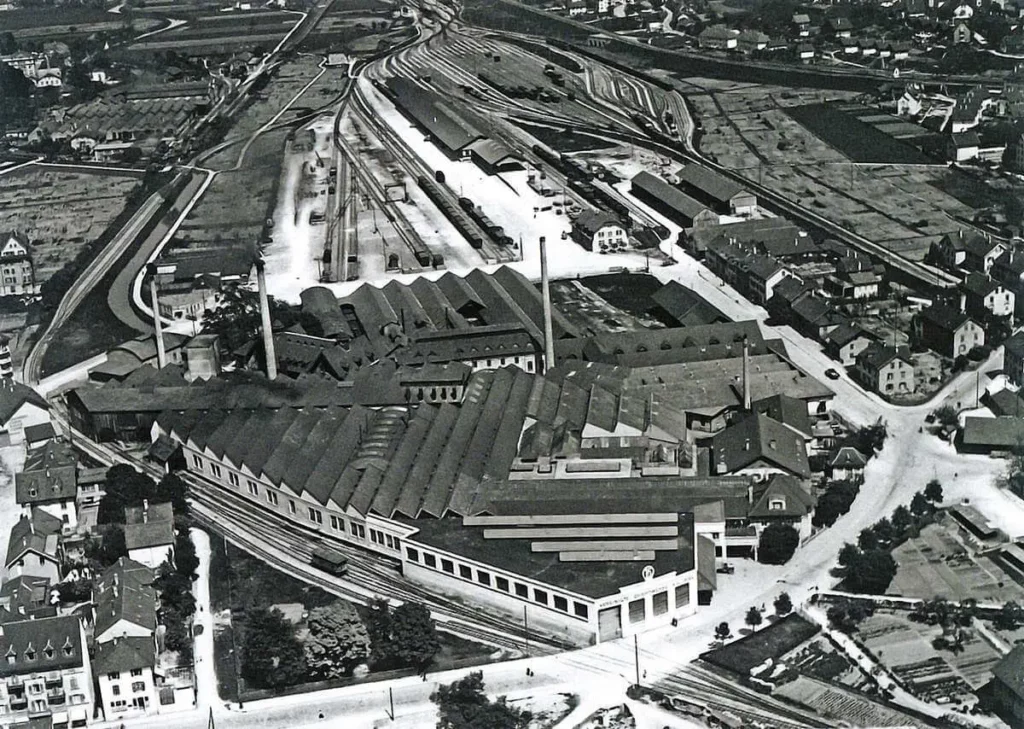
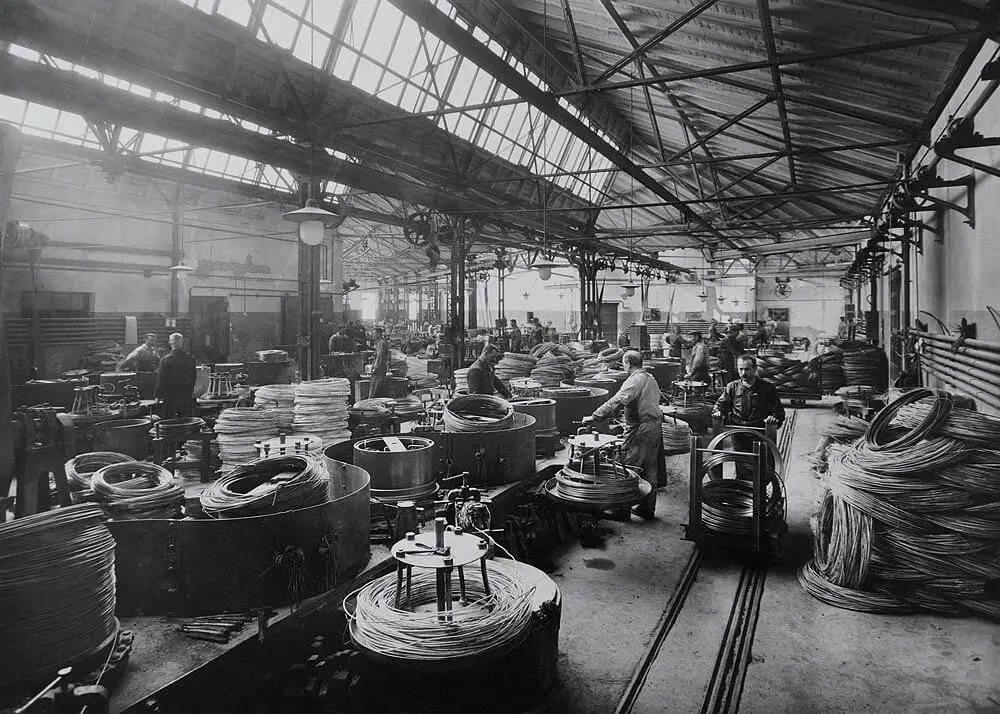
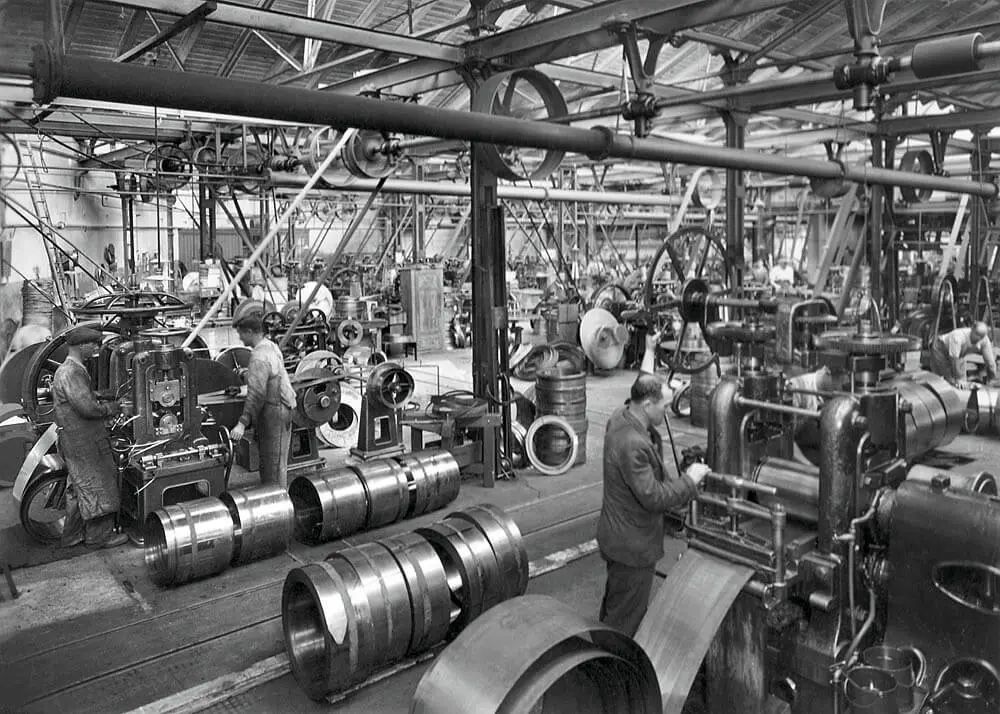
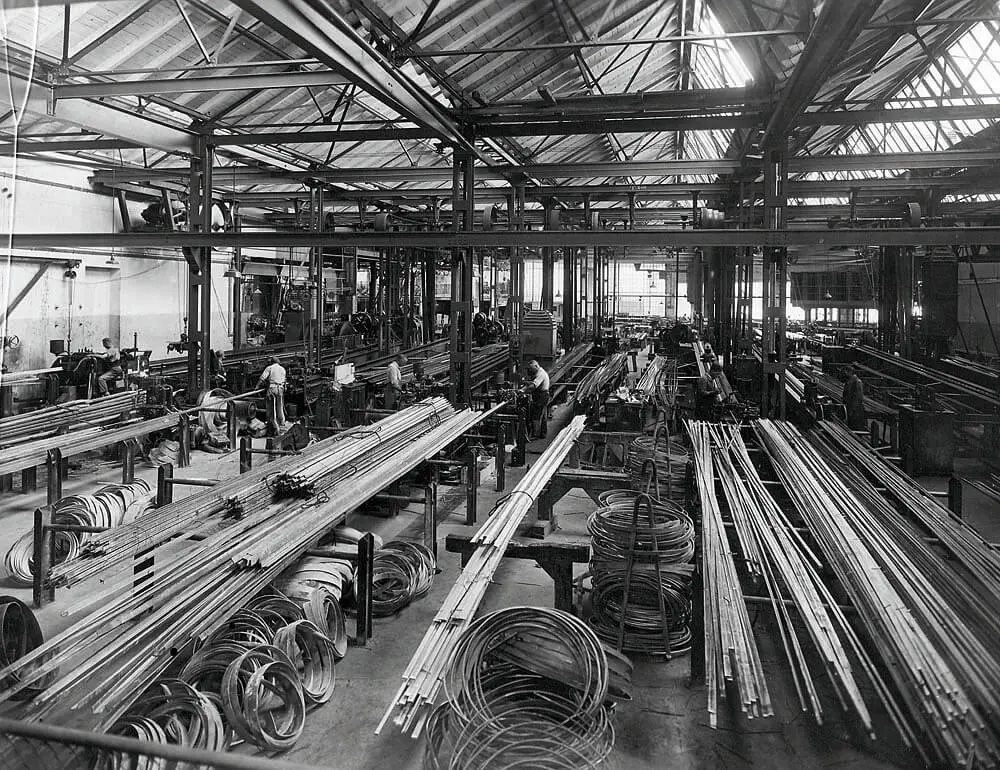
In the 18th century, Biel became a modest but strategic industrial centre, thanks to its position between the French-speaking and German-speaking parts of Switzerland. The wire-drawing works prospered gently, adopting advances such as water-powered rolling mills, which partly mechanised wire drawing. Around 1850, it joined a wider network of works under the banner of the Vereinigte Drahtwerke (United Wireworks), an entity grouping together several Swiss workshops specialising in metal. At the end of the 19th century, as the bicycle began to emerge as a cultural and sporting phenomenon in Europe, the steel wire produced in Biel found new applications: brake cables and reinforcements for primitive tyres. These first steps into cycling, although indirect, planted the seeds of a future revolution.
1900-1993: a transition towards cycling
The 20th century marked a slow metamorphosis for United Wireworks. In 1934, as the company celebrated three centuries of existence, it began producing components specifically for bicycles: hardened steel spokes, rudimentary rims and even metal mudguards. At that time, cycling was booming in Europe, especially in Switzerland, where the Alpine roads attracted racers and amateurs. The spokes from Biel, renowned for their strength and consistency, became a favoured choice of local manufacturers such as Condor or Allegro, Swiss brands that are now historic.
During the Second World War, production slowed, but neutral Switzerland maintained stable industrial activity. The post-war years, the “Trente Glorieuses”, saw growing demand for bicycles, both for transport and for racing. United Wire Works invested in modern machinery, such as high-precision presses, to meet this wave. In the 1960s, their spokes equipped Swiss professional teams taking part in the great classics, consolidating their reputation in cycling circles. However, the company remained above all a diversified industrial entity, also producing cables for cars and wire for electronics.
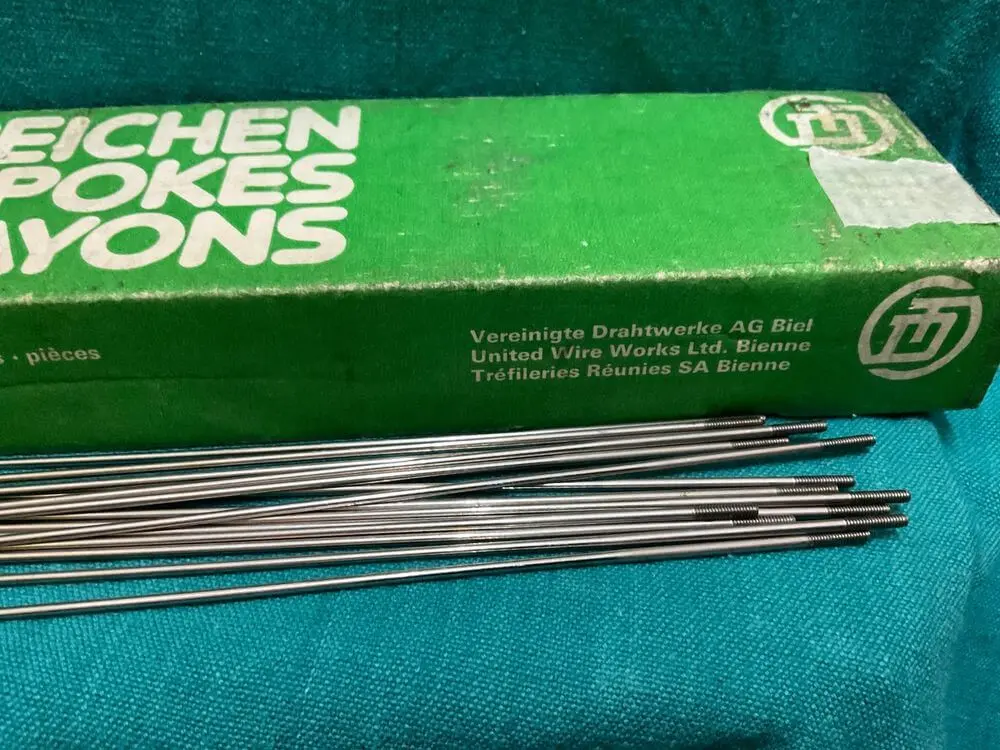 The famous United Wire Works spokes made in Biel.
The 1980s brought headwinds: globalisation and Asian competition eroded the margins of European manufacturers. United Wire Works went through a crisis, marked by redundancies and restructuring. In 1993, faced with these challenges, the management decided to split up its activities. The cycling division, then marginal but promising, caught the attention of three ambitious managers: Marco Zingg, Maurizio D’Alberto and Franck Böckmann. The trio saw in these industrial roots an opportunity to create a brand dedicated to cycling, a project that would give birth to DT Swiss.
1994-1999: the foundation and the first triumphs
DT Swiss AG was officially born in 1994, the result of a bold management buyout orchestrated by Zingg, D’Alberto and Böckmann. They bought the spoke division of United Wireworks, with the ambition of turning this heritage into a modern, specialised company. The name “DT Swiss” is a double nod: “DT” for “Drahtwerke Tréfileries” (wire-drawing works in German and French), and “Swiss” to anchor the brand in the Swiss tradition of precision and quality. Based in a renovated factory in Biel, they started with a small but determined team.
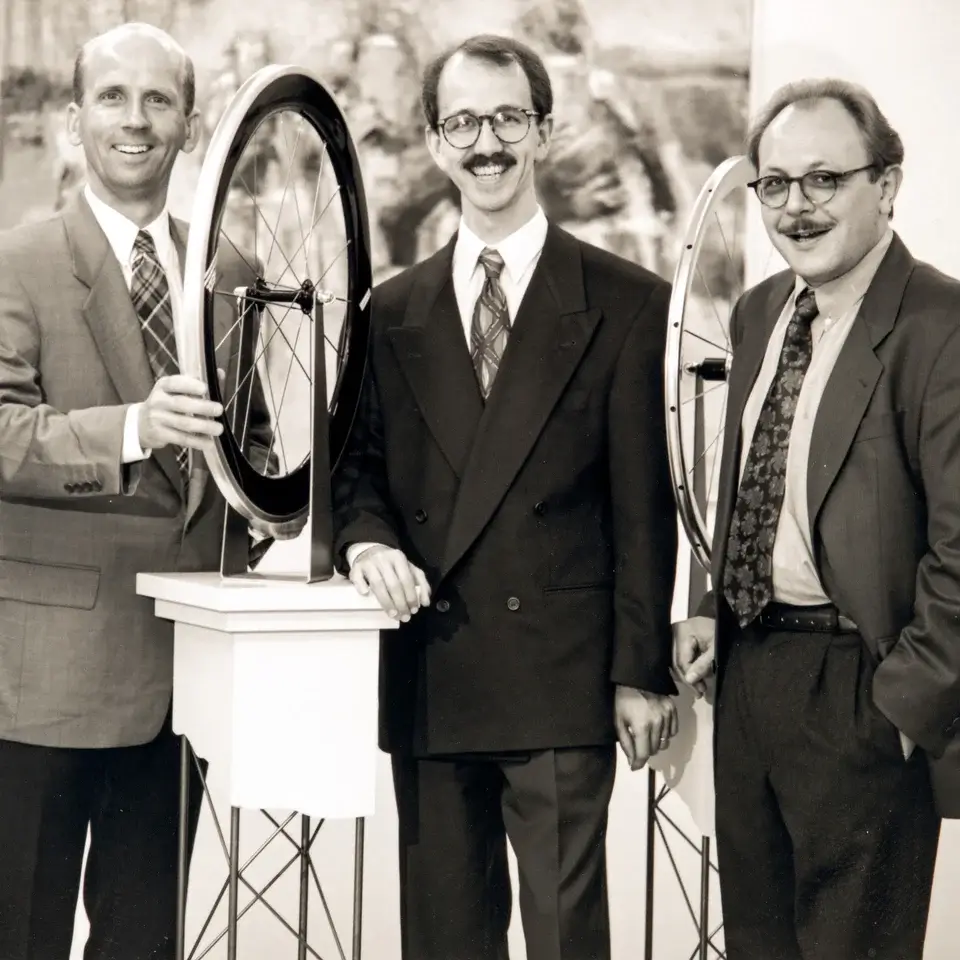 The founders of DT Swiss.
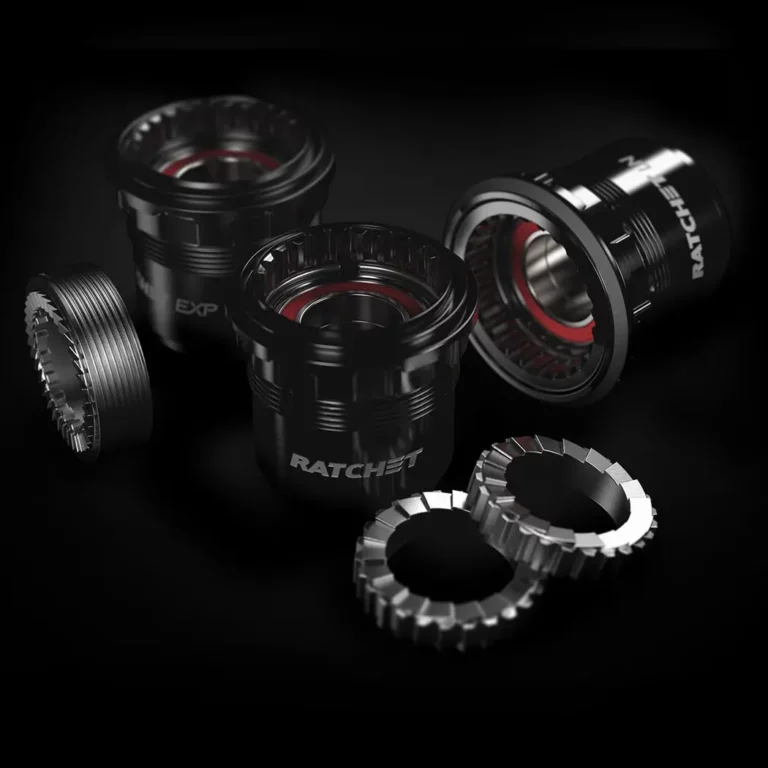
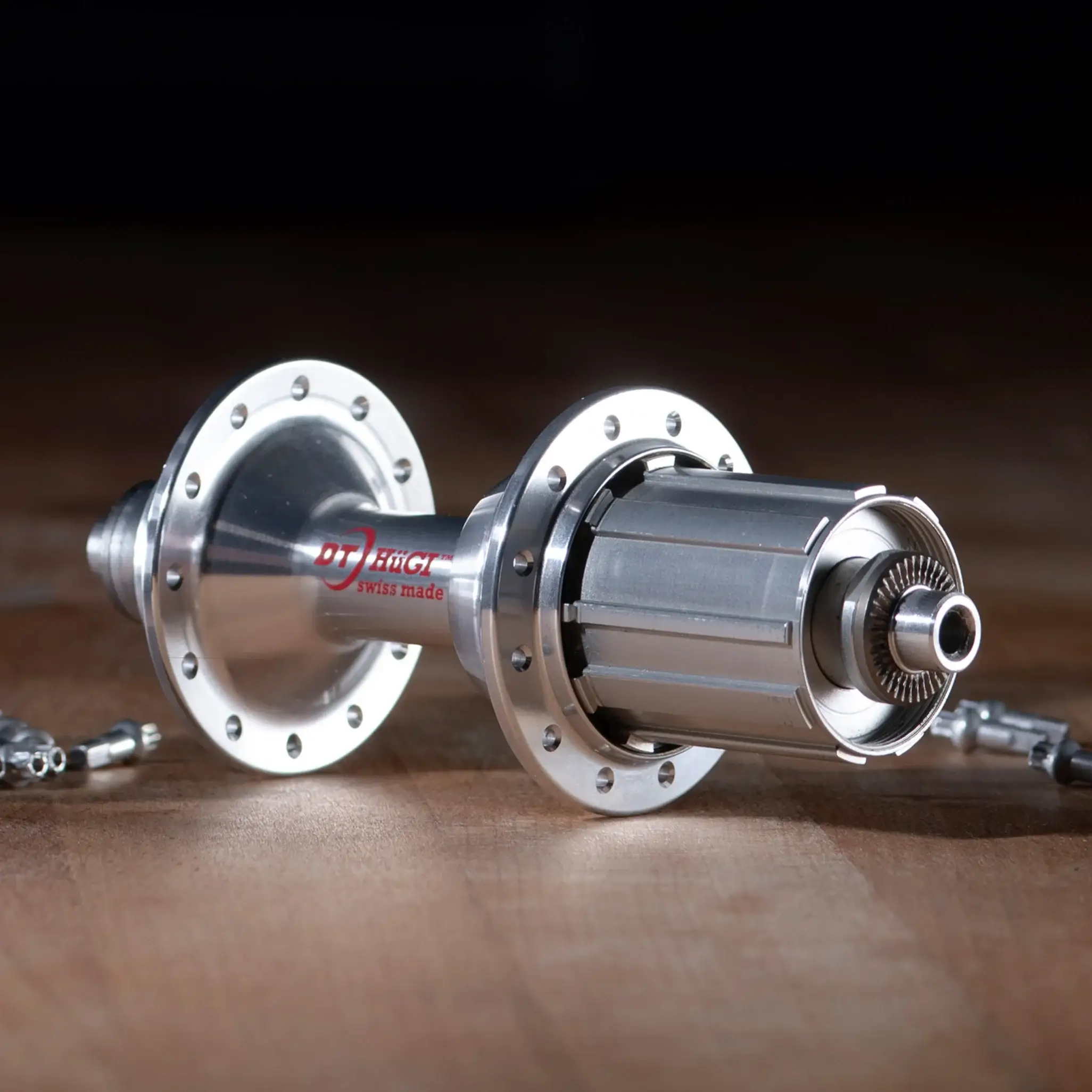
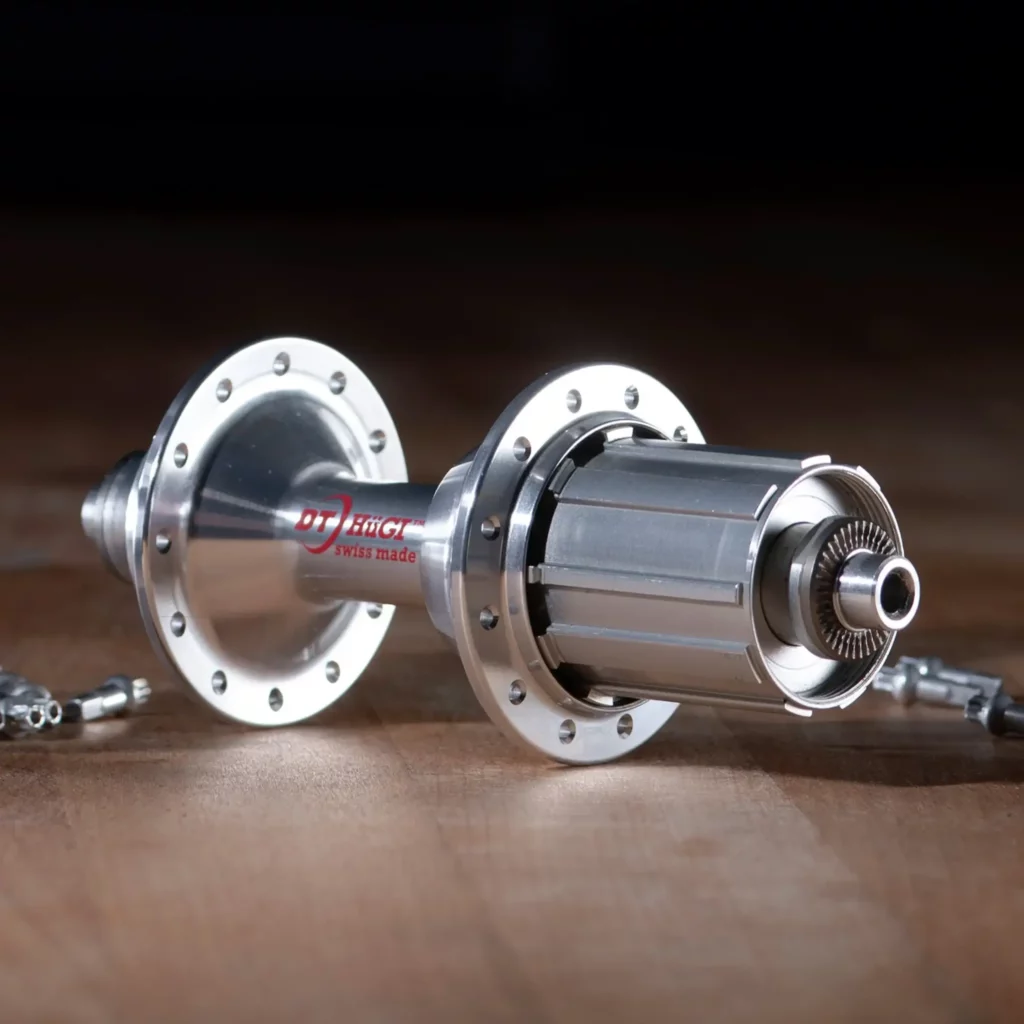
In 1995, DT Swiss made a big impact with the launch of its Ratchet hubs. This patented, revolutionary Ratchet system uses two toothed rings that engage simultaneously, offering fast engagement (18 points at the time) and exceptional durability. This hub became a calling card, attracting the attention of bike manufacturers and pro riders. From 1996, DT Swiss opened a subsidiary in Grand Junction, Colorado, to break into the American market, where mountain biking was exploding. In 1999, the brand completed its offer with aluminium and brass nipples, strengthening its mastery of wheel components. An offer that would win over and equip many brands such as Cadex, Roval, Lightweight, Bontrager, Enve, Syncros, and more.
2000-2010: a decade of growth and diversification
The beginning of the 21st century propelled DT Swiss onto the international stage. In 2001, the purchase of Pace, a British suspension brand, marked a turning point. This acquisition, finalised after months of negotiations, allowed DT Swiss to enter the market for MTB forks and shocks. The team brought Pace’s know-how to Biel, developing light, adjustable suspension that won over European and American mountain bikers. This strategic choice broadened their portfolio, positioning them as a versatile player.
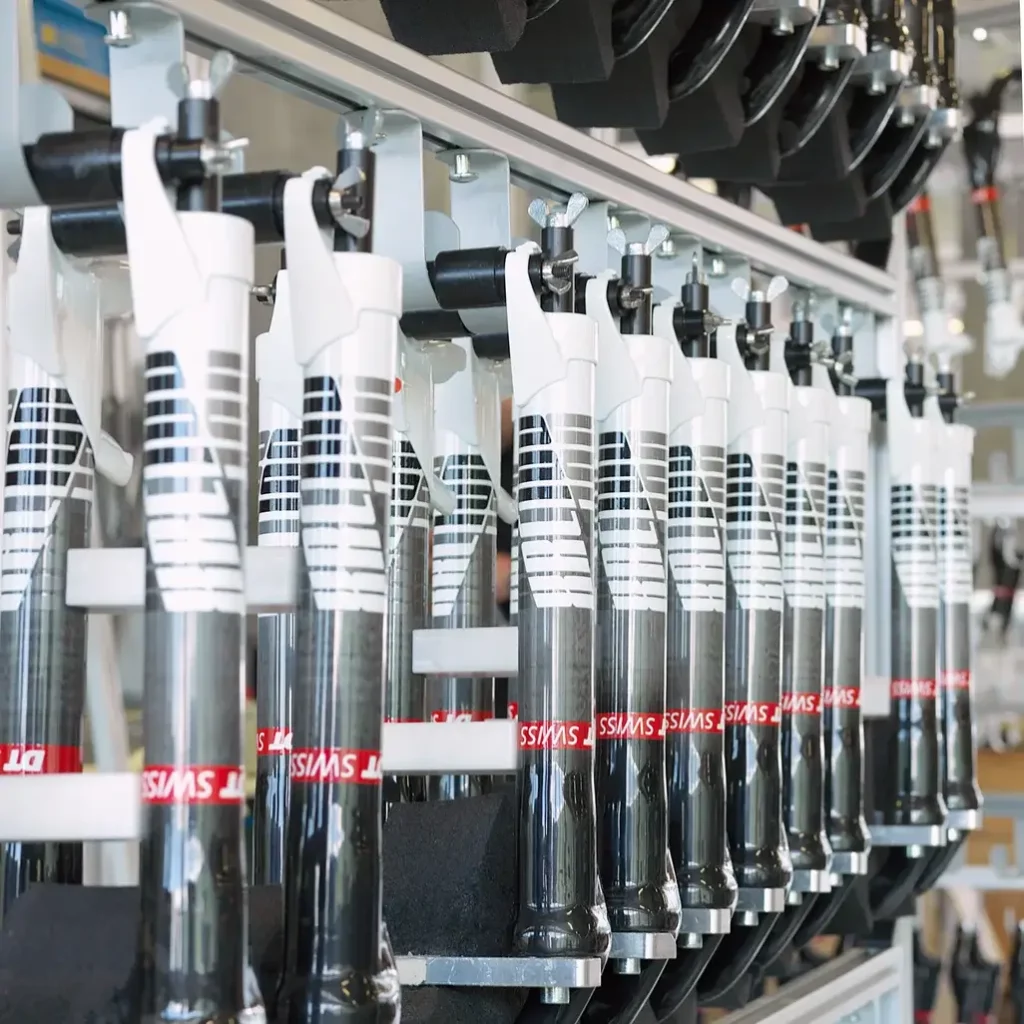
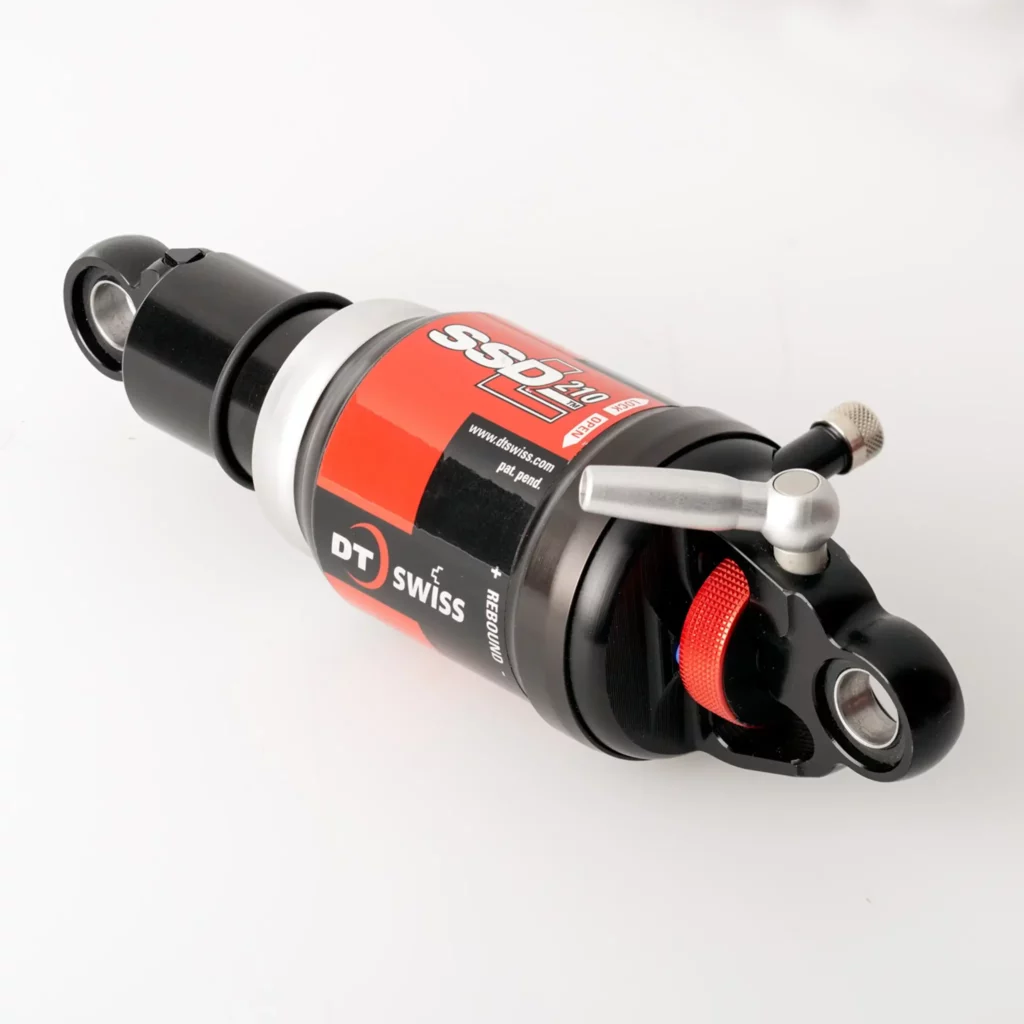
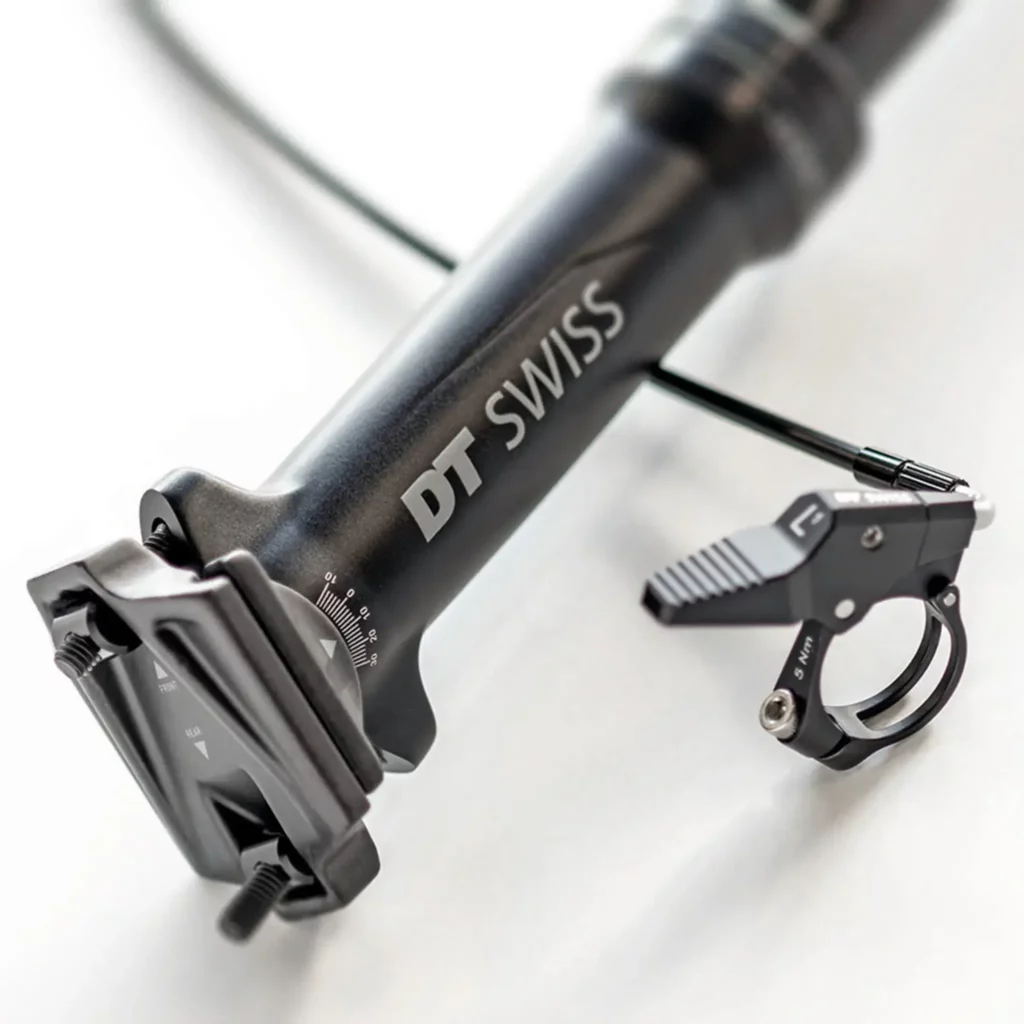
In 2003, DT Swiss received the Espace Mittelland Entrepreneur Prize, a regional award celebrating its innovation and economic contribution. That same year, the brand moved into rim production, followed in 2004 by complete wheels – integrated systems combining in-house spokes, hubs and rims. These wheels, often alloy but soon carbon, attracted giants such as Giant, Scott or Canyon, which fitted DT Swiss products to their high-end bikes. In 2005, a factory opened in Taiwan, at the heart of the Asian cycle industry, to reduce costs while maintaining high standards.
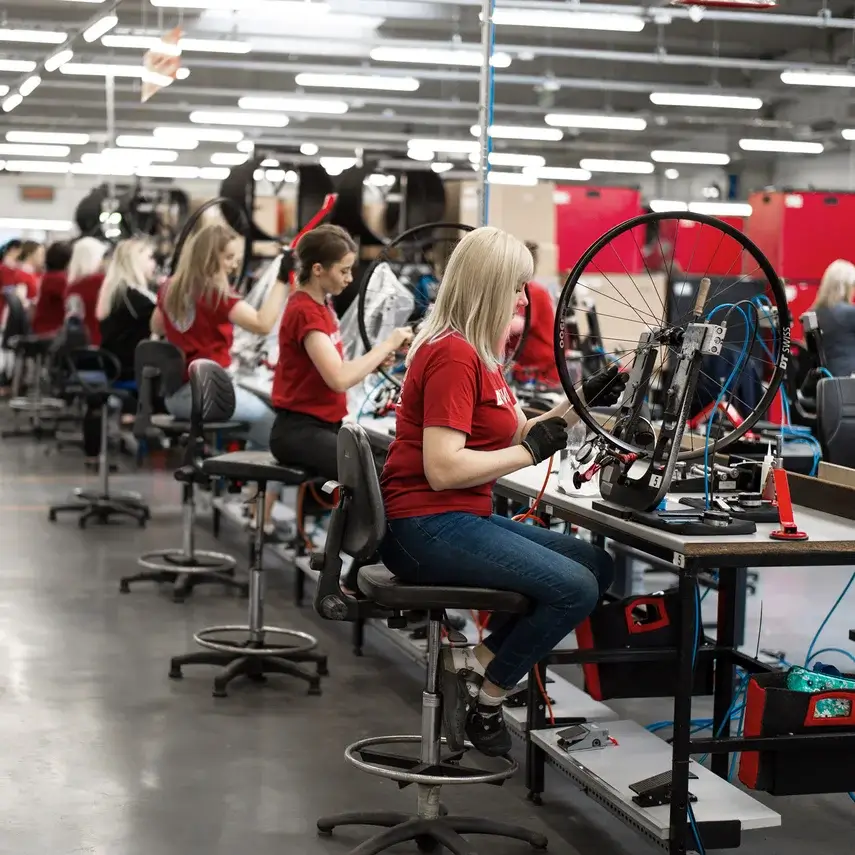 DT Swiss wheels are now produced in Poland.
In 2007, a new factory opened in Oborniki, Poland, dedicated to wheel assembly and European logistics. This site, chosen for its skilled workforce and its proximity to key markets, produces thousands of pairs each year. In 2010, DT Swiss celebrated 15 years of existence with a strong presence in the pro peloton: their carbon wheels equipped many triathletes and Olympic athletes, while their suspension dominated the MTB World Cup podiums with the legendary Nino Schurter. This decade established DT Swiss as an essential brand, combining craft heritage and global ambition.
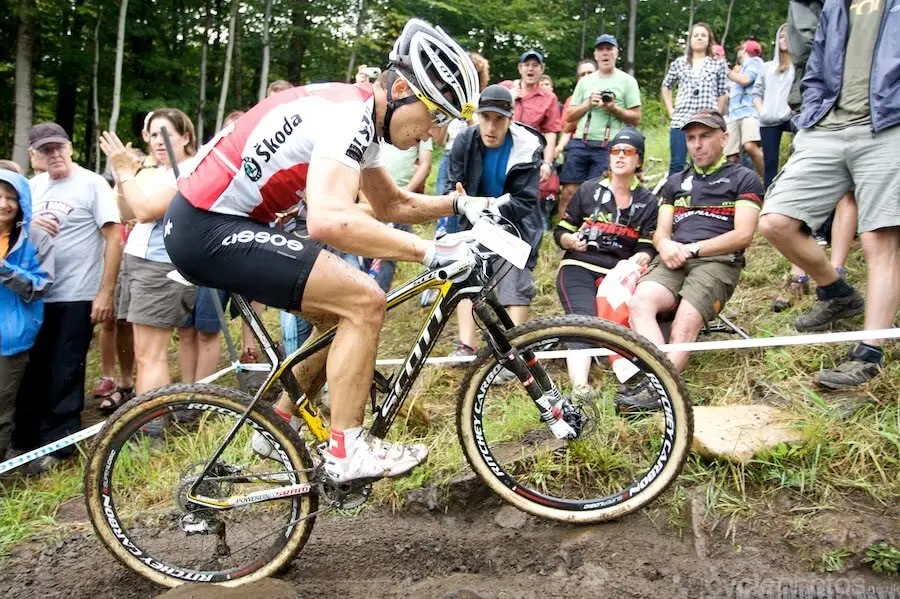 Nino Schurter winning the 2009 World Championship with a DT Swiss fork.
2011-2021: modernisation and resilience
In 2011, DT Swiss opened a new headquarters in Biel, an ultra-modern complex replacing the historic factory. The building, with R&D laboratories and an optimised production line, symbolises a forward-looking brand. The 2010s were marked by adaptation to changes in cycling: disc brakes, adopted on a massive scale after 2015, pushed DT Swiss to redesign its hubs and rims. Gravel, booming, inspired versatile wheels such as the GRC series, tested on the stony tracks of Graubünden.
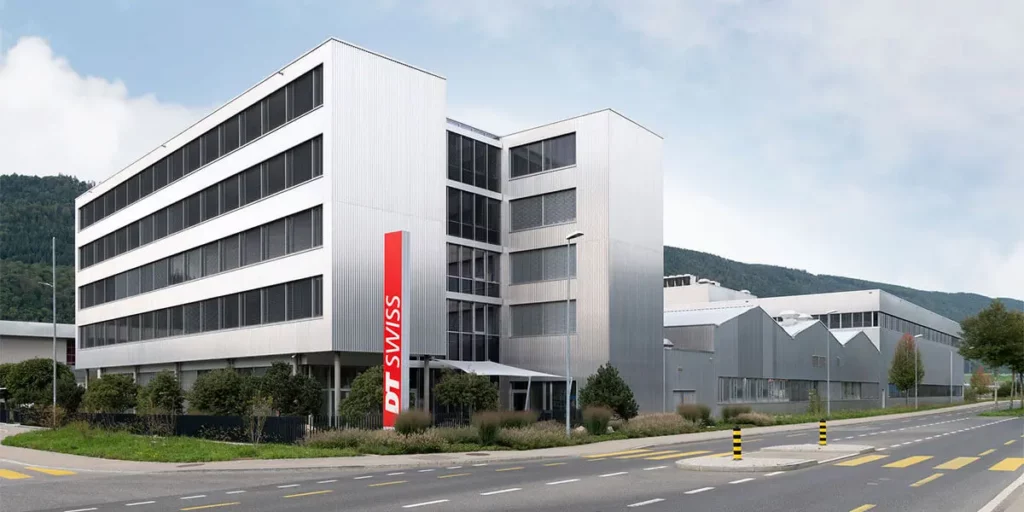 The new DT Swiss headquarters.
In 2016, Marco Zingg stepped down for personal reasons, leaving Böckmann and D’Alberto in charge. This transition coincided with the euro crisis, which weakened Swiss exports. Yet DT Swiss held firm thanks to prudent management and a solid reputation. In 2018, their spokes reached a symbolic milestone: more than 100 million units sold since 1994, a figure that reflects their dominance in this field. In 2021, the brand celebrated its 25th anniversary by equipping champions such as Nino Schurter, whose Olympic medals underline the reliability of DT Swiss products.
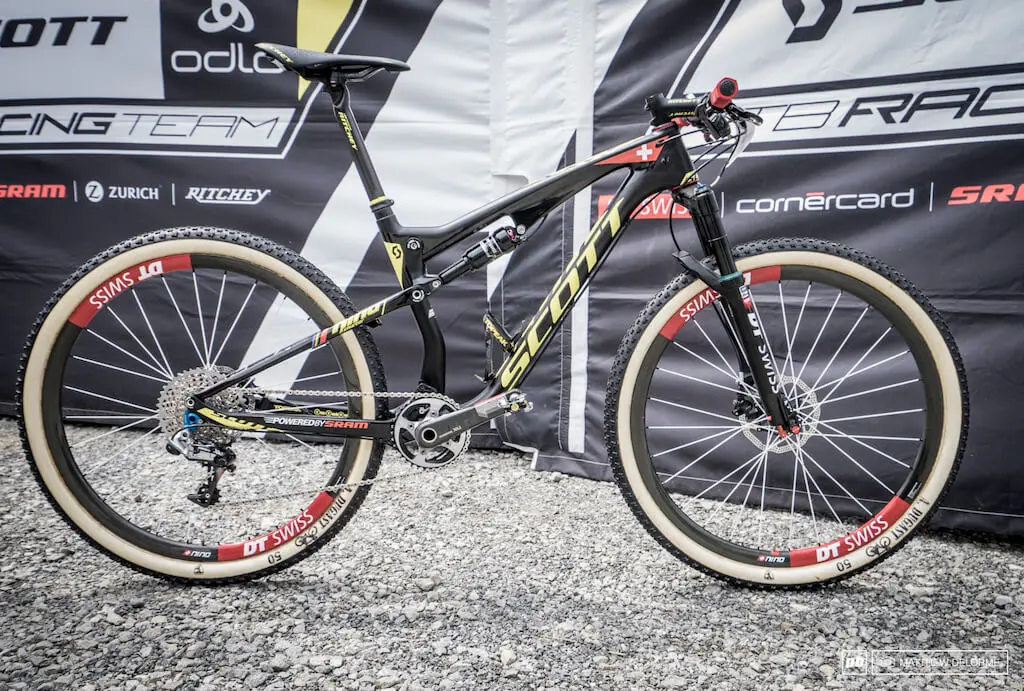 Nino Schurter’s bike in 2015, fully equipped with DT Swiss.
2022 to today: heritage and a global vision
In 2022, DT Swiss took a further step with the acquisition of Trickstuff, a German manufacturer of high-end brakes. This deal, finalised after complex negotiations, enriched their catalogue with precise braking systems, meeting growing demand for fully equipped bikes. In 2024, suspension production was gradually transferred to Oborniki, Poland, to optimise costs, while Biel remains the nerve centre for spokes and hubs.
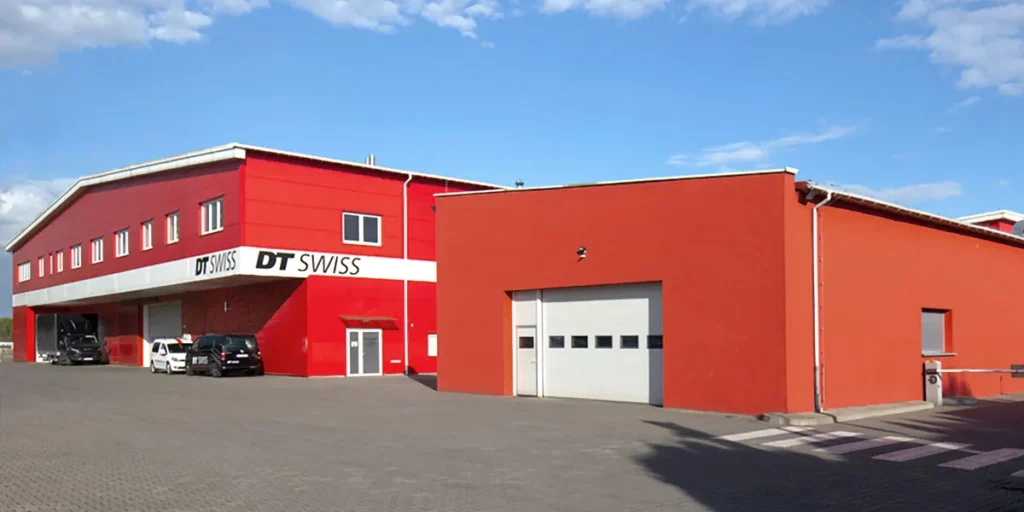 DT Swiss premises in Poland.
Today, in 2025, DT Swiss celebrates 30 years of official existence and nearly 400 years of indirect heritage. With 600 employees worldwide, 180 of them in Biel, the brand still dominates the spoke market (70% of its original business) while excelling in carbon wheels and suspension. Its products equip a professional team (Uno-X) and can be seen at the Tour de France, on Olympic MTB champions and on amateur cyclists in more than 50 countries. The Ratchet system has evolved to 54 points of engagement and more recently 90 (DEG). It remains an icon, often used under licence by other manufacturers. DT Swiss embodies a rare success: a company that has managed to turn ancestral know-how into a global force, while remaining true to its Swiss roots of precision and excellence.
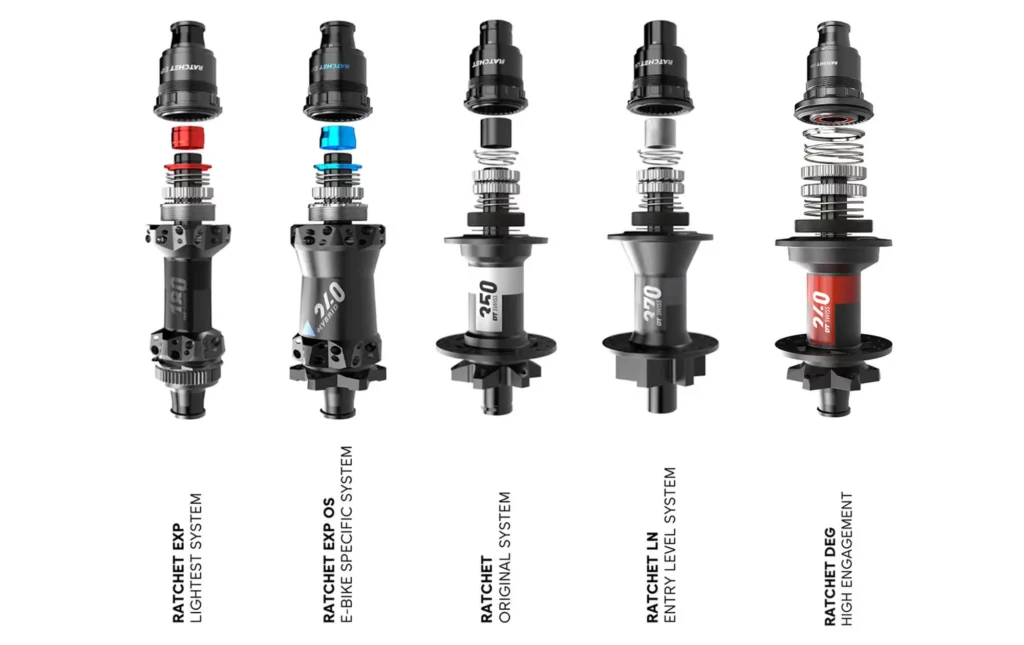 30 years of hub innovations
More information on the official DT Swiss website.