
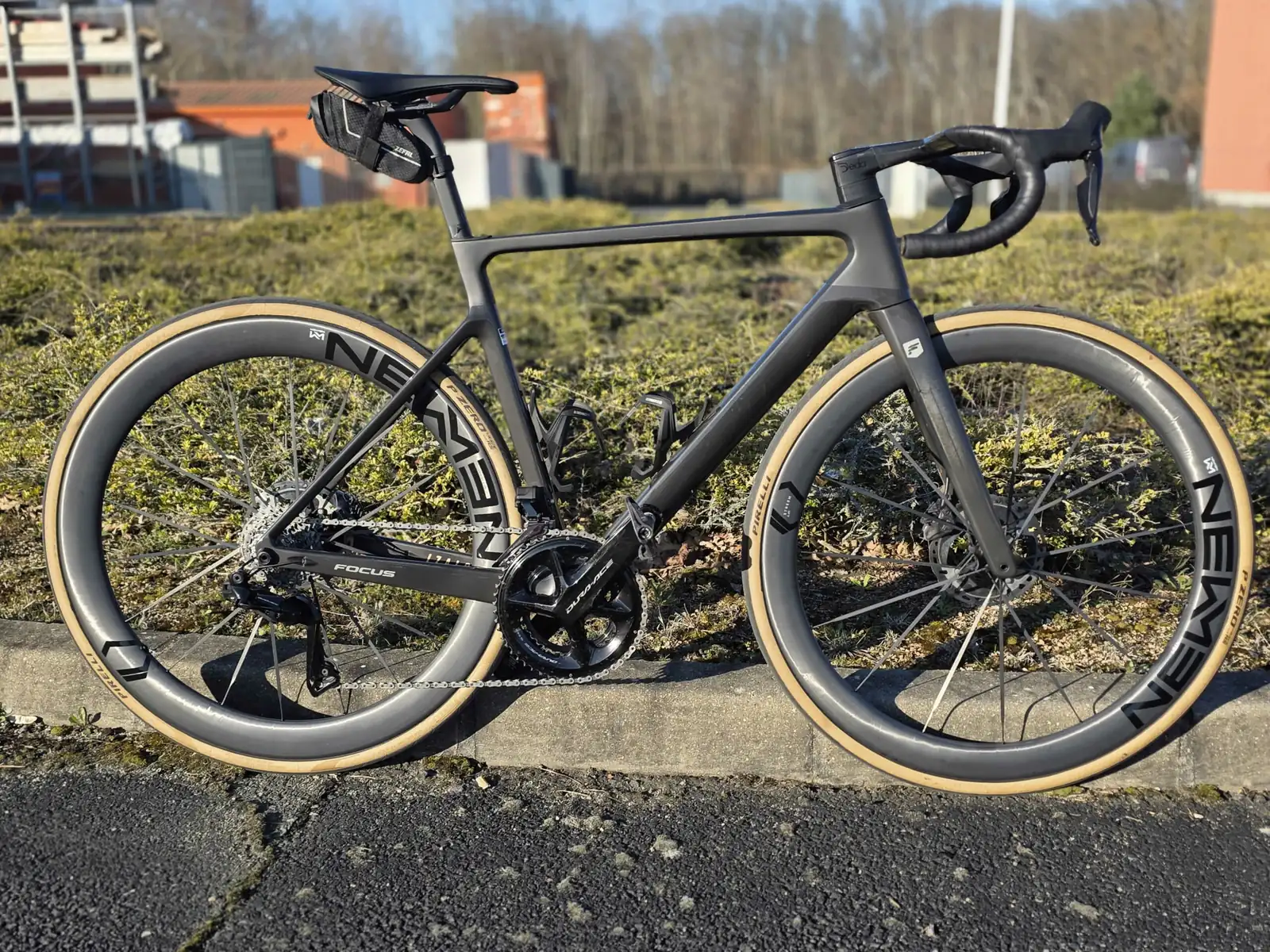
Newmen Streem Allround Vonoa Review: The Best Value Wheelset on the Market?
Field test · 1,500 km · Pirelli P Zero RS 30 mm
Newmen Streem Allround Vonoa
49/54 mm rim depth · VONOA carbon spokes · Centerlock disc
For this Newmen Streem Allround Vonoa review, we need to go back to the starting point. When Newmen unveiled the Streem Vonoa range, the spec sheet was enough to raise an eyebrow: 1,305 g a pair, differentiated rim depths of 49 mm at the front and 54 mm at the rear, VONOA Aerowide carbon spokes and an integrated removable valve, all for €1,690. In a segment where carbon spokes are usually reserved for wheels costing more than €2,500, that positioning deserved a serious check, far from the press releases.
In total, around 1,500 km were covered on rolling terrain, with a Pirelli P Zero RS TLR in 30 mm at 3.5 bar (about 51 psi), on my Focus Izalco Max 9.9 equipped with Dura-Ace Di2. The rides covered varied profiles: short climbs, flats and rough sections, in weather alternating between dry and wet roads. The available benchmark is a set of DT Swiss ERC 1100 45 mm wheels, on which I have logged more than 5,000 km on the same bike, with a full review coming soon. It is not a direct ride-by-ride comparison, but it is enough to place the key sensations.
Contents
Overview and first impressions
Placed on the scale before setup, the Streem Allround Vonoa come in at 1,342 g, against the 1,305 g claimed by Newmen, split into 599 g for the front wheel and 743 g for the rear. A 37 g gap (+2.8%) that stays within the usual range of manufacturing tolerances, but one worth knowing before comparing spec sheets between competitors.
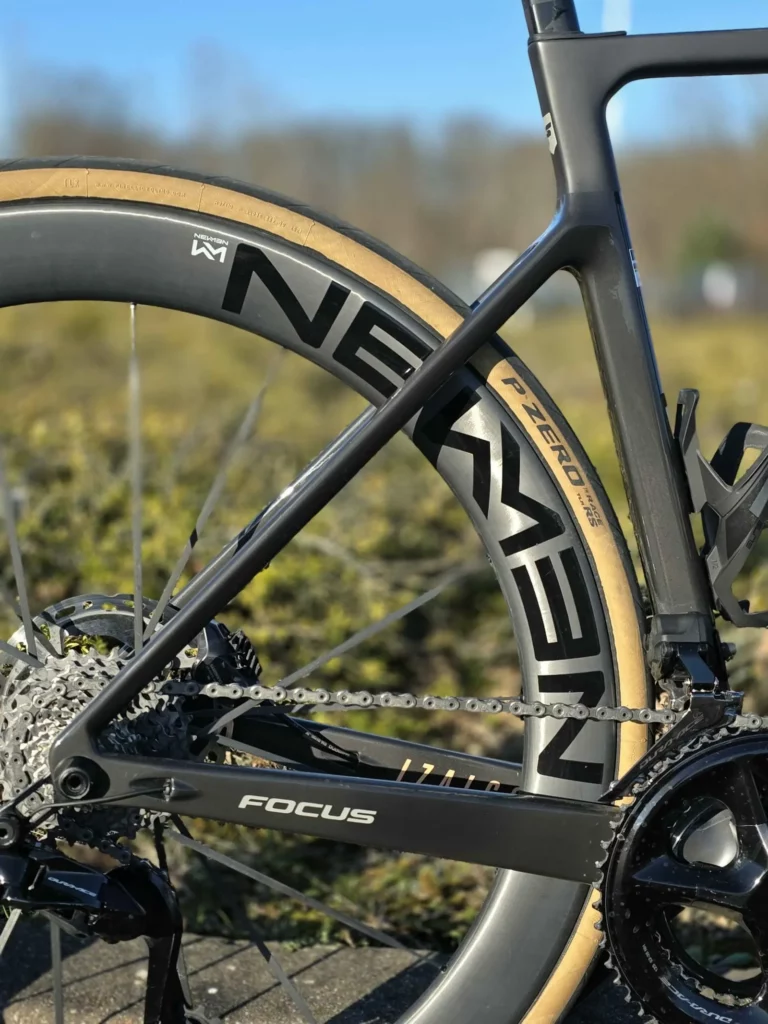
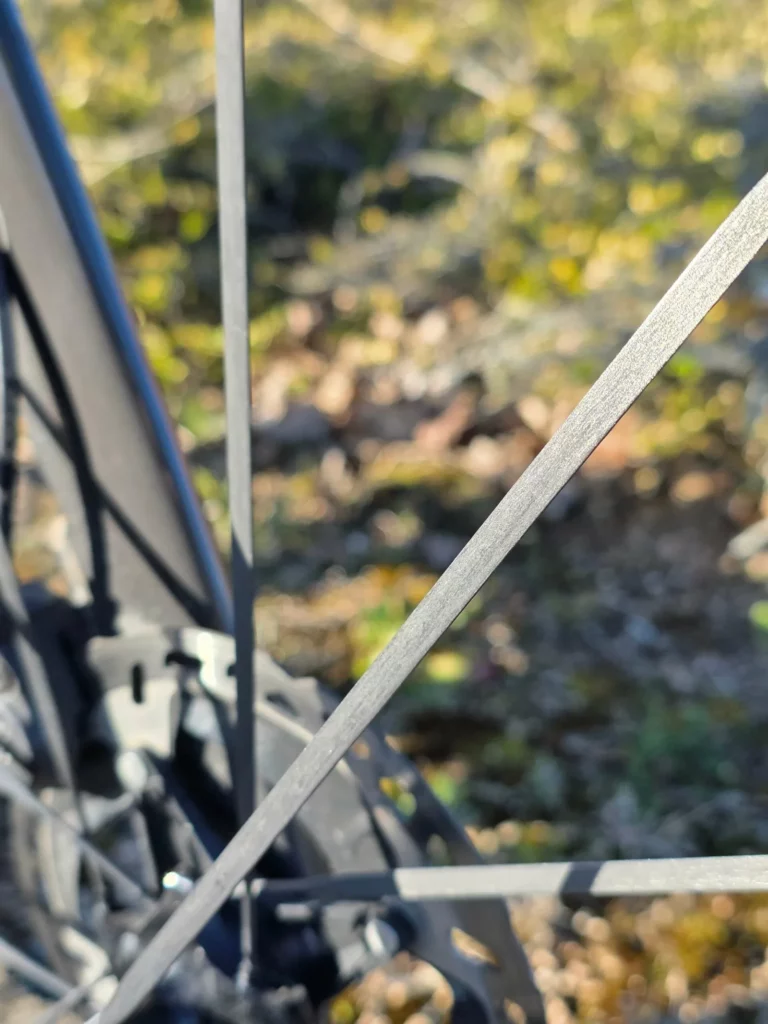
The matte finish is understated. It feels more like a “serious tool” than a “premium product” in the cosmetic sense, which fits the brand’s positioning well. The graphics are discreet and the look is coherent. Compared with the DT Swiss ERC 1100 45 mm I use alongside them, the difference in finish quality is noticeable as soon as you handle them: DT Swiss delivers a level of execution that is hard to match in this price range, and the Newmen wheels do not claim to compete on that ground. It is a deliberate choice, and it is consistent with the price. The spoke count strikes you immediately: 15 at the front, 18 at the rear, where almost all competitors sit around 21/21 or 18/21. Newmen justifies this choice with the geometry of the VONOA Aerowide spokes, wide and flat carbon flatspokes claimed to be 40% lighter than steel spokes of equivalent strength. The idea makes physical sense: fewer spokes, but laterally stiffer ones, which reduce both aerodynamic drag and rotating mass.
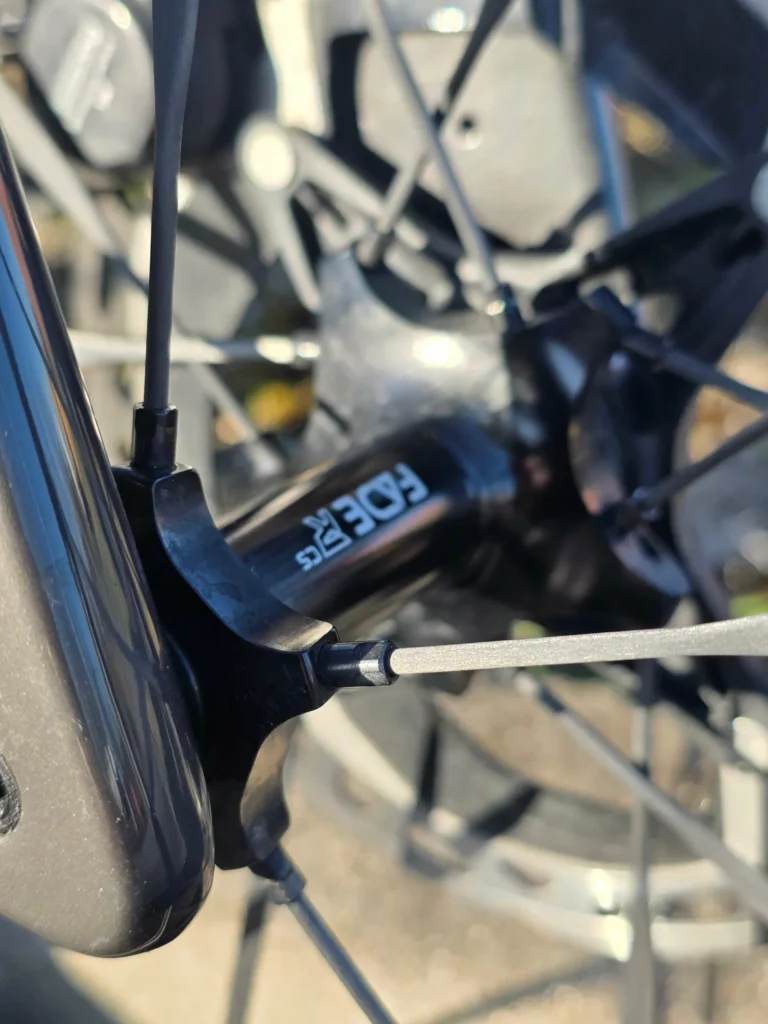
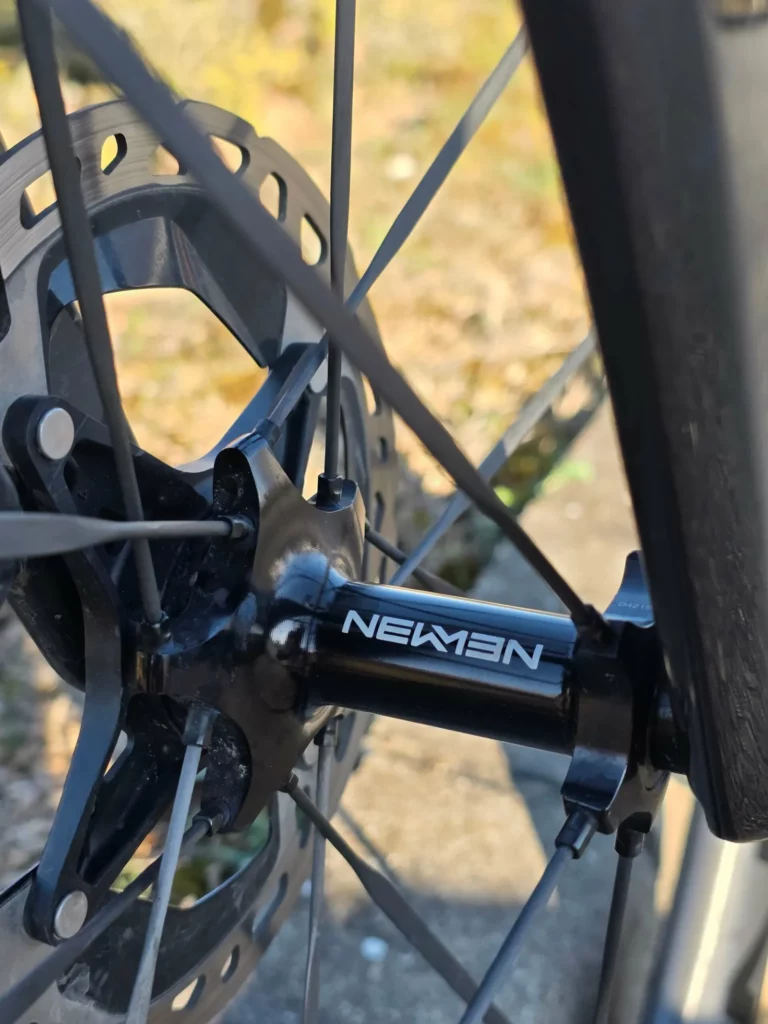
While the FADE R CS hubs are made in Germany, the rims and VONOA spokes are produced in Asia, a deliberate trade-off and the main lever that keeps the price at €1,690 without sacrificing the specifications. One element of real-world legitimacy completes the picture: Newmen sponsors the TotalEnergies team, a ProTeam outfit, which uses precisely this Allround Vonoa model for its entire season and on every type of race profile. On cobbled classics as on mountain stages, the riders do not change wheels.
To put these 1,342 g measured into context: the Corima 45R weighs 1,395 g for €1,590 with steel spokes and only 22 mm of internal width. The Mavic Cosmic SLR 45 comes in at 1,480 g for €1,999 with a 23 mm internal width. The Scope R4 (€1,698) claims 1,349 g with steel spokes and 23 mm. Only the Miche Deva RD 52 competes on weight with its claimed 1,305 g and carbon spokes, but its €3,200 price puts the two in unrelated commercial categories.
The removable valve: what the brand does not say clearly enough
The Newmen Streem Aero removable valve is the most visually distinctive element of these wheels. The principle: a valve integrated into the rim, with nothing protruding, for a completely smooth profile. Newmen claims a saving of 1.5 W at 45 km/h. That figure is hard to validate in the field without a comparative protocol, but the aerodynamic gain is credible and the visual effect is undeniable.
Setup with inner tubes, using the Tubolito tubes supplied with the wheels, is learned in two or three inflations: you simply screw the valve extension in from the outside along the right axis. Tubeless, on the other hand, the procedure becomes frankly laborious. The removable valve adapter, which provides the seal from inside the rim, requires millimetre-precise positioning before the tyre is mounted, and the valve bore is too narrow to let liquid sealant through. In practice: you have to unseat one side of the tyre after seating and deflating it in order to pour in the sealant, then refit the bead and reinflate. It is not impossible, but in a market that has broadly simplified this procedure to the extreme, it is a real point of friction.
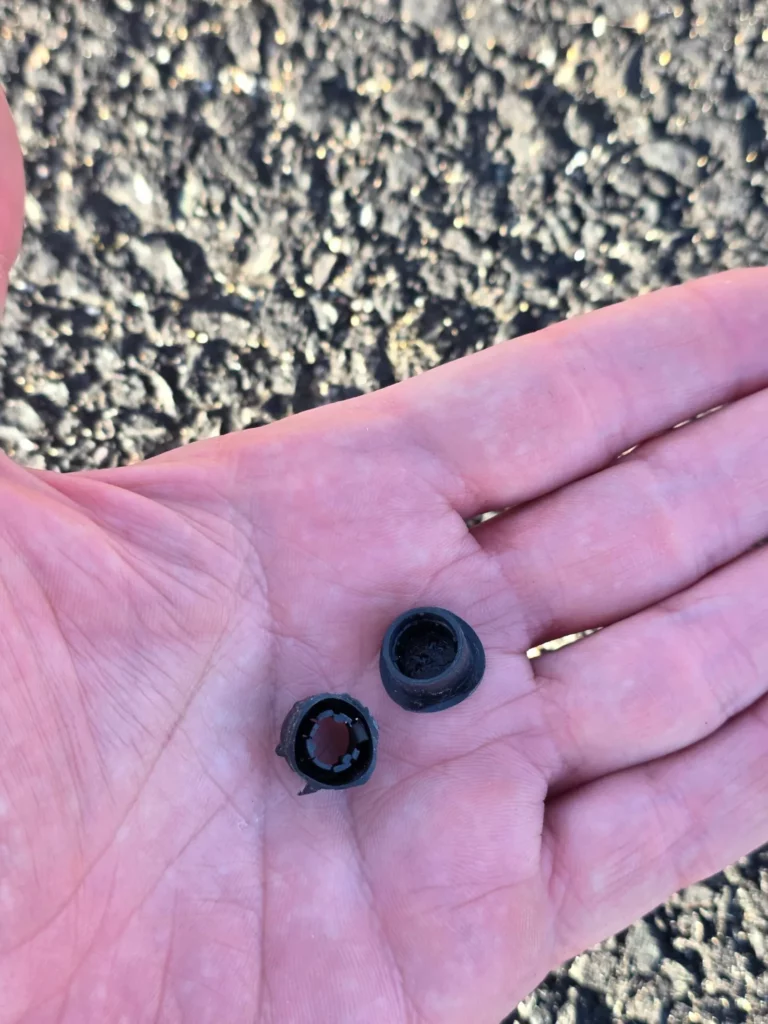
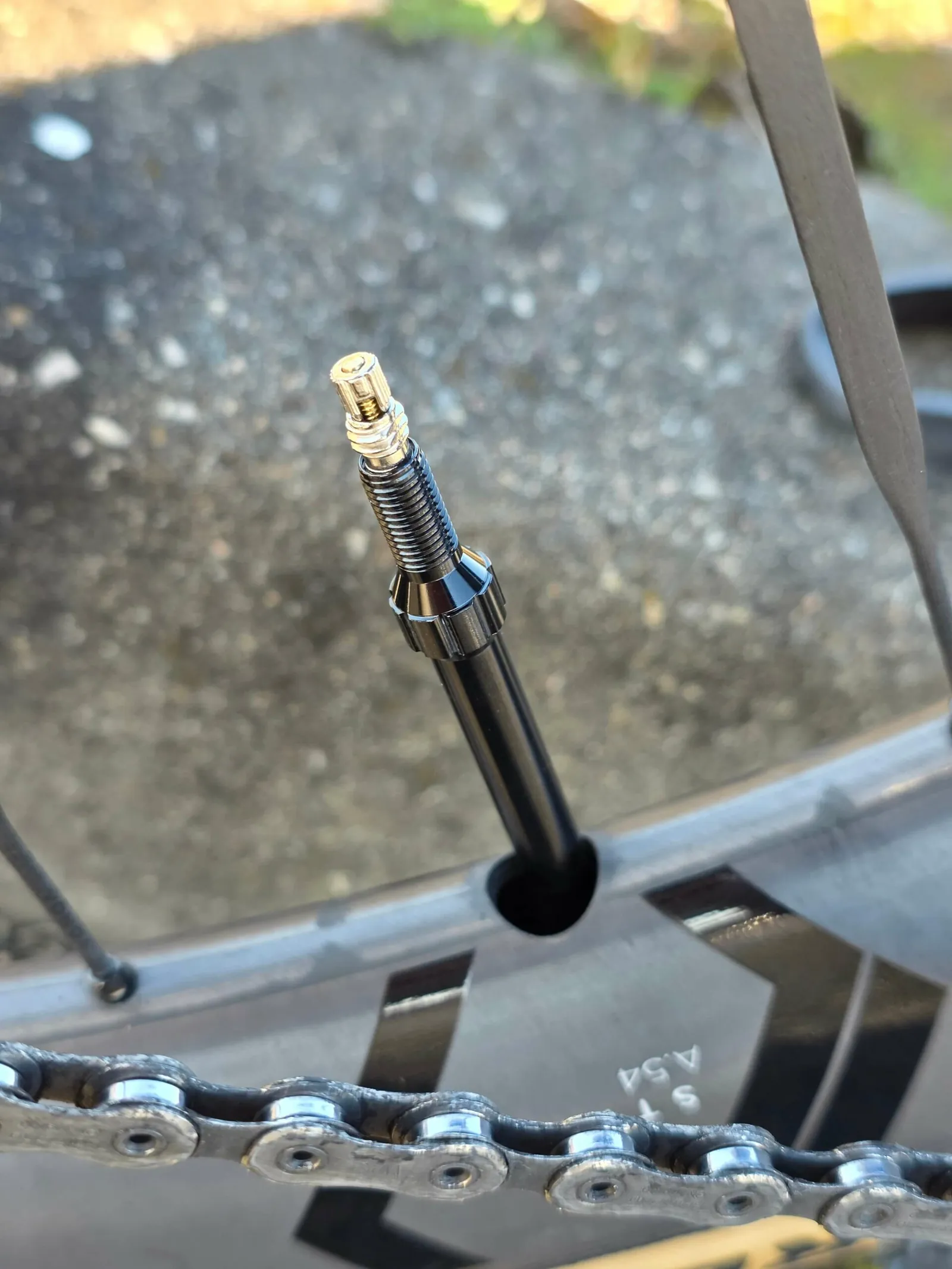
On top of that come two concrete problems with the valve plugs that deserve to be documented. These small black caps, almost invisible on the matte black rim, disappear with disconcerting ease at the first inflation: their small size and dark colour are unforgiving if they fall to the ground. But the problem does not stop there. Each plug consists of a plastic body covered with a rubber seal that makes the valve hole airtight. After about 1,000 km, when I removed the plug to access the valve, the rubber part had separated from the plastic body and stayed stuck in the hole. The photo below shows exactly this defect. This type of failure on an accessory directly involved in tubeless sealing is not acceptable on a €1,690 product.
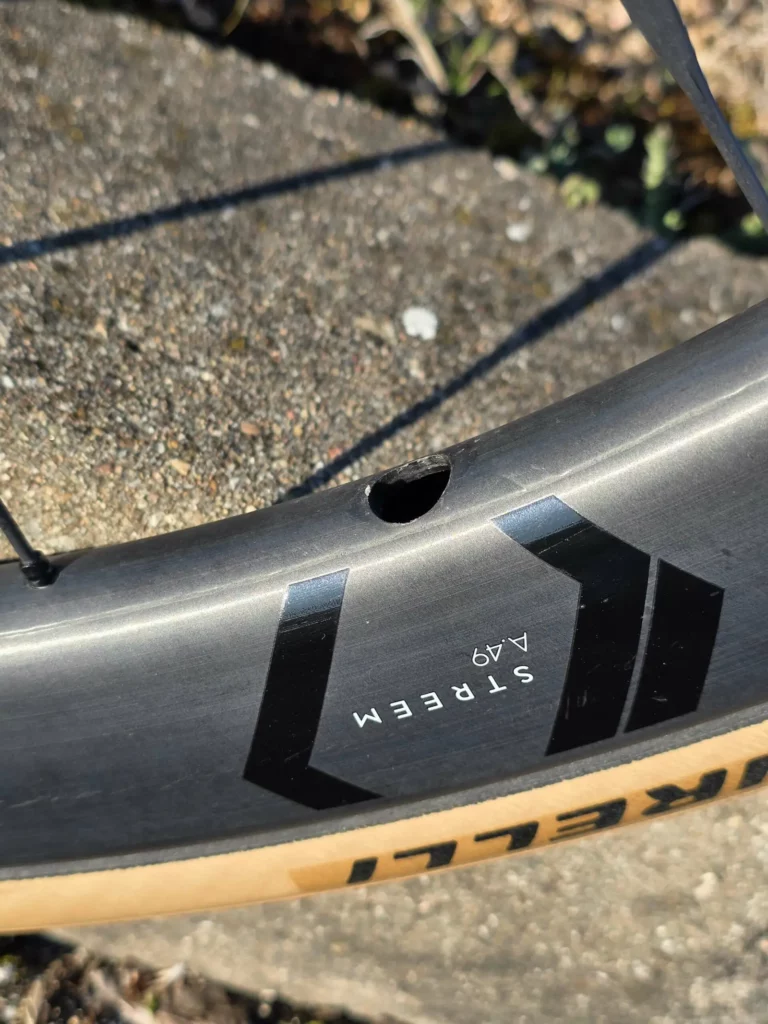
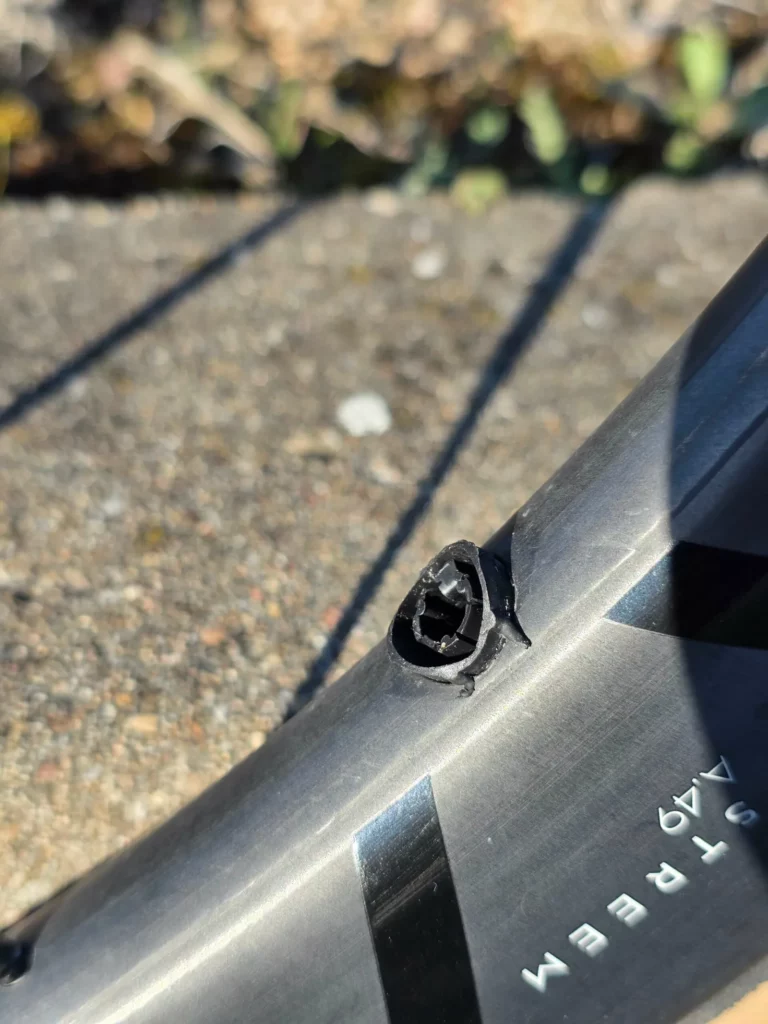 Newmen Streem Aero removable valve plug with its detached rubber seal left stuck in the rim hole
On the road
Tubeless setup and first ride
The tubeless setup described above was eventually completed, not without patience. The sidewalls of the Pirelli P Zero RS seated properly with a track pump once the bead was correctly positioned in the rim hooks. The rim tape supplied is of good quality and causes no adhesion problems. It is the removable valve system, and that alone, that complicates the operation. Once this first setup is behind you, subsequent inflations remain a little more tedious but under control.
Acceleration and responsiveness
From the very first pedal strokes, the Streem Allround Vonoa respond with a directness I do not spontaneously associate with 49 and 54 mm rims. Out of the saddle on a short climb, I do not feel that resistance to acceleration typical of deep rims carrying a lot of rotating mass. Accelerations are lively and the bike responds. This is precisely where the carbon spoking shows its relevance: by reducing the number of spokes while maintaining lateral stiffness, Newmen manages to keep inertia low relative to the rim weight.
Compared with the DT Swiss ERC 1100 45 mm, the Newmen wheels are livelier and more dynamic under acceleration. The ERC 1100 have a more laid-back, calmer character. It is a real pleasure to ride these playful wheels.
The FADE R CS hub deserves a specific mention. With its 3 pawls and 36 points of engagement (an angle of about 10°), it does not claim to compete with high-density ratchet systems such as the DT Swiss 54-tooth (6.7°) or Chris King (5°). Newmen’s goal was to maximise durability by limiting the stress on the pawls, even if that means accepting a less immediate engagement. Over 1,500 km of testing, that bet holds up: no skipping, no premature wear.
The freehub also deserves a mention for what really sets it apart from competitors: its noise level. The FADE R CS is remarkably quiet. It sits somewhere between the near silence of Campagnolo hubs and the deafening clicking of DT Swiss hubs, which you can hear from ten metres away when freewheeling on a descent. For riders sensitive to this parameter, often forgotten on spec sheets, it is a real everyday advantage.
Climbing behaviour
These wheels do not penalise you on the climbs despite their 49/54 mm depth, and that is one of their hardest qualities to find at this price. The gear turns over well, with no feeling of fighting excessive inertia at low speed. Combined with the measured weight of 1,342 g, the sensation is consistent with what you expect from an all-round wheelset meant to stay on the bike whatever the profile.
Behaviour on the flat and inertia
On the flat, the first detail that stands out is not visual: it is a slight whistle typical of carbon spokes at a sustained pace, even when seated. This discreet, regular sound confirms that the low spoke count is indeed a deliberate aerodynamic choice, and not simply a weight-saving decision.
The true character of these wheels comes out between 30 and 45 km/h. Speed, once gained, is held with striking efficiency, as if the road were tilting slightly downhill when it is not. It is that sensation of the road flowing by, typical of wheels well designed to hold speed, that naturally pushed me to stay on the big ring rather than spin. The differentiated rim depth plays a coherent role here: the shallower front behaves less nervously in crosswinds, while the rear makes full use of its inertia potential in line with the wheel.
Comfort and damping
With 24 mm of internal width and 33.5 mm external, these rims are designed to take a 30 mm tyre (measured at 31.8 mm) in optimal conditions, and it is precisely in this configuration that I appreciated them fully. In 30 mm at 3.5 bar, high-frequency vibrations are filtered out, small bumps pass without spreading into the frame, and the confidence on descents is real. It is no coincidence that TotalEnergies uses this model on classics that include cobbled sectors.
On this specific criterion, the DT Swiss ERC 1100 45 mm offer less comfort with 28 mm tyres. Their narrower internal width leaves the tyre less room to work in the rim, which translates into less enveloping damping on rough surfaces.
I must, however, flag one point to watch over time: I noticed water accumulating inside the rim, which suggests that the spoke heads may not be perfectly sealed. This phenomenon, which two other independent users confirmed to me they had observed, had no visible consequence on my bearings during the test. But I will keep a close eye on it, especially for riders who regularly ride in the rain.
Newmen Streem Allround Vonoa review: the verdict
At the end of these 1,500 km, the verdict is positive, but not without nuance. These wheels do not dominate any single category taken in isolation, but they do something difficult: they excel in all of them at once, at a price that has no direct equivalent in 2026 for this combination of specifications.
What convinces without reservation: the technical coherence. The VONOA Aerowide spoking delivers exactly what it promises: reduced inertia, uncompromised lateral stiffness and stable tension over time. The removable valve, despite its setup constraints, is a technically justified innovation. As for Newmen’s after-sales service, it proved its seriousness to me in a concrete way: on a removable valve whose thread had been damaged by cross-threading, the exchange was completed in 10 days, with no proof required and no discussion. The brand, which shares some logistics resources with Cube without any financial link, has built its reputation on this kind of service for years.
What gives pause: the finish, rated 6.5/10. The matte surface seems to whiten, the removable valve plugs fail in use, and tubeless setup remains the major irritant of these wheels. In a market that has broadly simplified this procedure, the constraint imposed by the removable valve is hard to defend objectively.
These wheels make sense for the all-round rider who rides often, wants race-wheel sensations without spending €3,000, and is not allergic to a slightly technical first tubeless setup. They make no sense for anyone looking for a friction-free setup or ceramic bearings. Once past that initial hurdle, there is clearly not much to hesitate about.
Technical specifications
- Rim depth: 49 mm (front) / 54 mm (rear)
- Weight: 1,305 g claimed / 1,342 g measured (585 g front / 720 g rear according to the manufacturer)
- Internal width: 24 mm
- External width: 33.5 mm
- Hubs: Newmen FADE R CS, 3 pawls, 36 points of engagement, made in Germany
- Spokes: VONOA Aerowide carbon flatspoke, 15 front / 18 rear, made in Asia
- Rims: Carbon, Hooked TLR, made in Asia
- Bearings: Steel, double sealed
- Brake compatibility: Centerlock disc
- Tyre compatibility: Hooked Tubeless Ready (up to 32 mm)
- Axles: Front 12×100 mm / Rear 12×142 mm
- Maximum system weight: 130 kg
- Price: €1,690 a pair
- Accessories supplied: 2x Tubolito inner tube with removable valve, 2x tubeless removable valve, valve tool, valve adapter, seal
FAQ
What is the real weight of the Newmen Streem Allround Vonoa?
Placed on the scale before setup, the Streem Allround Vonoa come in at 1,342 g, against 1,305 g claimed by Newmen: 599 g for the front wheel and 743 g for the rear. The 37 g gap (+2.8%) stays within the usual manufacturing tolerances.
Are the Newmen Streem Allround Vonoa comfortable?
Yes, it is one of their strong points. With 24 mm of internal width and 33.5 mm external, they take a 30 mm tyre (31.8 mm measured) in good conditions. At 3.5 bar, high-frequency vibrations are filtered out and small bumps do not spread into the frame.
Which rider are the Newmen Streem Allround Vonoa made for?
For the all-round rider who rides often and wants race-wheel sensations without spending €3,000, provided they accept a slightly technical first tubeless setup. They make no sense for anyone looking for a friction-free setup or ceramic bearings.
Are the Newmen Streem Allround Vonoa tubeless compatible?
Yes, the rims are Hooked Tubeless Ready with an internal width of 24 mm and an external width of 33.5 mm. They accept tubeless tyres up to 32 mm. Setup is, however, more complicated than average because of the removable valve, which requires unseating one side of the tyre to add the sealant.
Which freehub body for the Newmen Streem Allround Vonoa?
The wheels are available in two versions: Shimano HG freehub body (compatible with 10, 11 and 12 speed) and SRAM XDR (compatible with SRAM AXS groupsets). Braking is Centerlock, with 12×100 mm thru-axles at the front and 12×142 mm at the rear.
How reliable is Newmen’s after-sales service?
Newmen is a German brand that shares some logistics resources with Cube, without any financial link. The after-sales service proved very responsive during my test: the exchange of a removable valve with a damaged thread was handled in 10 days with no proof required. The FADE R CS hubs are made in Germany.

Leave a Reply