DT Swiss 2025 recall: what are the consequences for the brand?
As a bike wheel expert, I am constantly on the lookout for news that affects the safety and performance of your equipment. The large-scale recall launched by DT Swiss in July 2025 on some of its carbon wheels is a critical subject that deserves immediate attention. If you ride high-end models such as the ARC, ERC, CRC or HEC, this article guides you step by step. We will look at the wheels concerned, the identified defect, the risks involved and, above all, the procedure to follow for a stress-free return.
The affected models: an overview
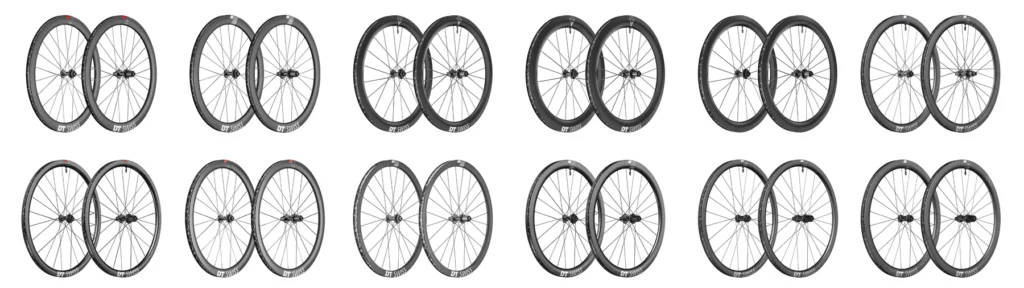
DT Swiss carbon wheels are renowned for their light weight, aerodynamics and stiffness, ideal for demanding road or gravel cyclists. Unfortunately, this recall affects a specific range produced in Vietnam from 1 August 2024, with a DT Swiss identification number (ID) from 2740000 onwards. The models concerned include the ARC series (50, 55 and 65 mm rim depths), ERC (35 and 45 mm), CRC (35 and 45 mm) and HEC (45 mm). This covers flagship references such as the ARC 1100 DICUT 50/55/65, ERC 1100 DICUT 35/45 and the CRC 1400 SPLINE 35/45. Note that shallower or deeper profiles (such as 38, 62, 80 or 85 mm) and rims made in Poland are excluded – a relief for many users.
Understanding rim delamination
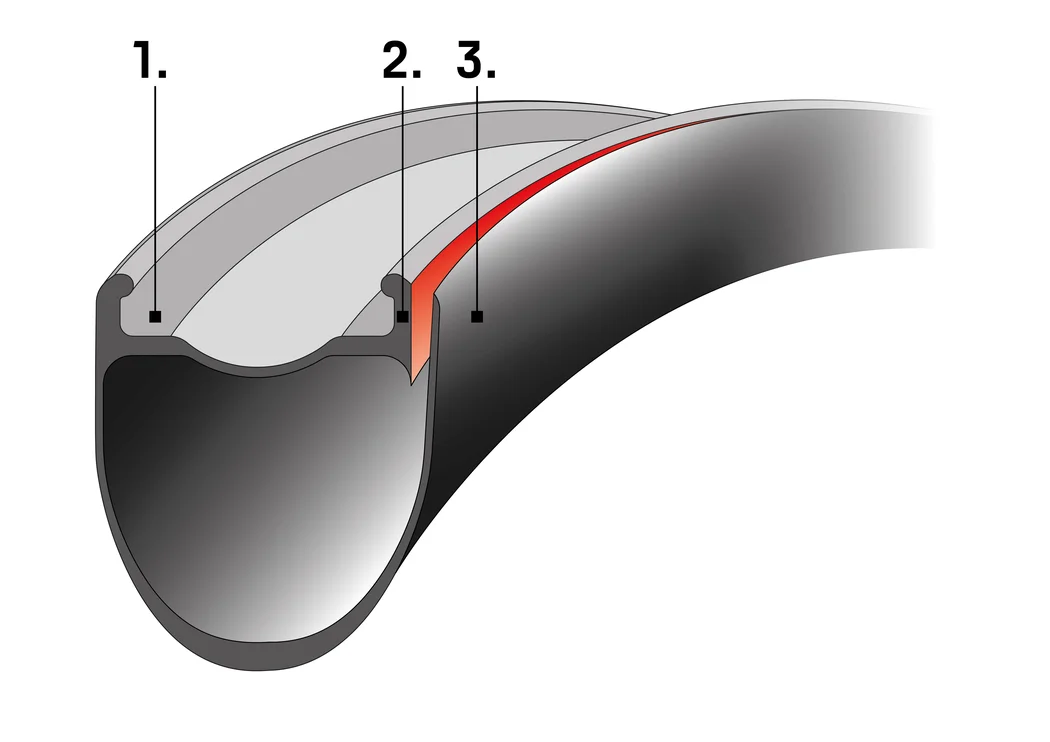
The problem? Spontaneous delamination at the rim hook, the small lip that holds the tyre in place. Imagine the carbon layers separating like crumbling puff pastry: this weakens the rim bed without touching it directly, but the overall structural integrity is compromised. According to DT Swiss’s analyses, the defect stems from similar manufacturing processes at its Vietnamese site, even though no incident has been reported on the ARC so far. The risks are serious: a rim that fails mid-descent or mid-sprint can cause loss of control, serious crashes, injuries (fractures, head trauma) or even, in the worst case, death. It is a rare scenario, but potentially catastrophic, especially at high speed.
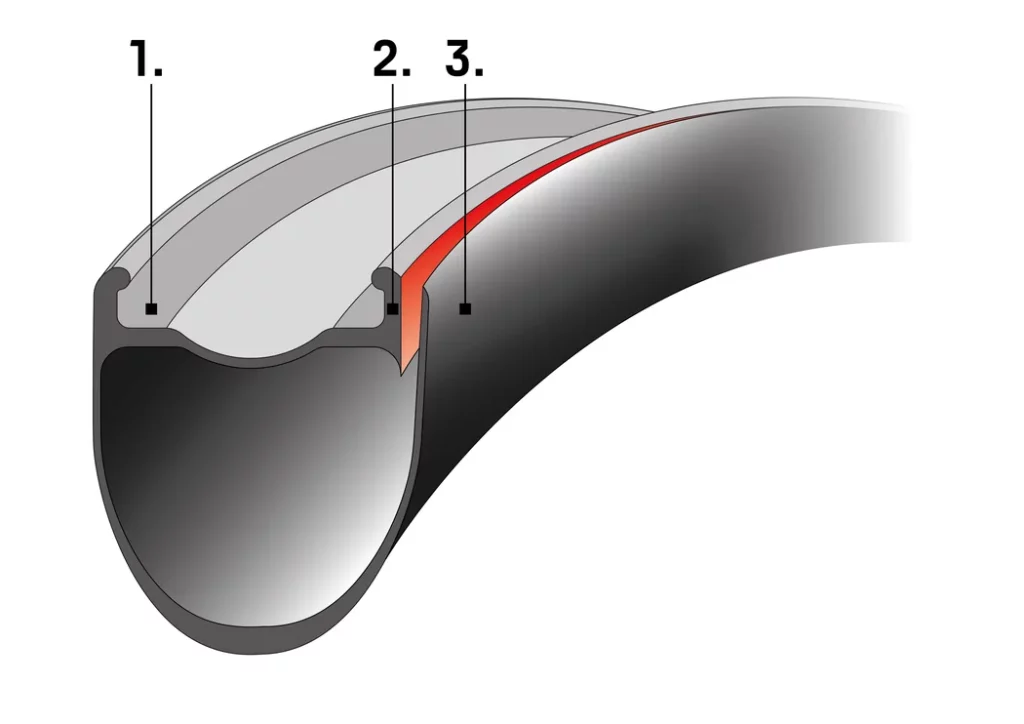
Figures and financial consequences
In terms of statistics, DT Swiss speaks of a “small number” of reported incidents – a handful of cases reported in mid-July 2025, mainly on the ERC/CRC/HEC. No large official figures, but our sources confirm a “limited number” of failures, with no widespread surge in accidents. In Canada, for example, there were zero reports of delamination as of 15 July 2025 according to Health Canada. This suggests an isolated problem, but one serious enough to justify a precautionary recall on thousands of units (they have been shipping hundreds of boxes a day since August).
As for the cost to DT Swiss? It is hard to get precise figures, but we can venture an estimate based on volume. With hundreds of returns a day and rigorous testing (stricter than ISO 4210), plus free replacements (identical or better wheels), shipping costs and compensation, the financial impact could approach several hundred thousand euros. Add the reputational damage and production stoppages: it is a heavy blow for a premium brand, but proof of its commitment to safety. Swiss Side, its partner, is also affected with Hadron models (450, 500, 550, 650 mm), adding to the scale.
The recall procedure: step by step
If your wheels match, stop riding them immediately! Here is the official procedure, optimised for a quick resolution:
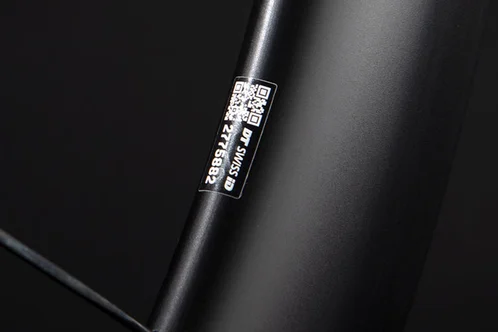
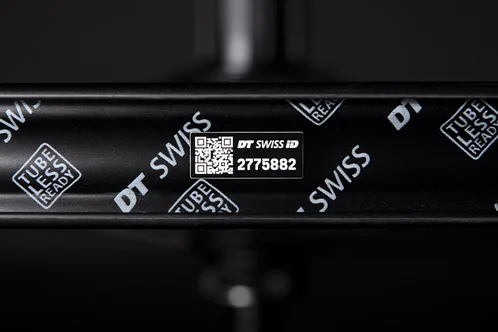
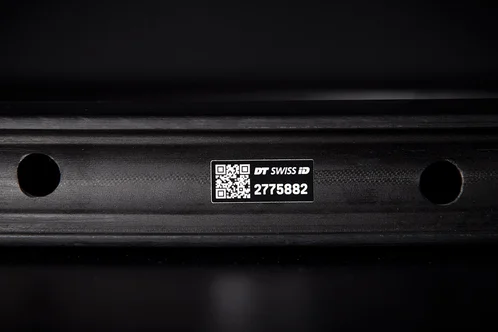
- Check your product: Find the DT Swiss ID (sticker with a QR code and 7-digit number) on the rim, often near the valve. Scan the QR code or enter the number on DT Swiss’s dedicated website. If it is ≥2740000 and listed as affected, move on to the next step. Note: even if the 7-digit batch appears “potentially affected”, only scanning the QR code (full 12-digit number) confirms it.
- Register: On the recall page, fill in the questionnaire with your contact details. DT Swiss will contact you within 24h with personalised instructions. If you have a wheelset (front/rear), register them together, even if only one is affected.
- Order the shipping boxes: Via a link provided, get two free boxes per registration (with assembly instructions). Prepare your wheels: remove tyres, discs and cassette if possible (otherwise, send them as they are; costs reimbursed via your local dealer).
- Send and wait: Ship via the indicated carrier (costs covered). DT Swiss tests within 10-20 working days max (capacity increased since August 2025). Internal tests check the structure beyond the standards.
- Return or replacement: If OK, wheels are sent back with a “Quality Check” sticker and can be verified via QR code (whitelist updated within 2 days). If defective, immediate free replacement.
For Swiss Side Hadron wheels, follow the same procedure via DT Swiss.
This recall, although frustrating, reinforces confidence in DT Swiss: they acted quickly, extended it to the ARC as a precaution, and are handling massive volumes.