
Bike rim and tyre compatibility: the ETRTO calculator and safety guide
Ten years ago, it was simple: a road rim was 17 mm wide and you fitted 23 mm tyres to it. Today, bike rim and tyre compatibility is chaos. Modern rims reach 25 mm of internal width on the road (wider than mountain bike wheels from 15 years ago!), and the hookless standard imposes strict safety rules.
One question comes up every day in the workshop: “Can I fit my 25 mm tyres to my new wheels?” or “What is the widest tyre my gravel bike will take?”.
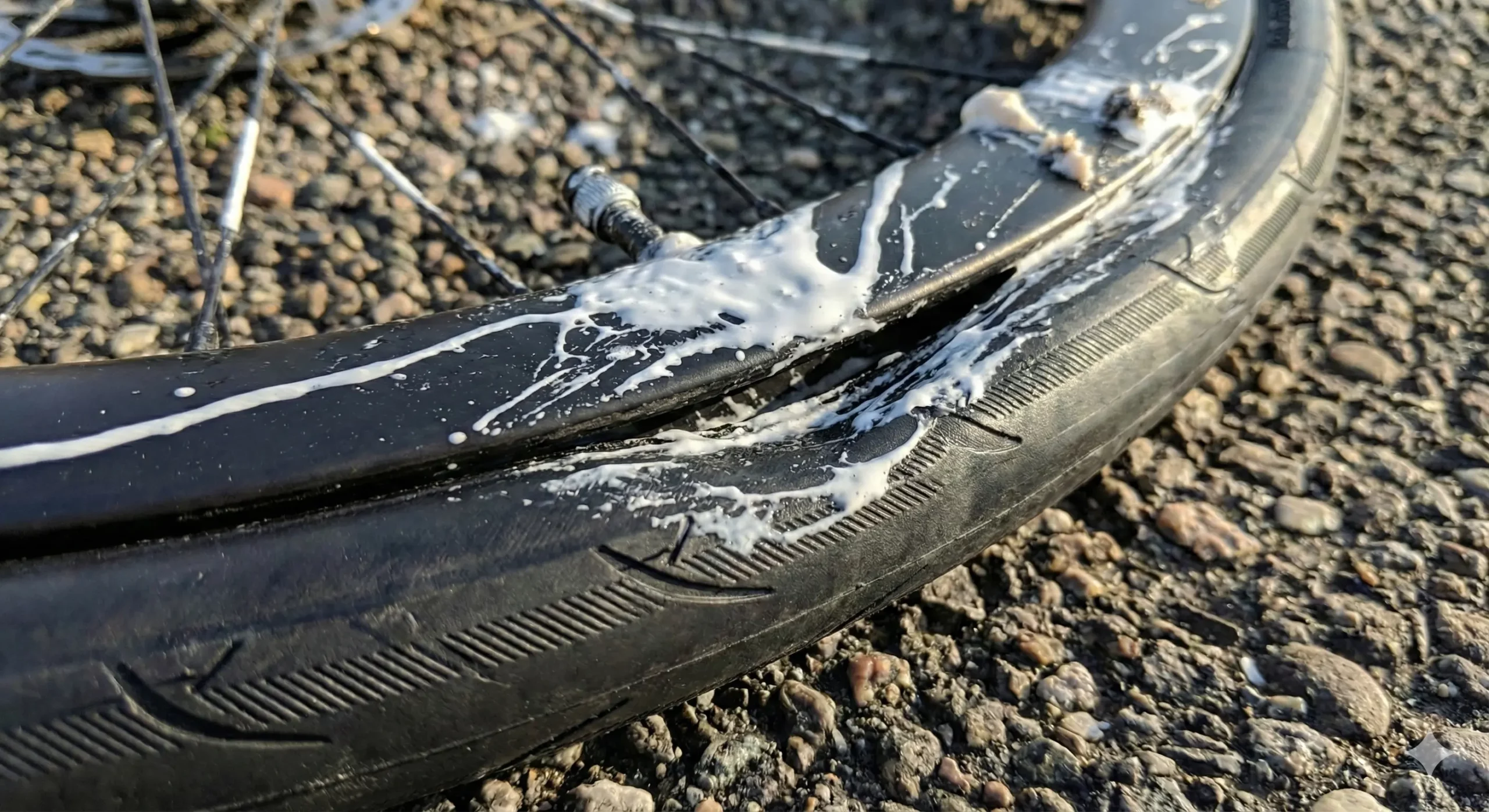
Fitting a tyre that is too narrow on a wide rim exposes you to a potentially fatal risk of the tyre blowing off the rim. Fitting a tyre that is too wide costs you handling precision. So that you never have to wonder again, I coded this calculator based on the latest ETRTO 2024 standards (European Tyre and Rim Technical Organisation) and ISO standards.
Your bike rim and tyre compatibility calculator (ETRTO)
First select your discipline, then the internal width of your rim to find out which tyres are compatible and safe.
Rim / Tyre compatibility
Contents
Understanding internal rim width
This is the key measurement. Forget the rim’s external width (which matters for aerodynamics). What counts for safety is the distance between the two hooks (or vertical walls) inside the rim. That is what determines how the tyre will seat.
How do you measure it?
If you don’t know the manufacturer’s figure, remove your tyre. Take a vernier caliper and measure the exact inside gap between the rim walls. That is the value (for example 19 mm, 21 mm, 23 mm) to enter in the calculator above.
The 3 golden rules of compatibility
1. The light bulb rule (lightbulb effect)
This is the “old” standard. A wide tyre was fitted to a narrow rim. The tyre formed a bulb that stuck out well beyond the rim. The problem: At low pressure, the tyre squirms, twists in corners and gives a vague feeling. That is bad for efficiency and precision.
2. The bell rule (bell shape)
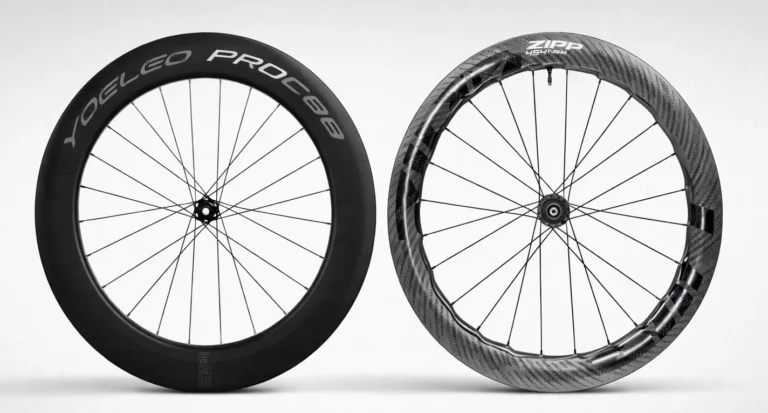
This is the modern “aero” and performance trend. The tyre sidewalls are straight, in line with the rim. The advantage: Air flows better (aero gain), the tyre is better supported and you can run lower pressure without vagueness. This is what brands like Zipp or Enve aim for.
3. The danger zone (too narrow)
If you fit a tyre narrower than the rim (or barely wider), the tyre bead will not be held firmly enough by the pressure. The risk: The tyre blowing off immediately at the first corner or impact. That is why the new 23 mm or 25 mm rims often prohibit 23 mm tyres and sometimes even 25 mm ones.
The critical case of hookless (TSS)
Hookless rims (straight walls without hooks, Tubeless Straight Side type) are increasingly common on road and gravel. They are lighter and stronger, but they forgive no mistakes.
🚨 Hookless survival rules
Which tyre should you choose for your rim?
Here are the most common combinations I recommend in the workshop for a perfect balance between performance and safety.
FAQ: your technical questions
Does a 25mm tyre really measure 25mm?
Rarely! The stated width is theoretical. On a modern wide rim (21mm+), a 25mm tyre will spread out and actually measure 27mm or 28mm. That is why you should always check the space available in your frame (clearance) before buying.
What is ETRTO?
The European Tyre and Rim Technical Organisation. It is the body that defines the ISO standards (notably 5775) to make sure tyre and rim manufacturers speak the same language. The 2023/2024 standards have changed a great deal to make tubeless and wide rims safer.
Can I fit an MTB tyre to a gravel wheel?
Yes, as long as the diameter is the same (700c / 29 inches) and the rim width is compatible. A 25mm gravel rim will happily take a 2.10 inch (53mm) XC MTB tyre.


Leave a Reply