
CULT – Campagnolo
Campagnolo, the renowned Italian brand, continues to innovate for demanding cyclists. Among its flagship technologies, CULT (Ceramic Ultimate Level Technology) bearings stand out for their ability to optimise the performance of carbon wheels and cranksets. Used in high-end products such as the Bora Ultra or Super Record groupsets, they offer exceptional smoothness and durability. Let’s look at this technology in detail.
What is CULT technology?
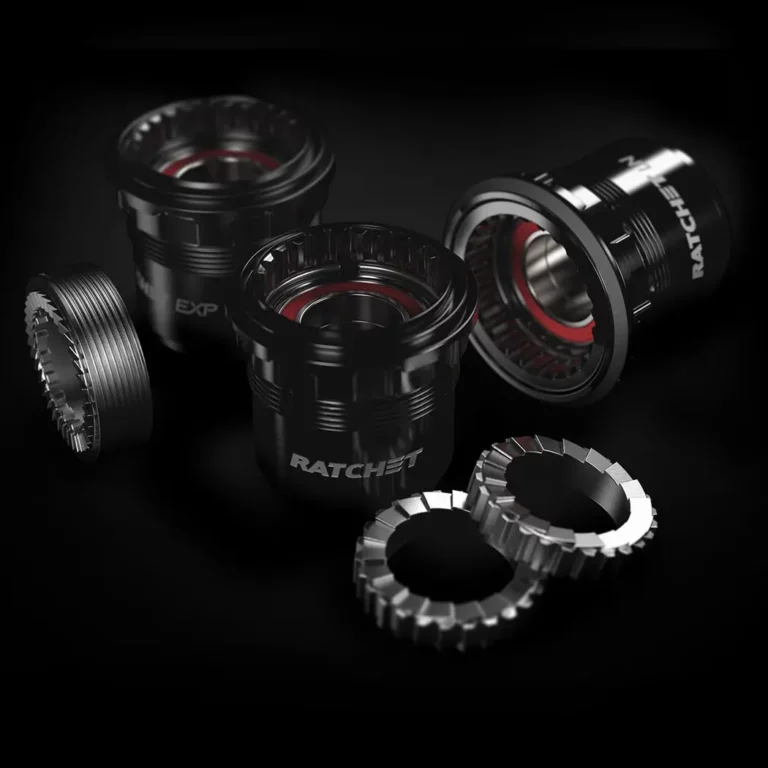
CULT is based on a combination of high-quality ceramic bearings and races in Cronitect® stainless steel, developed by Schaeffler. Unlike standard bearings, these components drastically reduce friction thanks to ceramic balls machined with micrometric precision. Cronitect® steel, which is thermochemically treated, offers greater resistance to wear and corrosion. A strong point: no heavy greasing is required, a thin film of oil is enough to ensure optimal operation.
The benefits for carbon wheels
CULT bearings transform the pedalling experience. Their coefficient of friction is up to nine times lower than that of traditional bearings, which translates into better power transfer – around 3.5 extra watts per pedal stroke according to Campagnolo. On carbon wheels such as the Hyperon Ultra (1,240 g a pair), this smoothness improves responsiveness and reduces energy losses. What is more, their longevity is impressive: tests show a spin time up to 5.5 times longer than that of standard bearings.
Who are these bearings for?
This technology is aimed at cyclists seeking excellence, whether they are racers or keen amateurs. It is found in the hubs of the Bora Ultra WTO carbon wheels or in Super Record Ultra-Torque cranksets. Compatible with 11 and 12 speed drivetrains, it suits a wide range of riding, from the mountains to time trials. Maintenance remains minimal, provided you use a light oil and clean them regularly.
Our recommendations for use
Be careful: using grease cancels out their advantages, so opt for a thin synthetic oil. Regular checks guarantee their performance over the long term.