
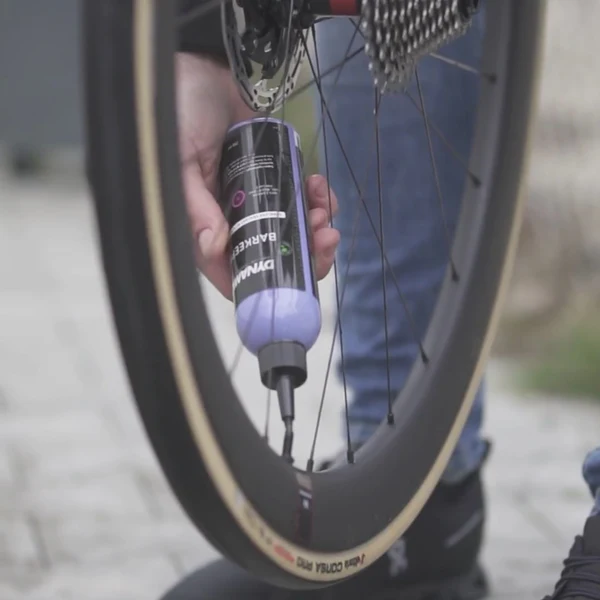
How much tubeless sealant? Exact calculator and guide (MTB, gravel, road)
Going tubeless is probably the most effective technical upgrade a cyclist can make, whether on the road, on gravel or on a mountain bike. No more pinch flats, better comfort, lower rolling resistance. But one question keeps coming up in my workshop: “How much sealant should I put in?”
It is a delicate balance. Put in too much and you add needless weight to your wheels in the most critical place (the rim). Put in too little and the sealant will dry out too quickly and fail to plug the hole the day you ride over a thorn.
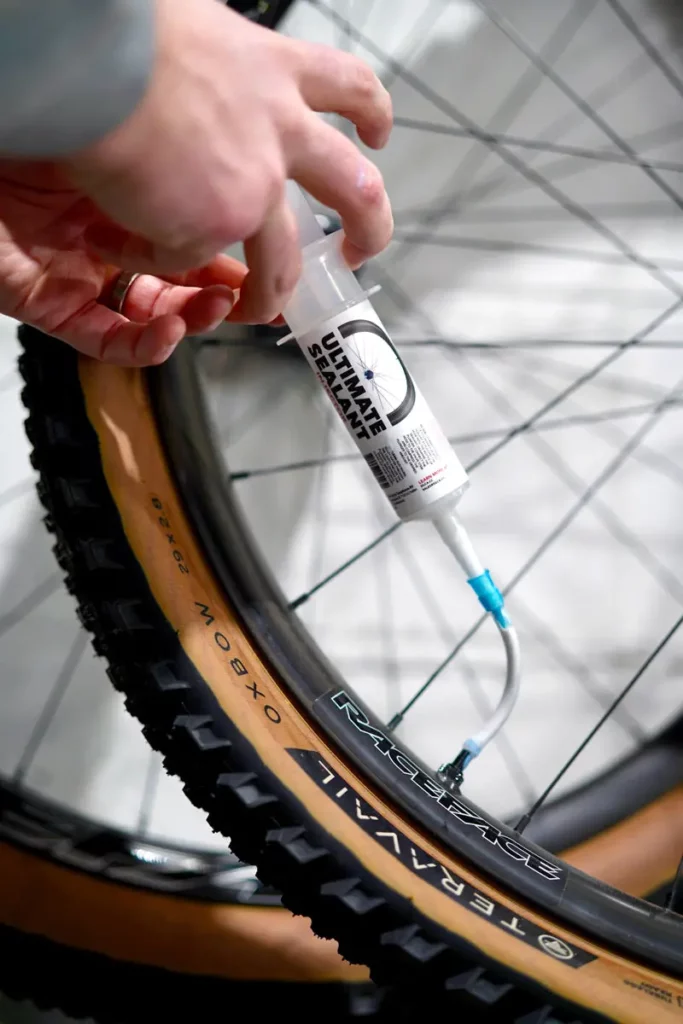
To put an end to guesswork, I developed this free tubeless sealant calculator. It gives you the precise volume (in ml) recommended for your discipline and the size of your tyres.
How much tubeless sealant: your dosage calculator
Select your type of bike and your tyre width to get the ideal recommendation. Don’t forget to use the reminder button to plan your next top-up!
Sealant volume calculator
Table of sealant quantities by tyre width
No time to run the calculator? Here are the volumes it recommends, per wheel, for each type of bike and tyre.
| Bike / wheels | Tyre width | Quantity per wheel |
|---|---|---|
| Road 700c | 23 to 28 mm | 30 to 40 ml |
| Road 700c | 30 to 32 mm | 40 to 50 ml |
| Road 700c | 35 mm | 50 to 60 ml |
| Gravel 700c | 33 to 38 mm | 50 to 60 ml |
| Gravel 700c | 40 to 45 mm | 60 to 70 ml |
| Gravel 700c | 47 to 50 mm | 75 to 85 ml |
| Gravel 700c | 2.1" à 2.25" | 85 to 95 ml |
| Gravel 650b | 40 to 42 mm | 55 to 65 ml |
| Gravel 650b | 47 to 52 mm | 70 to 80 ml |
| MTB 29" | 2.0" | 80 to 90 ml |
| MTB 29" | 2.1" à 2.25" | 90 to 100 ml |
| MTB 29" | 2.3" à 2.5" | 100 to 110 ml |
| MTB 29" | 2.6" à 2.8" | 120 to 130 ml |
| MTB 27.5" | 2.1" à 2.25" | 85 to 95 ml |
| MTB 27.5" | 2.3" à 2.5" | 95 to 105 ml |
| MTB 27.5" | 2.6" à 2.8" | 115 to 125 ml |
| MTB 26" | 1.9" à 2.0" | 70 to 80 ml |
| MTB 26" | 2.1" à 2.2" | 80 to 90 ml |
| MTB 26" | 2.3" à 2.5" | 90 to 100 ml |
Contents
Why is precise dosing vital for your wheels?
Many cyclists think that "the more, the better". That is a technical mistake. Sealant has two distinct jobs:
- Sealing the casing: Especially on "Tubeless Ready" tyres (as opposed to "pure tubeless" ones), the sidewalls are porous. The sealant has to fill these micro-pores.
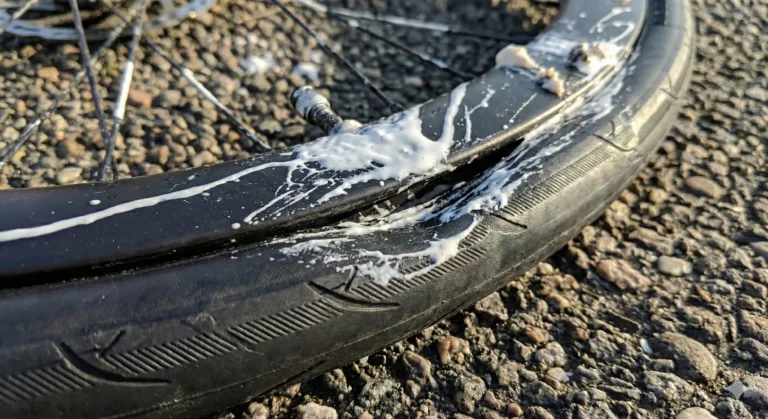
- Plugging punctures: In the event of a puncture, the air pressure must force the latex into the hole so that it coagulates and forms a plug.
The enemy is rotating weight
Adding 50ml of unnecessary sealant per wheel adds 100g to the pair. But be careful: 100g on the wheels (rotating mass) takes far more energy to accelerate than 100g on the frame. On a road or XC bike, overdosing kills the liveliness of your carbon wheels.
Detailed guide by discipline
Your needs are not the same if you ride at 7 bar on tarmac or at 1.4 bar in the mud. Here are the specifics you need to know.
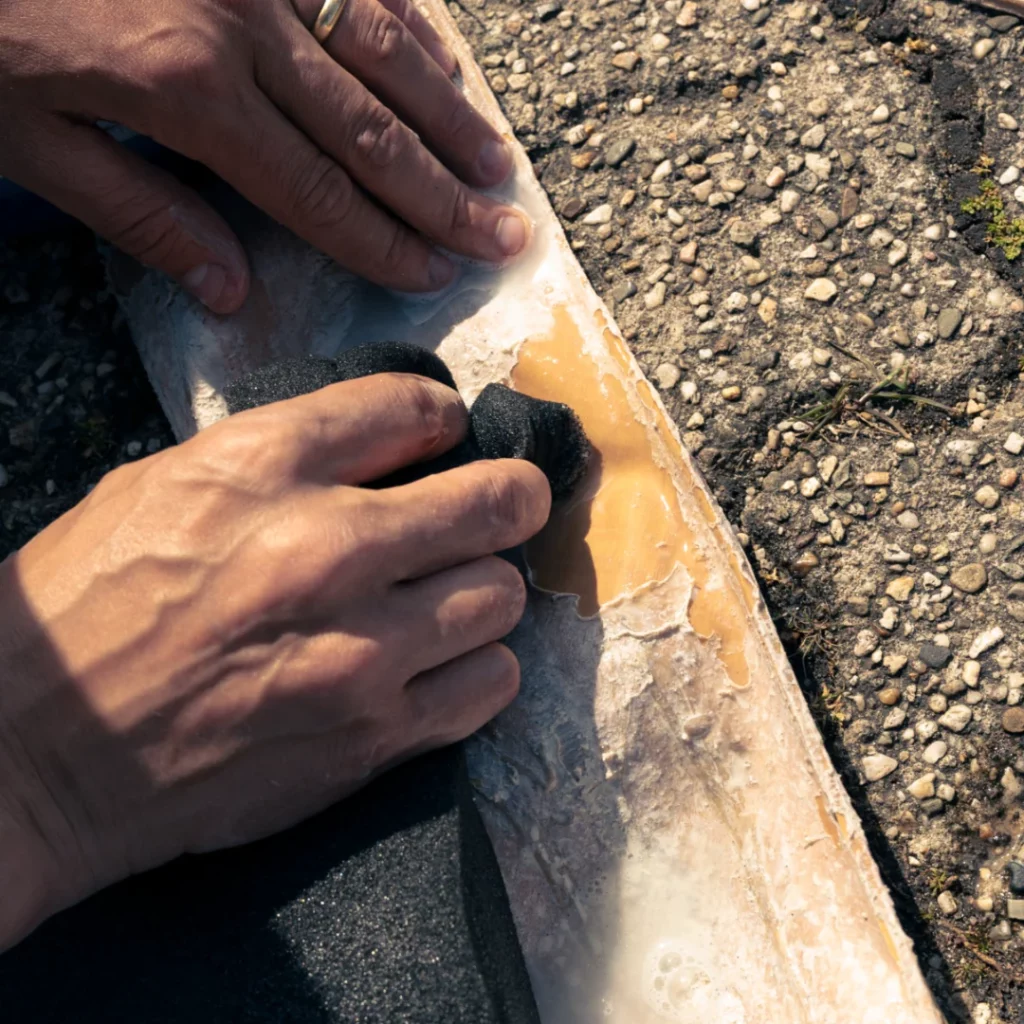
Maintenance: when should you top up the sealant?
This is the number one cause of disappointment with tubeless: the sealant dries out! Its lifespan is not infinite. It varies with:
- Heat: In high summer or when stored in a hot garage, sealant can dry out in 2 months.
- Humidity: In winter, it can last 4 to 6 months.
- Use: The more you ride, the more the sealant is stirred and stays active. On a bike that is not ridden, the sealant sits still and coagulates at the bottom of the tyre.
 It's already too late!
Beware of CO2 cartridges!
If you inflate with a CO2 cartridge after a puncture, be aware that the gas comes out at -50°C. This thermal shock freezes the latex and often solidifies it instantly (the "cauliflower effect").
Tip: If you have used CO2, drain and replace your sealant as soon as you get home, because it is probably no longer effective.
My product recommendations
After years of testing dozens of bottles in the workshop, here are the only 2 I recommend without hesitation for their reliability.
Can you mix two brands of sealant?
No, never! The chemical bases (ammonia, synthetic or natural latex) differ. Mixing them often causes an immediate chemical reaction that turns your sealant into a solid ball of rubber.
Should you clean out the old sealant before adding more?
Ideally, yes. If the old sealant is just a dry film on the tyre, leave it (it helps keep the tyre sealed). But if there is still a puddle of old brown sealant, suck it out or soak it up. Do not add new sealant on top of old, expired sealant.
Can you put sealant in an inner tube?
Yes, it is possible if the inner tube has a removable valve core. It works well for small thorns, but it is less effective than a true tubeless setup because an inner tube tears more easily than a tyre.
Going further
Now that your tyres are protected and sealed, there remains the most important parameter for your comfort and efficiency: tyre pressure. A tubeless tyre with plenty of sealant but at the wrong pressure will not deliver its full potential.

Leave a Reply