Mavic
Founded in 1889 in Lyon, France, by Charles Idoux and Lucien Chanel, Mavic – an acronym for Manufacture d’Articles Vélocipédiques Idoux et Chanel – went from making modest parts to worldwide fame in the field of wheels. From its early days in the shadow of the velocipede to its emblematic role in the Tour de France, we trace its journey here, rooted in French tradition and marked by periods of glory and of challenge.
The history of Mavic: from Lyon to the top of cycling
1889-1930: first steps in a changing world
The history of Mavic begins in 1889 in Lyon, a prosperous industrial city in the heart of France. Charles Idoux and Lucien Chanel founded the Manufacture d’Articles Vélocipédiques Idoux et Chanel at a time when the bicycle, still called the “velocipede”, was undergoing a revolution with the arrival of the “safety bicycle” – a model with two equal-sized wheels and chain drive. The company started modestly, producing mudguards, pedals and metal parts for these new machines. The context was favourable: cycling was becoming a popular pastime in Europe, carried by a middle class in search of mobility.
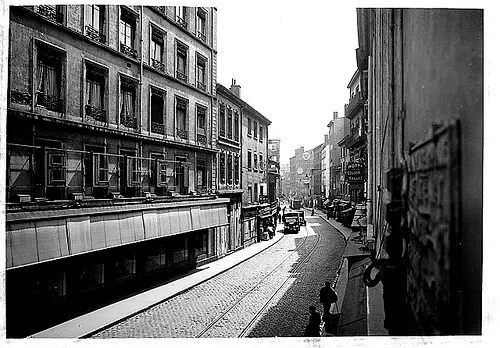 The first premises of the Manufacture d’Articles Vélocipédiques Idoux et Chanel
In the 1890s, Mavic remained a small business, operating in the shadow of more established manufacturers. Shortly after its creation, the founders handed over the management to Henry Gormand, a Lyon industrialist who took the reins at the turn of the century. Under his leadership, the company widened its scope, making wooden rims – the standard of the time – and accessories for the emerging racing bikes. In the 1920s, as the Tour de France, launched in 1903, grew in prestige, Mavic began to take an interest in racing, steering its production towards more technical solutions under Gormand’s impetus.
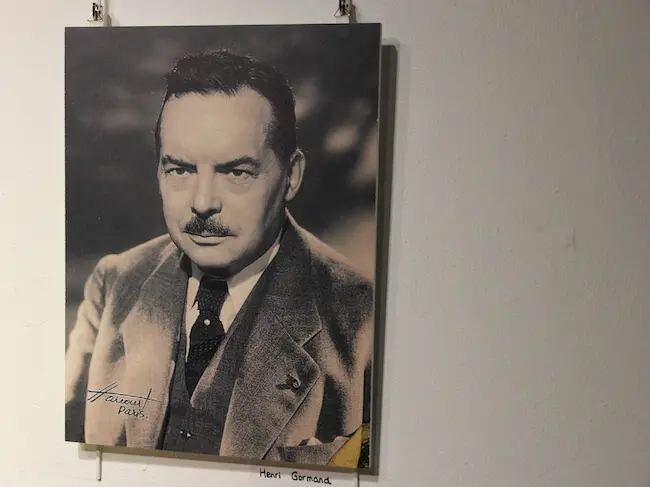 Portrait of Henry Gormand
1930-1950: emergence and the adoption of aluminium
The 1930s marked a significant turning point for Mavic. In 1934, the company introduced a major innovation: the Duralumin rim, a light, strong aluminium alloy, weighing 750 g against 1.2 kg for the steel or wooden rims then dominant. Known as the “Dura”, this rim caught racers’ attention. A famous anecdote surrounds its launch: at the 1934 Tour de France, Antonin Magne, winner of the 1931 edition, used these Dura rims painted in wood colours to get around the strict UCI rules, which then allowed only traditional rims. Magne dominated the race, holding the yellow jersey from the second stage to win the Tour, giving Mavic a resounding victory and its first worldwide recognition.
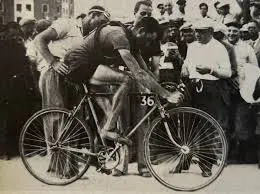 Antonin Magne celebrating his win
In the 1930s, Mavic also diversified its activities, producing children’s pedal cars with spoked wheels and chain drive, a niche market that temporarily broadened its portfolio. The Second World War interrupted this progress. Under occupation, Lyon saw its factories slow down, but Mavic kept a minimal level of activity thanks to military orders for metal wire and light parts. After the war, in the 1940s, the company picked up again, benefiting from reconstruction and the renewed enthusiasm for cycling in France. The Dura rims established themselves as a standard among cyclists, strengthening Mavic’s position as a maker of reliable components.
1950-1970: consolidation and modernisation
The 1950s and 1960s were a period of steady growth for Mavic, as professional cycling became more organised and events such as the Tour de France captivated an ever wider audience. Under the leadership of the Gormand family, with Bruno, Henry’s son, playing a key role, Mavic perfected its aluminium rims and extended its production to other essential components: hubs, pedals and cranksets. Lyon remained the company’s nerve centre, but its products began to be exported across Europe and beyond, carried by a reputation for quality combining technical rigour and French heritage.
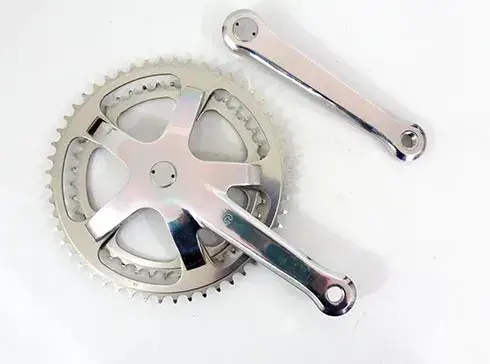 Mavic Starfish crankset
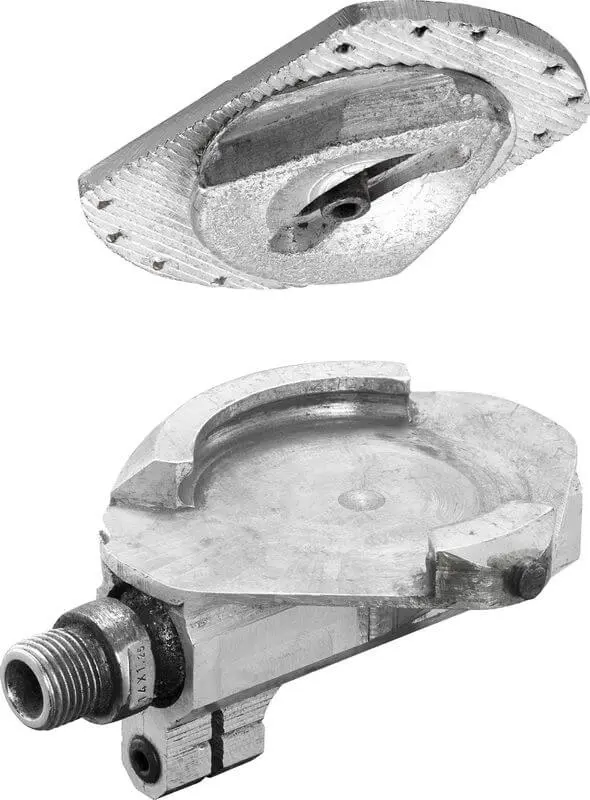 The first clipless pedals
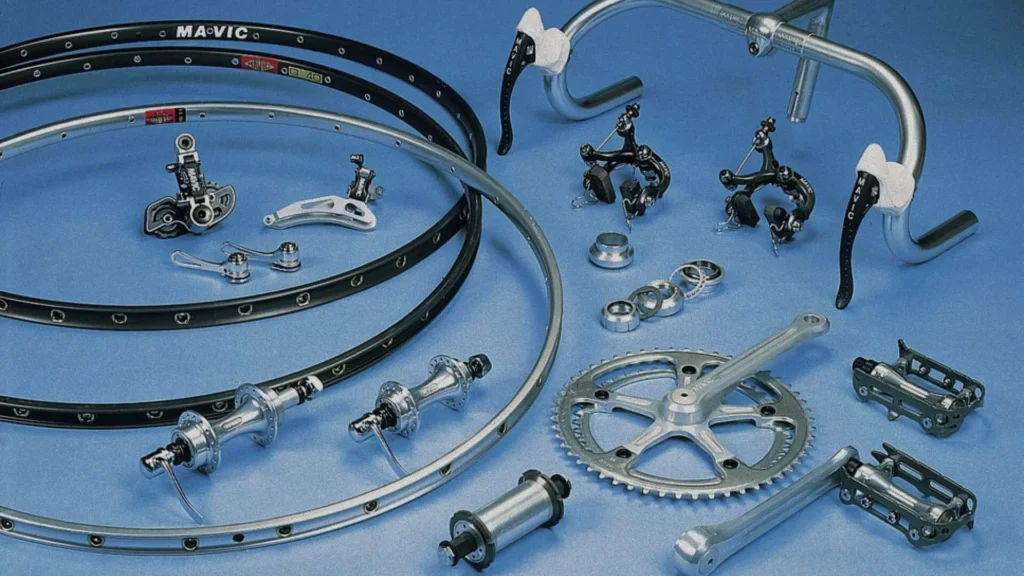 The very first Mavic groupset
In the 1960s, Mavic strengthened its commitment to racers’ needs. The company invested in more modern production equipment and began working with professional teams to test its components in real conditions. This period saw Mavic lay the foundations for a stronger presence in top-level cycling, while remaining a family business attached to its Lyon roots.
1970-1990: the golden age and the institution of neutral service
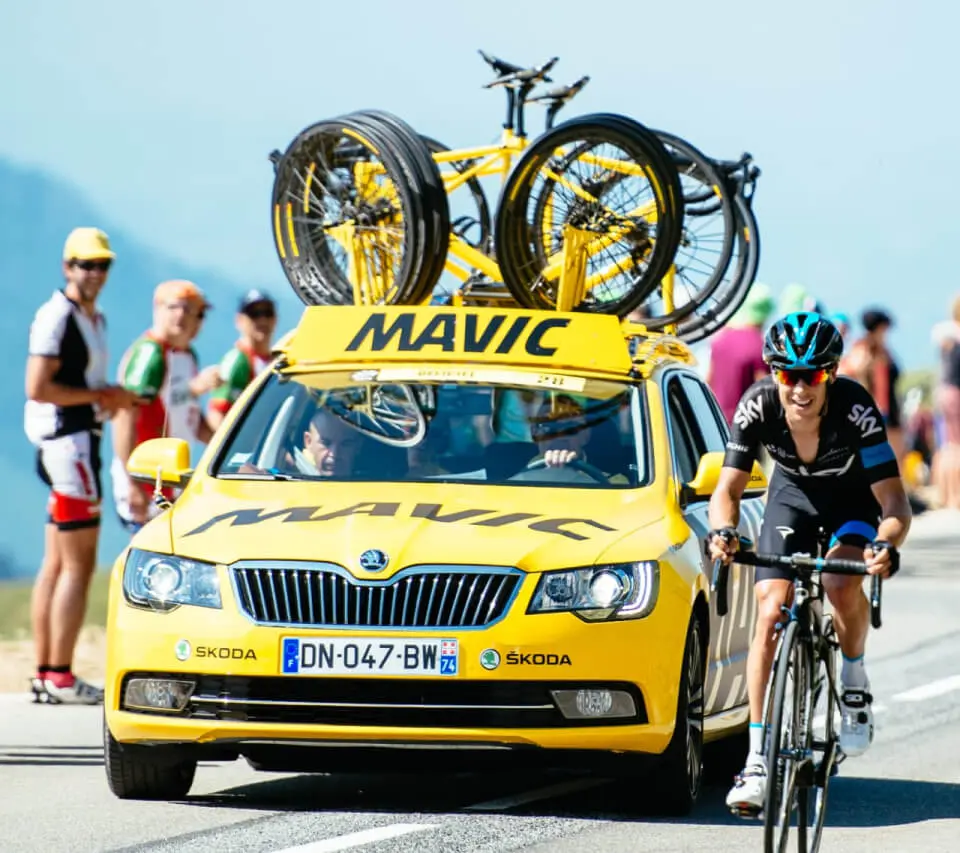
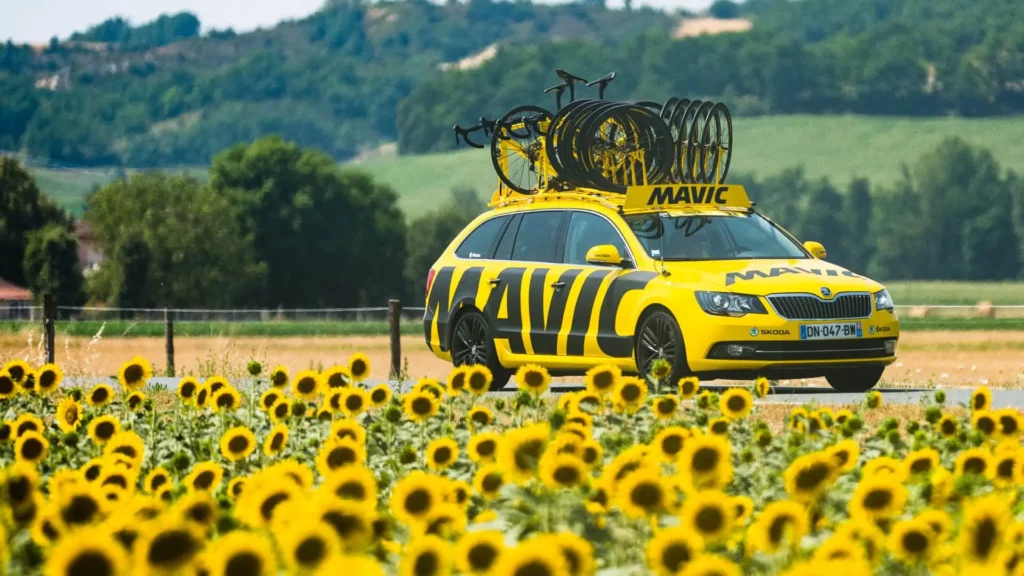
The 1970s propelled Mavic to the forefront of world cycling. In 1972, Bruno Gormand, then chairman, launched an innovative project: a neutral support service for riders, regardless of their team. Tested at the Critérium du Dauphiné Libéré in 1972, the concept was made official at Paris-Nice in 1973, with Mavic’s yellow cars following the peloton to provide spare wheels and quick repairs. This service became an institution at the Tour de France, boosting the brand’s visibility and its essential role in the big races.
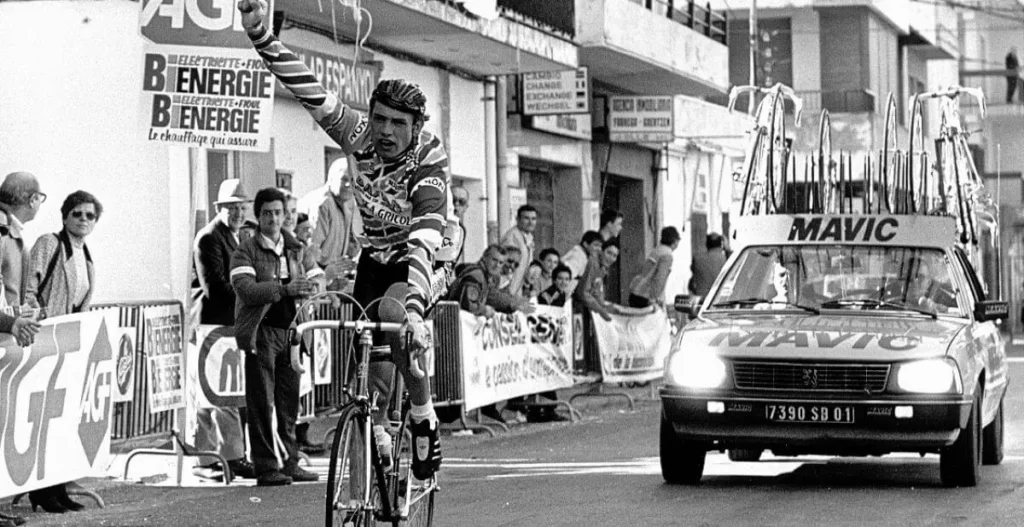
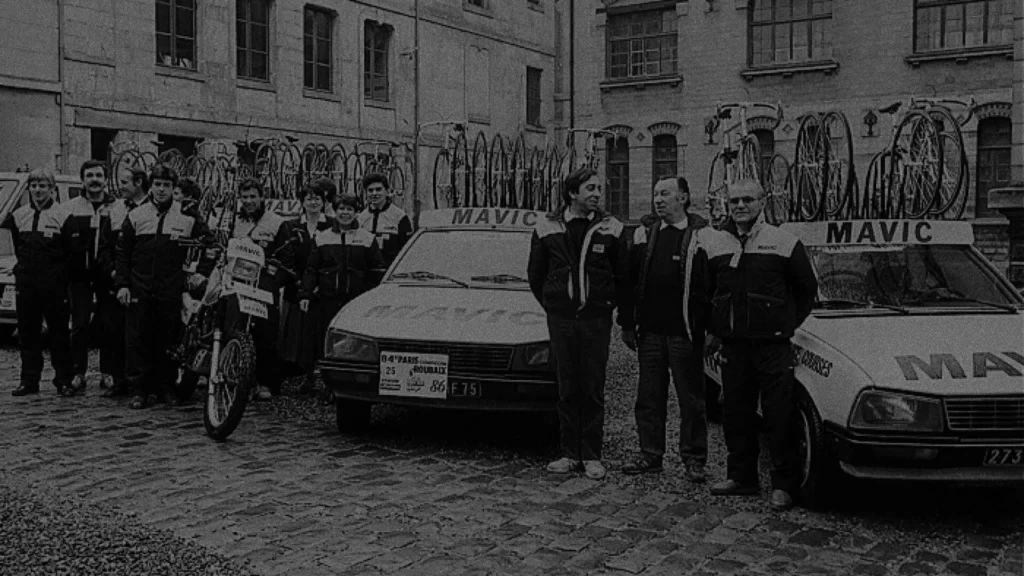
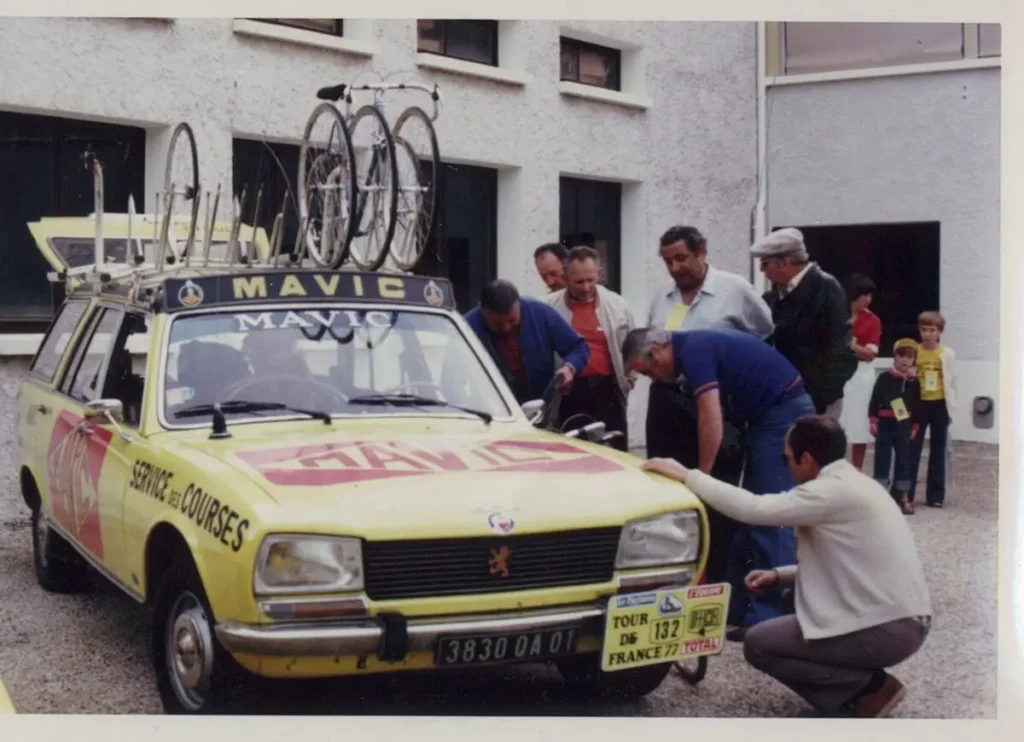
In 1979, Mavic launched “Tout Mavic”, a complete groupset comprising hubs, cranksets, pedals and rims, which equipped well-known riders in major races. The 1980s confirmed this dominance, with a growing presence in the professional peloton. In 1985, the tragic death of Bruno Gormand in a car accident shook the company, but his wife, Cécile Gormand, took over the management and held the course. In 1989, Mavic celebrated a historic victory when Greg LeMond won the Tour de France on a bike fully equipped by the brand, consolidating its status as a leader in performance cycling.
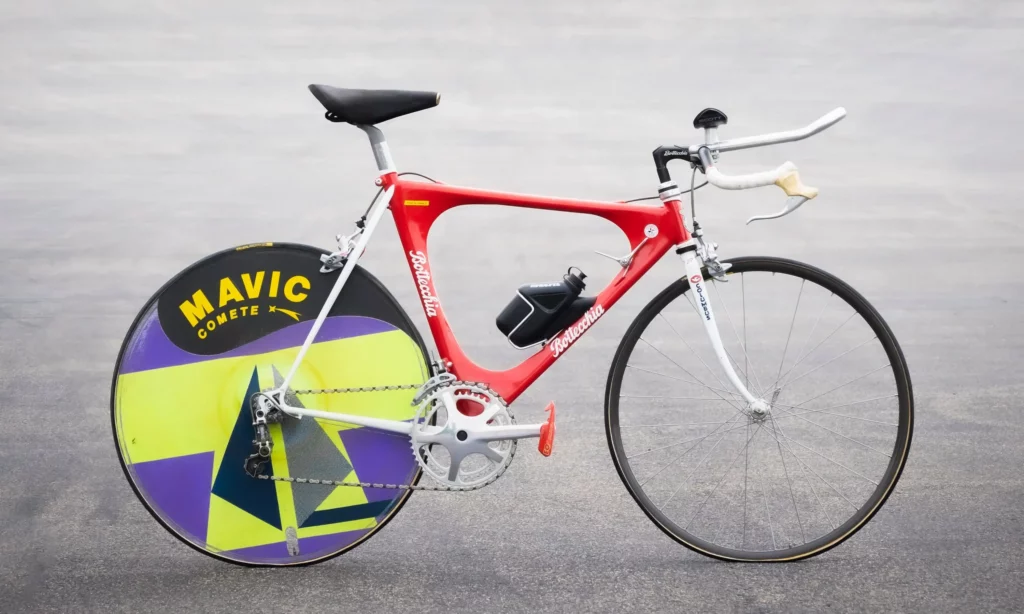 Greg LeMond’s famous “Mavic” bike
1990-2010: global expansion and major innovations
Under Cécile Gormand’s leadership, the 1990s marked a phase of international expansion for Mavic. In 1994, Cécile orchestrated a management buy-out, allowing four managers, backed by an investor, to buy Mavic. That same year, Mavic revolutionised cycling with the launch of the Zap groupset, the first electronic shifting system on the market. Introduced in 1994, Zap offered precise shifting via electrical controls, a pioneering advance well before Shimano’s Di2 or Campagnolo‘s EPS, although its adoption remained limited against the dominant mechanical groupsets of the time. In 1996, the brand was acquired by Salomon, a French winter sports equipment maker, which merged with Adidas in 1998 to form Adidas-Salomon. In 1999, Mavic introduced two major innovations: the UST (Universal System Tubeless) system, developed with Michelin and Hutchinson, which does away with inner tubes to reduce punctures and improve grip, becoming a benchmark in mountain biking before spreading to the road; and the wireless Mektronic groupset, an evolution of Zap. Mektronic, launched in 1999, used radio transmission for cable-free shifting and was tested by the Once team at the Tour de France, but its adoption remained marginal because of its complexity and cost.
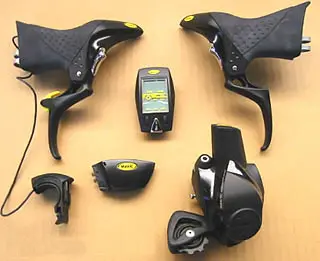 Mektronic groupset
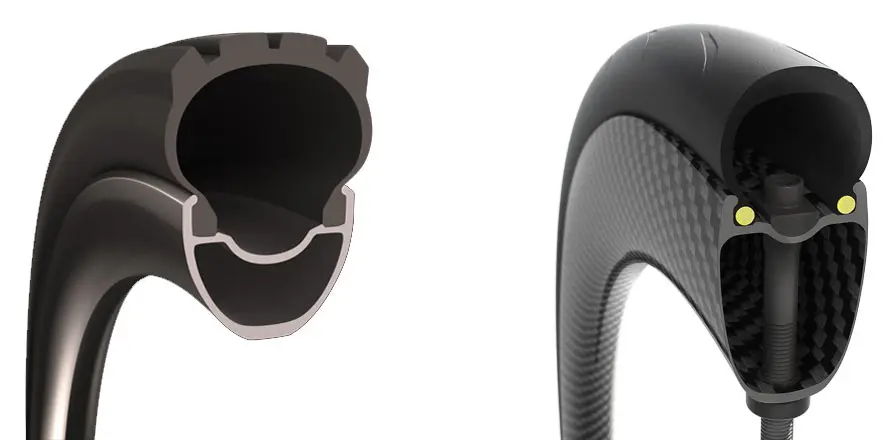 UST system
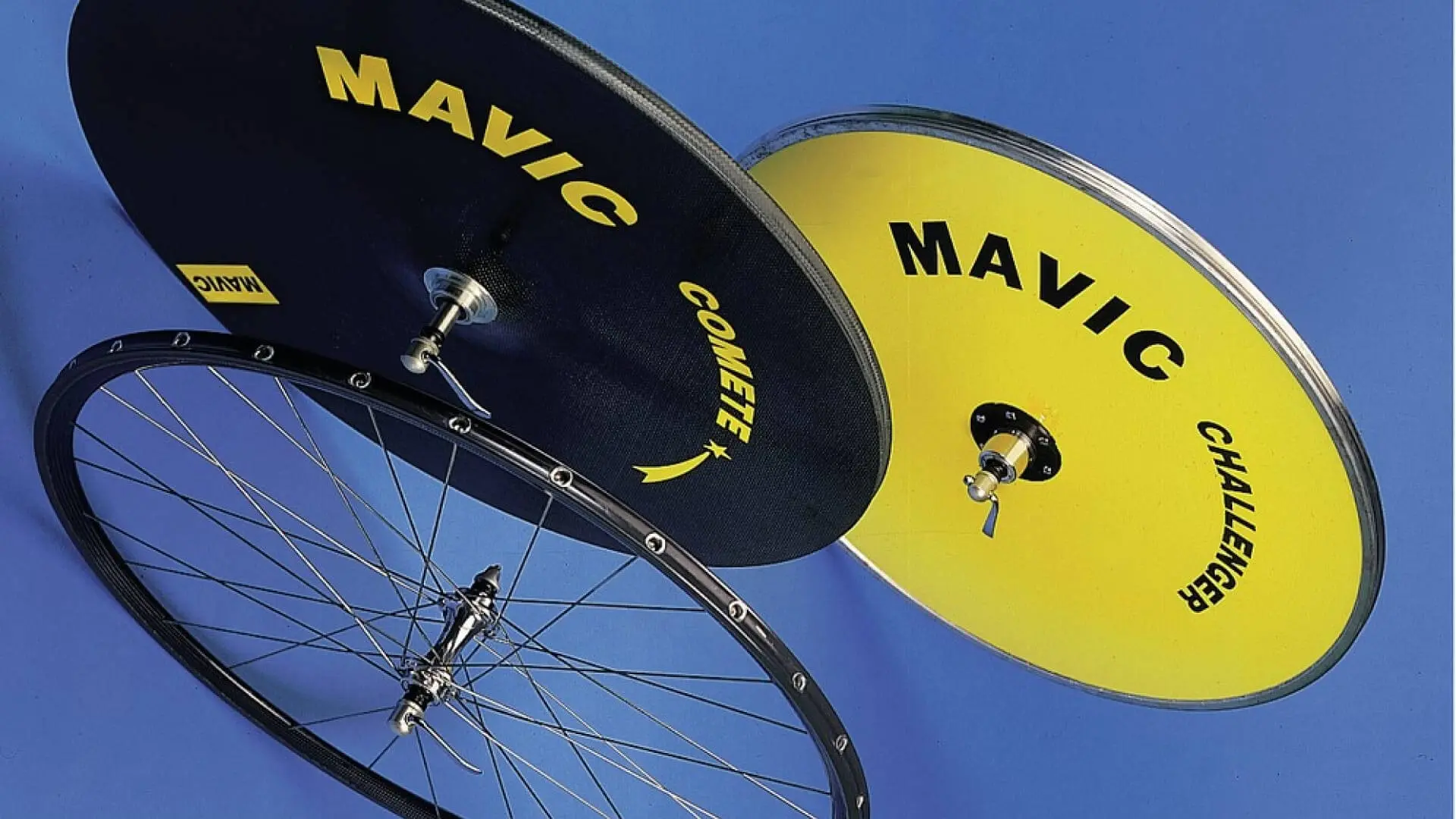
It was also in the 1990s that the story of the Cosmic wheel took off. In 1985, Mavic marketed the Comète carbon fibre disc wheels, followed in 1989 by the Comète “+ and -“, a version with peripheral pockets allowing steel weights of 130 to 780 g to be adjusted according to the needs of the event – a bold idea to optimise inertia. This innovation culminated in 1989 when Greg LeMond used a Comète disc wheel to win the Tour de France, beating Laurent Fignon by 8 seconds in a memorable time trial. This success inspired the launch in 1994 of the Cosmic, a carbon wheel designed to combine aerodynamics and low weight, which became a symbol of performance for road cyclists. Tested on the track as early as 1984 with the French team at the Los Angeles Olympics, then refined with the 3G three-spoke wheel that dominated in Barcelona in 1992, the Cosmic line evolved further with the Cosmic Ultimate, made entirely of carbon in the Annecy workshops, embodying Mavic’s French know-how.
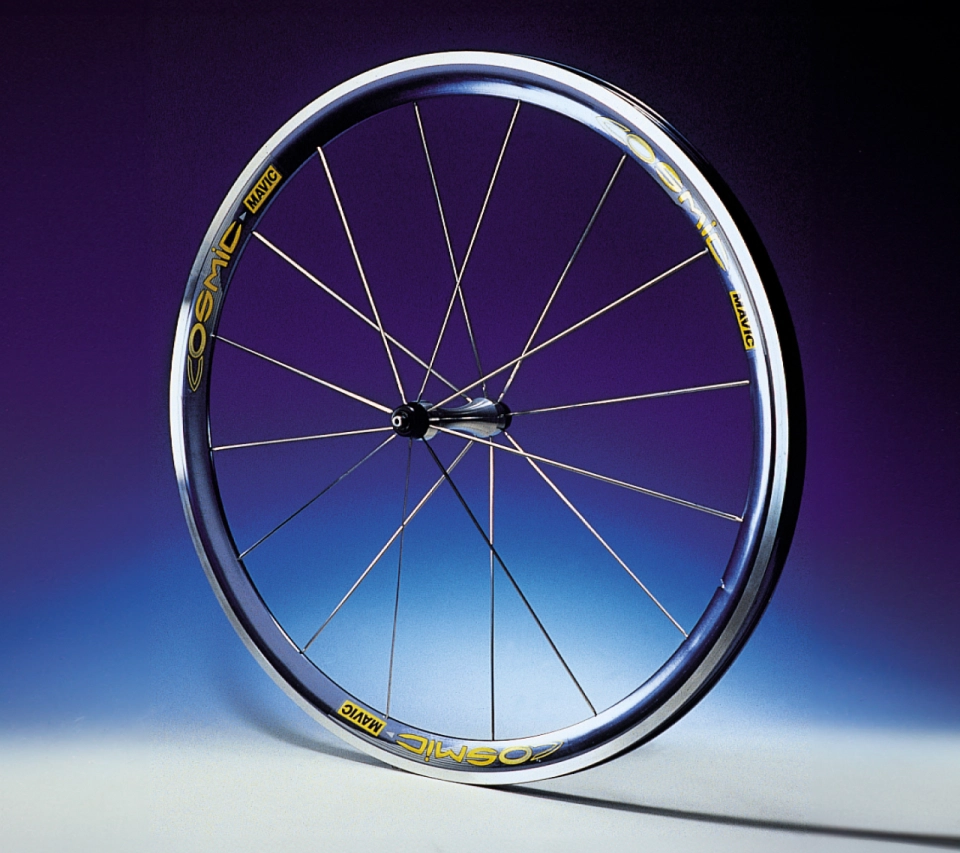 The first Cosmic…
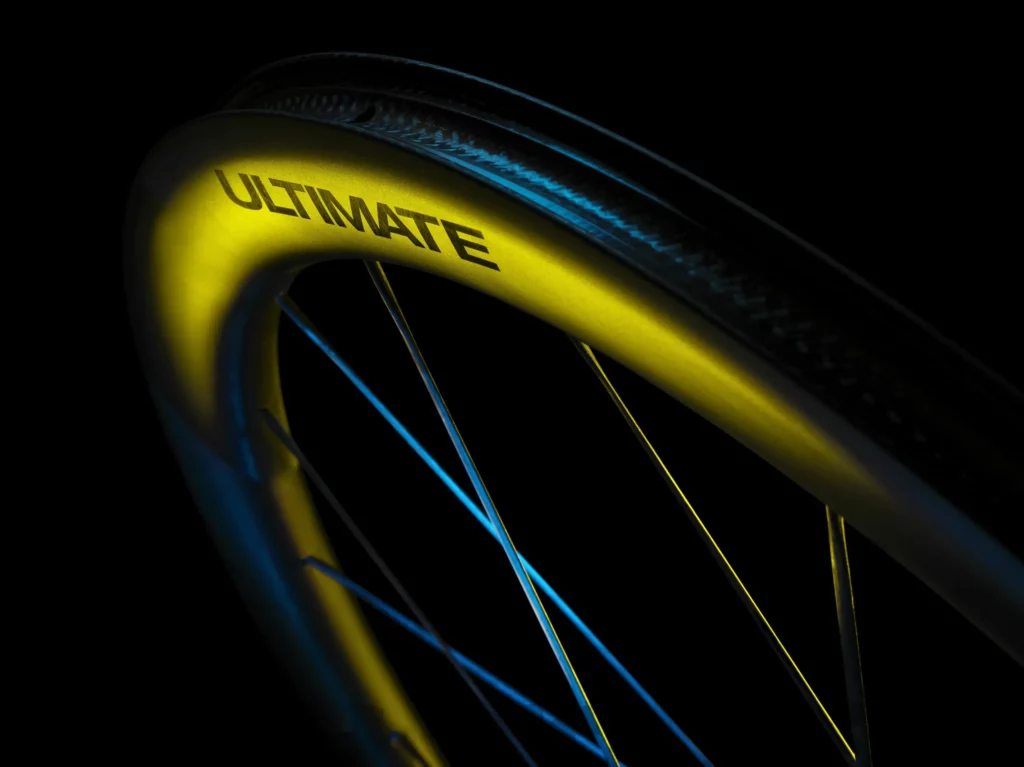 … and the latest generation
In 2005, the group came under the control of Amer Sports, a Finnish conglomerate, beginning an era of more industrialised production. Mavic moved its headquarters to Annecy, at the foot of the Alps, while keeping a rim production plant in Saint-Trivier-sur-Moignans. This period saw the company strengthen its role in the Tour de France, where its neutral service continued to support the peloton with greater efficiency. Internationalisation accelerated, with products distributed in key markets such as the United States and Asia, while Mavic kept its French identity despite the changes of ownership. Innovations such as Zap, Mektronic, UST and the Cosmic bear witness to the brand’s ambition to push the technological limits of cycling.
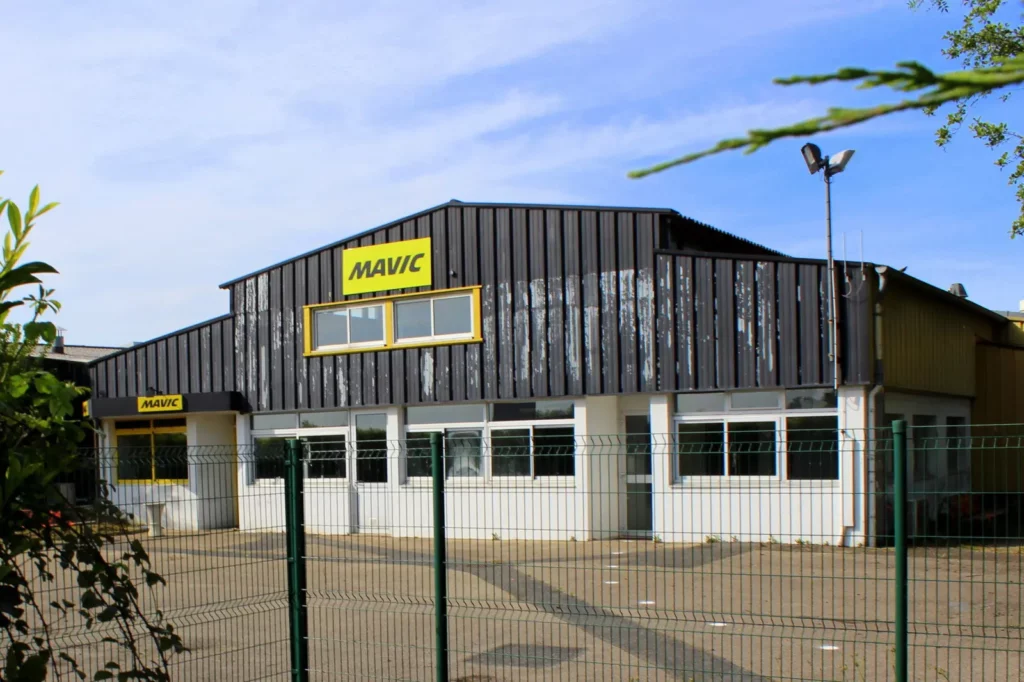 The Saint-Trivier factory
2010-2025: financial challenges and rebirth
The 2010s brought significant challenges. In 2019, Amer Sports sold Mavic to Regent LP, an American private equity firm, but administrative errors revealed in 2020 that the real buyer was M Sports International LLC, an obscure entity based in Delaware. This confusion plunged Mavic into uncertainty, and in May 2020 the company was placed in receivership by the Grenoble commercial court, under pressure from creditors worried about its financial situation. After six months of observation, Mavic was bought in July 2020 by the French Bourrelier group, a deal that ensured the survival of the Saint-Trivier factory and the Annecy headquarters.
Under Bourrelier, Mavic regained relative stability. In 2023, the brand celebrated its 134th anniversary with an exhibition in Annecy, highlighting its cycling heritage. However, in 2022, Mavic lost its role as neutral service provider at the Tour de France, handed to Shimano after nearly five decades of emblematic presence. Today, in March 2025, Mavic employs around 200 people in France and remains a respected name in cycling. Its carbon wheels continue to equip amateur and professional riders around the world, testimony to a resilience forged over more than a century of history. From its Lyon origins to innovations such as the Dura rims, the Zap groupset, Mektronic, the UST system and the legendary Cosmic, Mavic embodies a journey marked by ingenuity, adaptation and a deep bond with the sport.
Evolution of the Mavic logo since 1923
 1923
 1945
 1973
 1988
 1996
 2015