

Princeton Wake 6560 Evolution II: a new version out to win everything in 2026
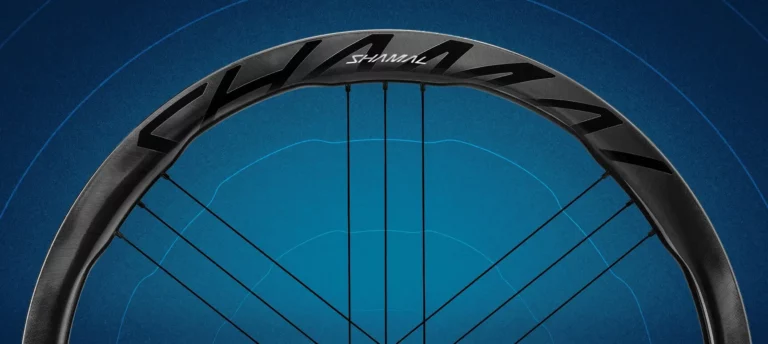
In February 2026 Princeton CarbonWorks announced the Princeton Wake 6560 Evolution II, the sixth generation of its flagship wheel, and the brand is bringing out the heavy artillery: according to Princeton, it is the fastest UCI-approved wheel ever tested in its wind tunnel. A new, lighter rim (420g against 470g on the Evolution I), a development process rethought from the tyre outwards, and reinforced hooks when everyone else is going hookless. Princeton is once again doing the opposite of the crowd, and not without good arguments.

A development process that starts again from the tyre
The real break with the past in this Evolution II is not visible at first glance: it is the method. Princeton fitted tyres from 23 to 32mm on four rim widths (21, 22, 23 and 24mm internal), 3D-scanned them and created a complete matrix of cross-sections. This data then fed a CFD analysis with NablaFlow using the AeroCloud software, before wind tunnel validation at the Politecnico di Milano and at the A2 tunnel in North Carolina.
This is what is known as a system approach. Where most brands optimise the rim first and then add a tyre, Princeton starts from the tyre as the real frontal surface, the one that meets the air. The result: a hooked rim with a 22mm internal width and a 33mm maximum external width, built specifically for 28mm tyres. Rim weight drops from 470g to 420g, a saving of 50g per rim, and impact resistance rises to 120 joules, against the 40 joules required for UCI approval. In terms of structural margin, that is colossal for a 420g rim.

Betting on hooks against the hookless trend
While the whole high-end segment converges on hookless (ENVE SES 5.6, Cadex Max 50), Princeton is doing the opposite and reinforcing its hooks. Harrison Macris, CEO and lead engineer, stands by it: the aim is to control tyre width proactively to eliminate any deformation that would alter aerodynamics and handling.
The argument is not cosmetic. The entire logic of the Evolution II rests on a tyre cross-section controlled to the exact millimetre, because that is the section that was scanned, modelled and optimised in CFD. If the hook keeps this geometry more reliably than a hookless rim, the choice makes sense. It can be criticised for limiting compatibility with some high-volume tyres, but Princeton does not make wheels for everyone, and that has been a deliberate brand stance since day one.
The yaw performance range is quoted at ±12.5°, with particularly pronounced gains at wide angles, exactly where deep wheels and classic profiles usually struggle. The same logic had already set the previous generations apart in tunnel tests. The Evolution II pushes even further on this point. The rim bed still has no spoke holes, which removes the need for tubeless rim tape and simplifies setup.
Ultra-premium positioning: everything, or almost, has a price
Princeton does not make entry-level wheels. It does not make mid-range wheels. It makes only the very top. This shows in every development decision on the Evolution II: collaboration with NablaFlow and Luca Oggiano for the CFD, two validation tunnels (Politecnico di Milano + A2), patented RSL lacing, and 10 colours available immediately, four of them new (Gloss Sand, Gloss Cobalt, Gloss Red, Gloss Chameleon). It is the kind of brand INEOS Grenadiers choose for Filippo Ganna when they want to win the time trial world championship — not for budget reasons.
The price follows this logic: from €3,750 (White Industries CLD, 1,455g) to €4,890 (Tactic TR01 V2, 1,250g) and up to €5,300 depending on the configuration. It is the price of access to the summit.


My verdict
The leap in quality in the development method is real and documented. 3D-scanning hundreds of tyre and rim combinations before CFD and before double wind tunnel validation is a level of rigour that goes beyond most competitors. The 50g saved per rim (470g → 420g) on an already very light product is a concrete result. 1,250g without resorting to the trick of carbon spokes is seriously impressive.
What stings is the entry price (€3,750) for the heaviest configuration (1,455g with White Industries). To reach the 1,250g highlighted in all the brand’s communications, you have to go up to €4,890. To benefit fully from the promise, you will have to choose this ultra-premium version and leave aside the other, less appealing configurations.
Technical specifications
- Rim depth: 60-65mm (undulating sinusoidal profile)
- Weight: 1,250g (Tactic TR01 V2, steel spokes) / 1,455g (White Industries CLD)
- Internal width: 22mm
- External width: 33mm maximum
- Spokes: Sapim CX-Ray (steel)
- Tyre compatibility: Tubeless, with an undrilled rim bed
- Hub configurations available: 6 options (including Tactic TR01 V2, White Industries CLD)
- Colours: 10 options (Matte Black, Gloss Black, Matte White, Gloss White, Gloss Gold, Gloss Chrome, Gloss Sand, Gloss Cobalt, Gloss Red, Gloss Chameleon)
- Price: €3,750 (White Industries CLD, 1,455g) or €4,890 (Tactic TR01 V2, 1,250g)
- Accessories supplied: Tubeless valves + padded wheel bag
Leave a Reply