
Campagnolo
Campagnolo: the history of a carbon wheel giant and its technical innovations
If you are a cyclist with a passion for components that combine history, performance and elegance, this article on Campagnolo is for you. This legendary Italian brand has left its mark on cycling with its carbon wheels and its revolutionary innovations. We will trace its journey since 1933, analyse its technological advances and explore its current range.
The history of Campagnolo: a heritage of passion and innovation
1933: the beginnings of a visionary in Vicenza
It all began in 1933 in a small workshop in Vicenza, Italy, when Tullio Campagnolo, a former racing cyclist, founded the company that would bear his name. Frustrated by the laborious wheel-change systems of the time – notably during a race in the snow in the Dolomites in 1927 – he invented the quick-release mechanism. Patented in 1930 and on sale from 1933, this system would transform the way cyclists handled their wheels for almost a century, laying the foundations of a brand dedicated to innovation.
 Tullio Campagnolo at work
 The first quick-release
During that decade, Campagnolo concentrated on simple but effective mechanical components. Tullio, with his practical mind and his love of cycling, shaped a company that would become synonymous with Italian precision. Those early years were modest, but they planted the seeds of a technological revolution.
The 1940s and 1950s: the rise of derailleurs and the first victories
The Second World War slowed progress, but from 1940 Campagnolo bounced back with the “Cambio Corsa”, an innovative rod-operated derailleur. Although complex to use – it required back-pedalling while operating levers – it marked a step towards smoother gear changes. In 1949, the brand introduced the “Gran Sport”, its first parallelogram derailleur, a major advance that simplified shifting and won over racers.
 The rod-operated derailleur
 Bartali wins the 1948 Tour on Campagnolo
 The “Gran Sport” derailleur
The 1950s saw Campagnolo branch out into other sectors, such as magnesium rims for Ferrari or Maserati, but cycling remained at its heart. The “Record”, launched in 1962, became a benchmark for racers thanks to its low weight and reliability. The victories kept coming, notably with Fausto Coppi, strengthening Campagnolo’s reputation as supplier to the champions.
 The first Campagnolo groupset, launched in 1959
 The first Record derailleur
The 1960s and 1970s: the golden age of Super Record
The 1960s propelled Campagnolo to the top. In 1966, the “Nuovo Record” perfected the rear derailleur with light alloys, becoming a standard in the pro peloton for nearly 20 years. Eddy Merckx, the ultimate legend, adopted these components for his many Tour de France victories. In 1973, the “Super Record” was born, incorporating titanium parts and a refined design. This groupset embodied the pinnacle of the technology of its day and remains an icon for purists.
 The Nuovo Record and its aluminium construction
 Merckx, the birth of the Cannibal
During this period, Campagnolo also supplied wheels for Ferrari’s Formula 1 cars and chassis for NASA satellites, proving its versatility. Yet it was on bikes that the brand shone, equipping the biggest names and dominating the major races of the 1970s.

The 1980s and 1990s: challenges and revival
The 1980s marked a turning point. While SunTour invented indexed shifting and Shimano launched its integrated STI levers, Campagnolo struggled to keep up. A failed foray into mountain biking with groupsets such as “Euclid” (too heavy compared with the competition) weakened the brand. Tullio’s death in 1983 added to these challenges, but his son Valentino took the reins and restored momentum.

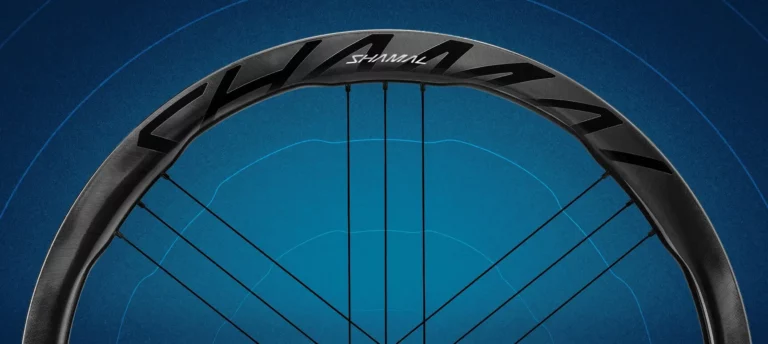
In 1992, the “ErgoPower” levers combining braking and shifting brought Campagnolo back into the race. The pre-built Shamal wheels, launched in 1991, revolutionised the market with their aerodynamics and their carbon design. The 1990s also saw the rise of carbon and titanium in groupsets, restoring Campagnolo’s status as a pioneer.
 The iconic first Shamal wheels
 The 1984 C-Record derailleur
 ErgoPower levers
2000 to today: modernity and prestige
In 2004, Campagnolo launched Fulcrum, a sub-brand of wheels compatible with Shimano and SRAM, broadening its audience. The same year, the “Ultra-Torque” crankset with external bearings improved stiffness and ease of servicing. In 2008, the move to 11 speeds with Super Record, Record and Chorus modernised the groupsets, followed in 2011 by the EPS electronic system.
 The magnificent 11-speed Super Record
Since 2018, Campagnolo has picked up the pace: 12-speed arrived with Super Record and Record, then the Ekar gravel groupset (13-speed) was born in 2020. The Bora carbon wheels, now legendary, dominate the pro peloton. Despite competition from SRAM and Shimano, Campagnolo remains a benchmark, equipping teams such as UAE Team Emirates until 2022, and keeping a unique aura thanks to its heritage and Italian design. After equipping Movistar, AG2R and Lotto, Campagnolo made its return to the World Tour in 2025 by signing a technical partnership with the Cofidis team.
 Victory at the Tour de France with Pogacar
 Campagnolo innovates with the 13-speed Ekar groupset dedicated to gravel
 A 2025 return to the World Tour peloton with Cofidis
Campagnolo’s innovations: cutting-edge technology
Let’s move on to the technical advances that make Campagnolo a leader. Here are the pillars of its expertise.
Carbon and the Bora wheels: aerodynamics and low weight
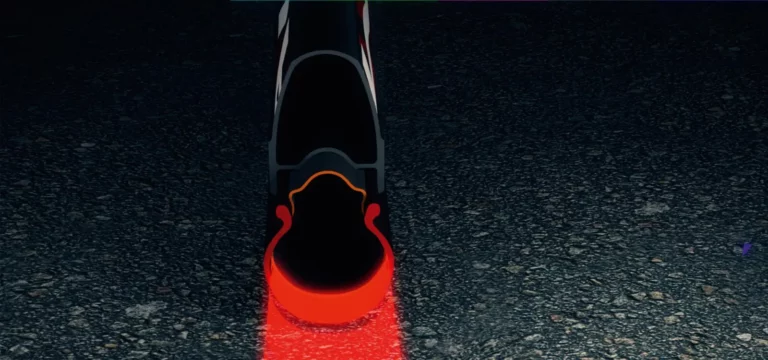
The Bora carbon wheels, introduced in the 1990s and perfected with versions such as the Bora WTO, embody Campagnolo excellence. Made from high-modulus carbon fibre, they offer a perfect balance of low weight, stiffness and aerodynamics. Their design, tested in the wind tunnel, reduces drag, while the G3 system (asymmetric grouping of the spokes) improves stability. These wheels are a favourite choice of the pros for their performance under high pressure.

Ultra-Torque: a revolution in cranksets
Launched in 2004, the Ultra-Torque system uses a two-piece axle with a Hirth joint, connecting the cranks via external bearings. The result: more stiffness, less weight and simpler servicing. This innovation redefined crankset standards, offering optimal power transfer.

EPS and more gears: electronic precision
With Electronic Power Shift (EPS) in 2011, Campagnolo entered the electronic era, rivalling Shimano’s Di2. This system guarantees precise, fast gear changes, even under load. The move to 12 and then 13 speeds (Ekar) widened the gearing options, suited to gravel and modern road riding.
Why choose Campagnolo?
Opting for Campagnolo carbon wheels or components means choosing a 90-year heritage, exceptional Italian manufacturing and race-proven technology. Despite a high cost and a smaller presence than Shimano or SRAM, the brand appeals through its aesthetics and reliability. Whether you are a racer or a lover of fine equipment, Campagnolo remains a safe bet.
More information on the official Campagnolo website