
Syncros Capital SL 40 review: is the one-piece wheel worth €4000?
Field test · 2000 km · Schwalbe Pro One 30 mm
Syncros Capital SL 40
40 mm rim depth · MWS one-piece carbon · Centerlock disc
For this Syncros Capital SL 40 review, we need to go back to the starting point. When Syncros unveiled the Capital SL in summer 2023, the spec sheet came down to one figure: 1170g a pair for a 40mm rim depth. But the real story lay elsewhere. Rim, carbon spokes and hub flanges are moulded in a single piece, with no spoke nipples and no possible tension adjustment. A radical approach, priced at €3999.80 a pair. The kind of promise that deserves to be checked away from the press releases, and above all over time.
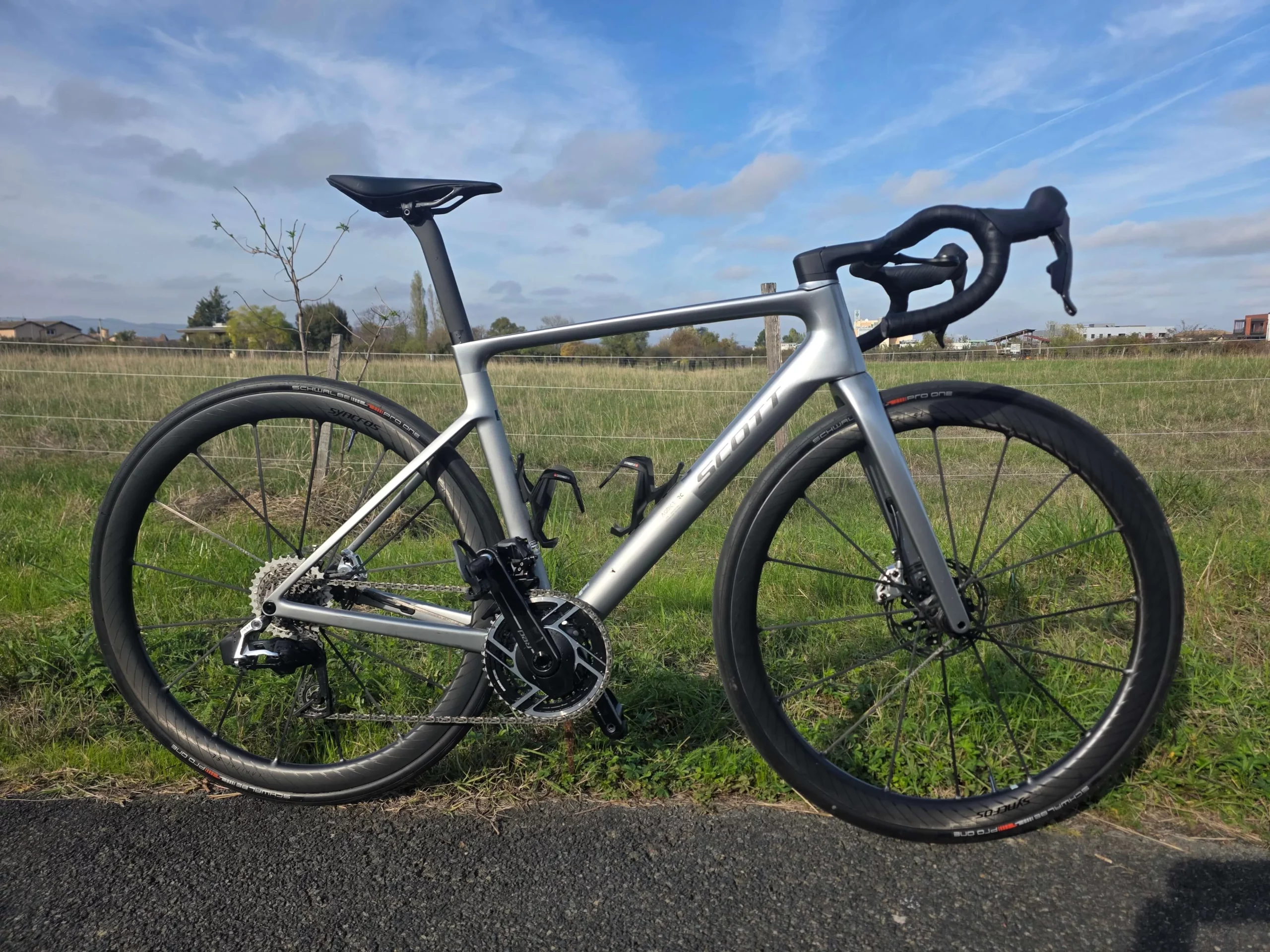
In total, 2000km were ridden on every type of route, from the plains of the Ain to the cols of the Vercors, on rough roads as well as on billiard-table-smooth tarmac. The test bike is a Scott Addict Ultimate with SRAM Red AXS, shod with 30mm Schwalbe Pro One tyres (30.4mm measured on the rim) inflated to between 3.5 and 4 bar (51 to 58 psi), first with Aerothan TPU inner tubes, then tubeless. There is no shortage of reference points: Corima MCC 45, DT Swiss ERC 1100 and Newmen Streem Allround Vonoa, among other wheelsets that have passed through my bikes in recent months.
Contents
Presentation and first impressions
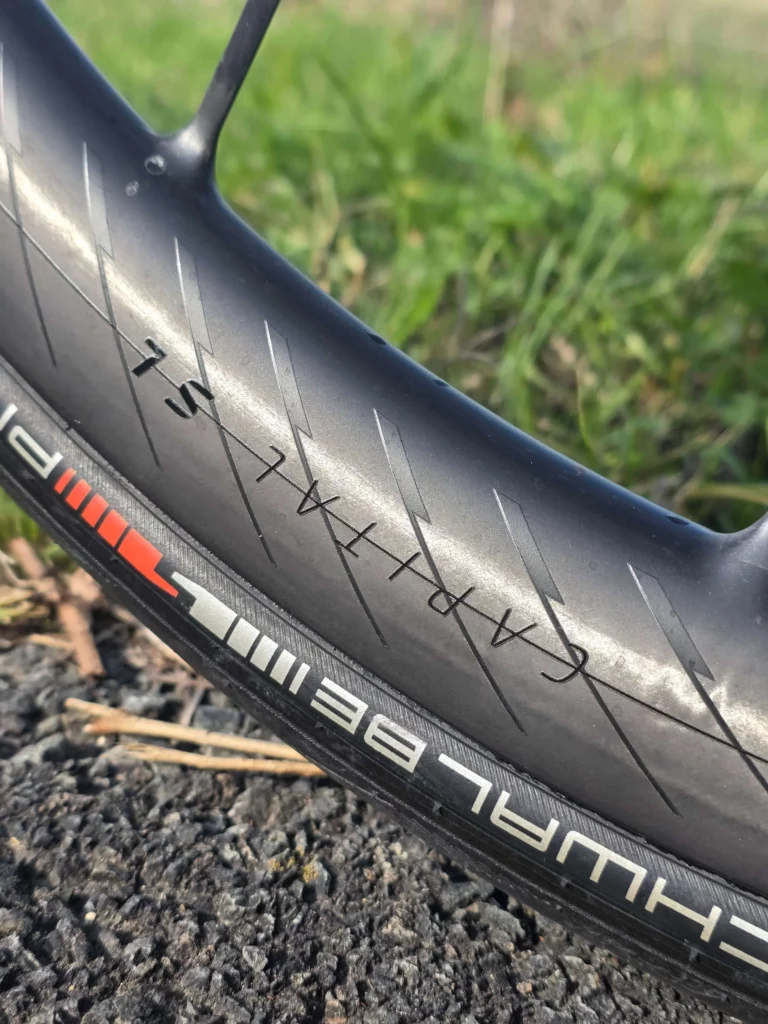
On the scales, the Syncros Capital SL 40 weigh 1202g including tubeless valves, against the 1170g claimed by Syncros (540g for the front, 630g for the rear). A 32g difference largely explained by the valves. For a 40mm rim depth, this is quite simply one of the lightest wheelsets on the market.
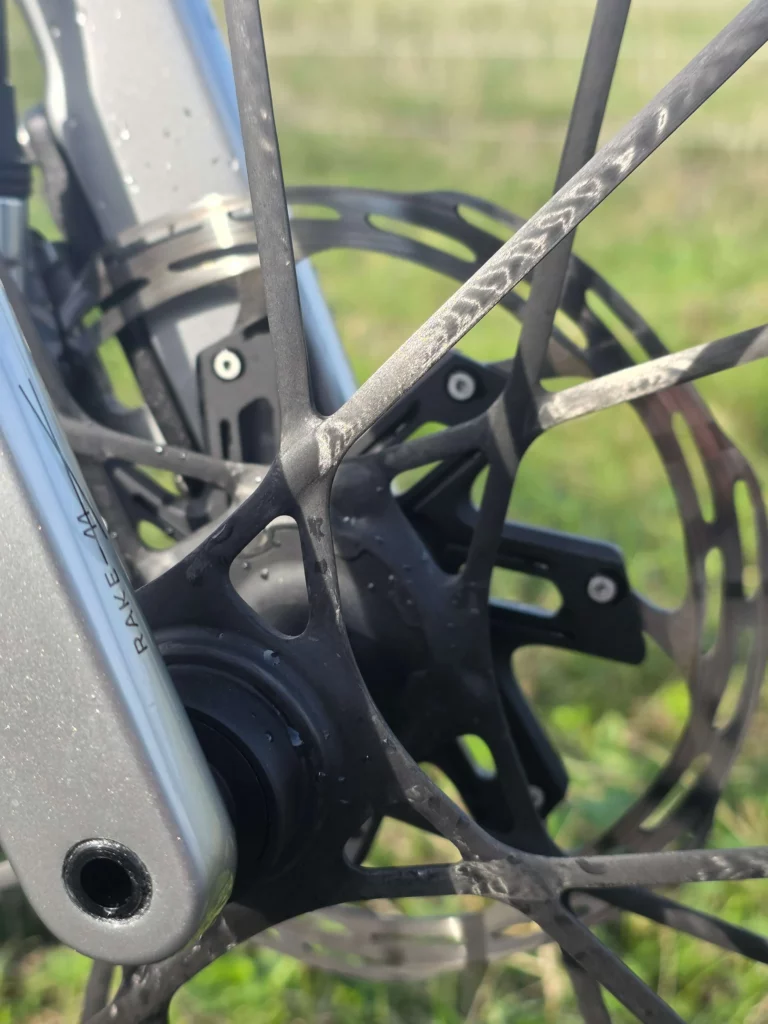
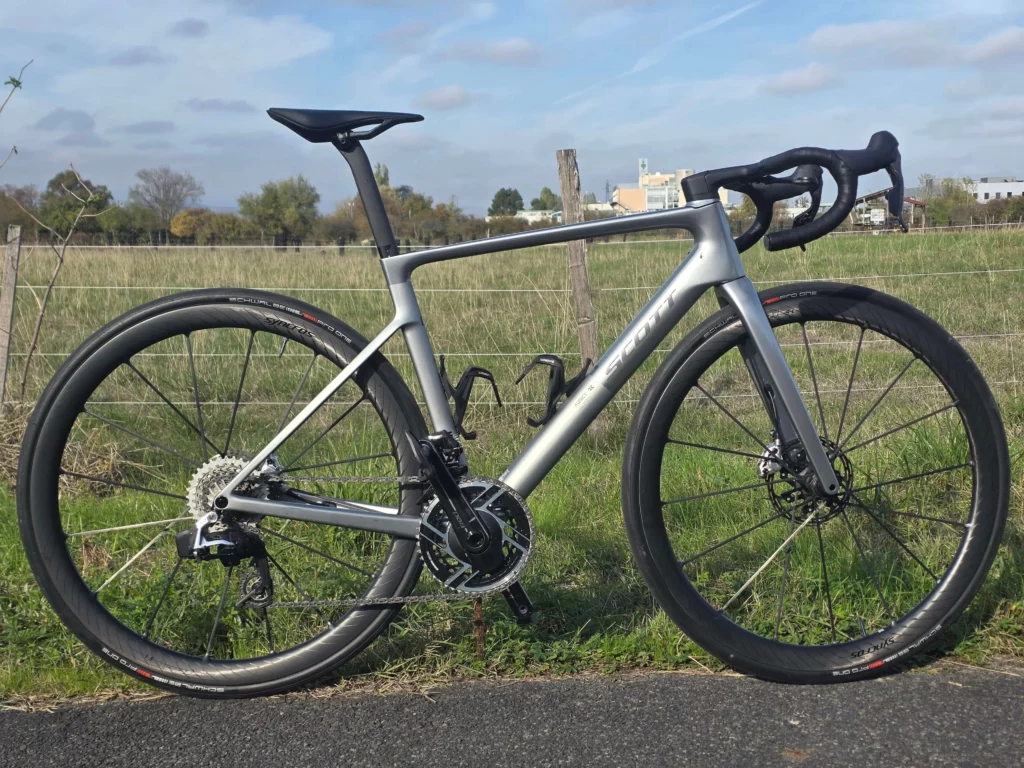
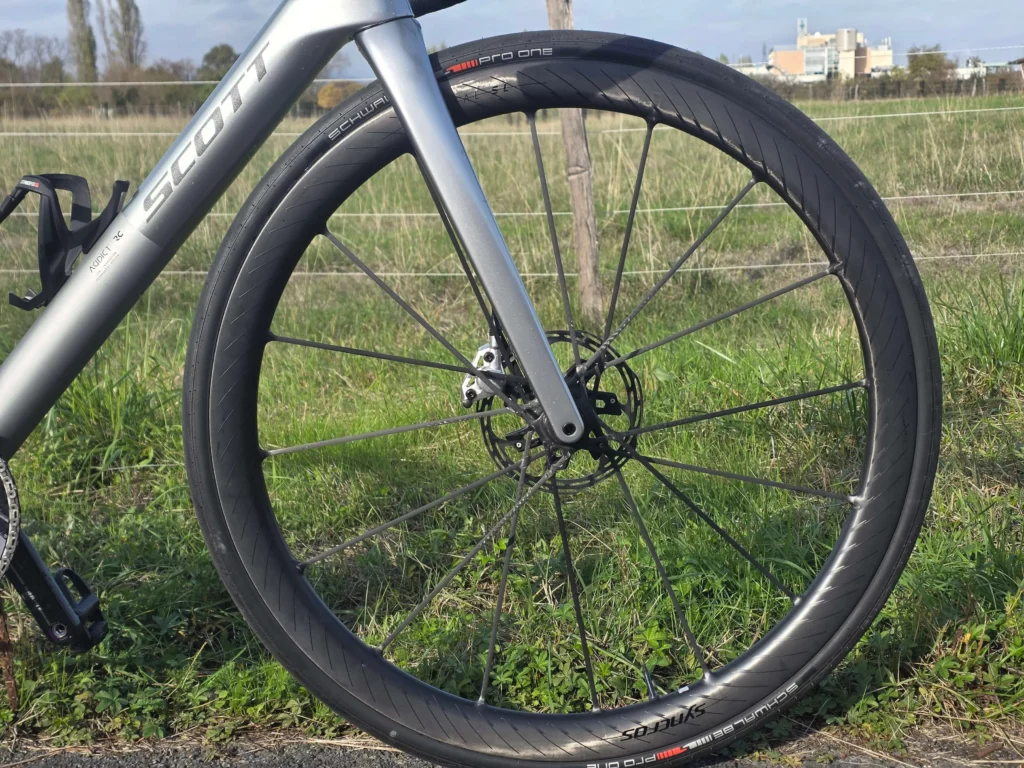
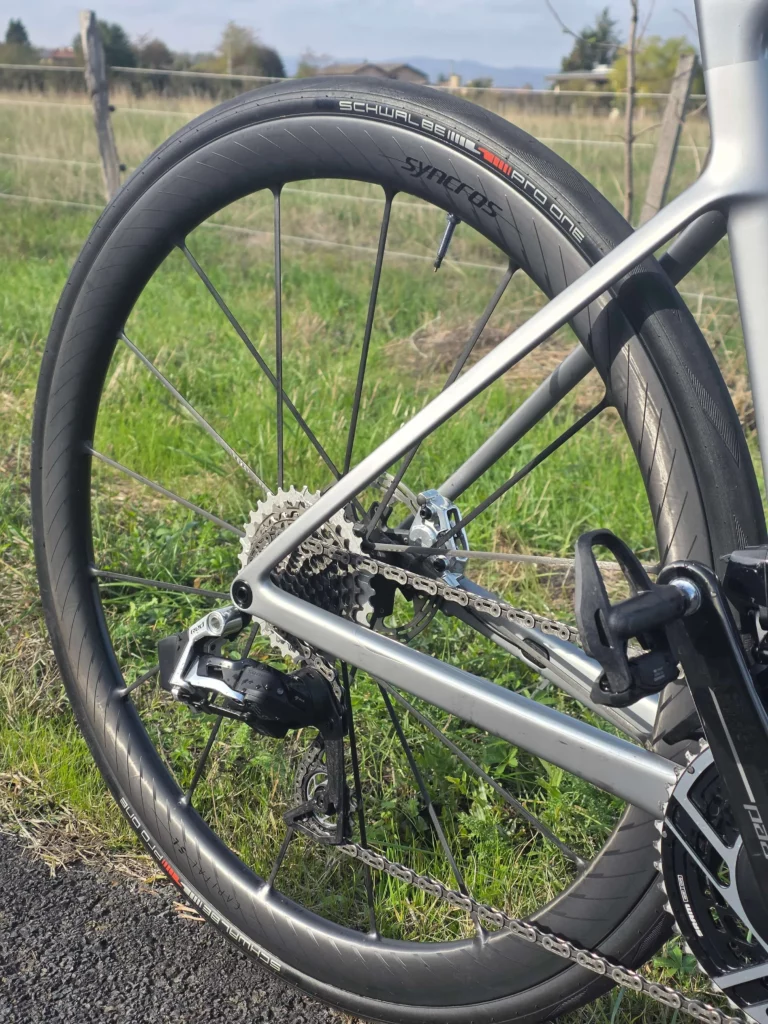
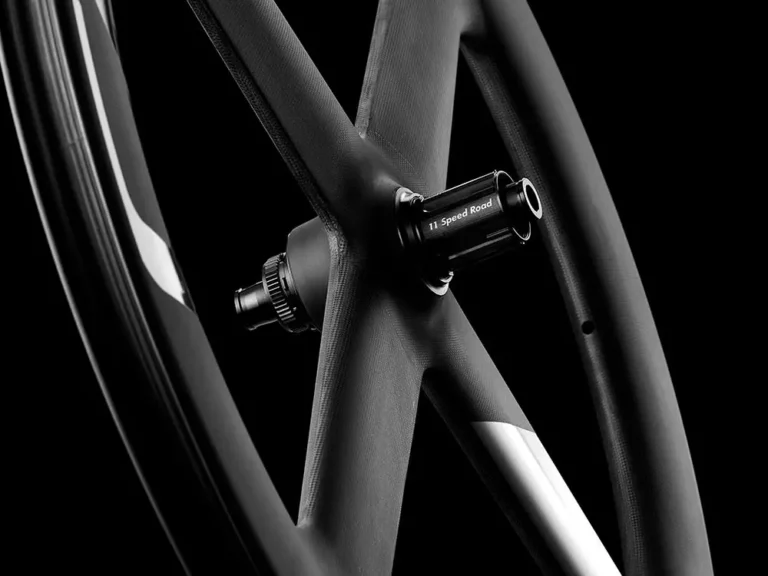
The first contact is surprising, even when you know the spec sheet. 16 carbon spokes front and rear, crossed once and fused together where they intersect, radiate from a small-diameter hub. There is no nipple at the end of the spokes: the connection with the rim is made by a continuous carbon transition. And this is where these wheels impress. The finish is quite simply impeccable. The junctions between spokes and rim are magnificent, the curves flow without a break from the hub to the edge of the rim, and the design looks like no other wheel. The surface also proved fairly resistant to scuffs: it does not mark quickly. A real jewel and, for once, the level of execution matches the asking price.
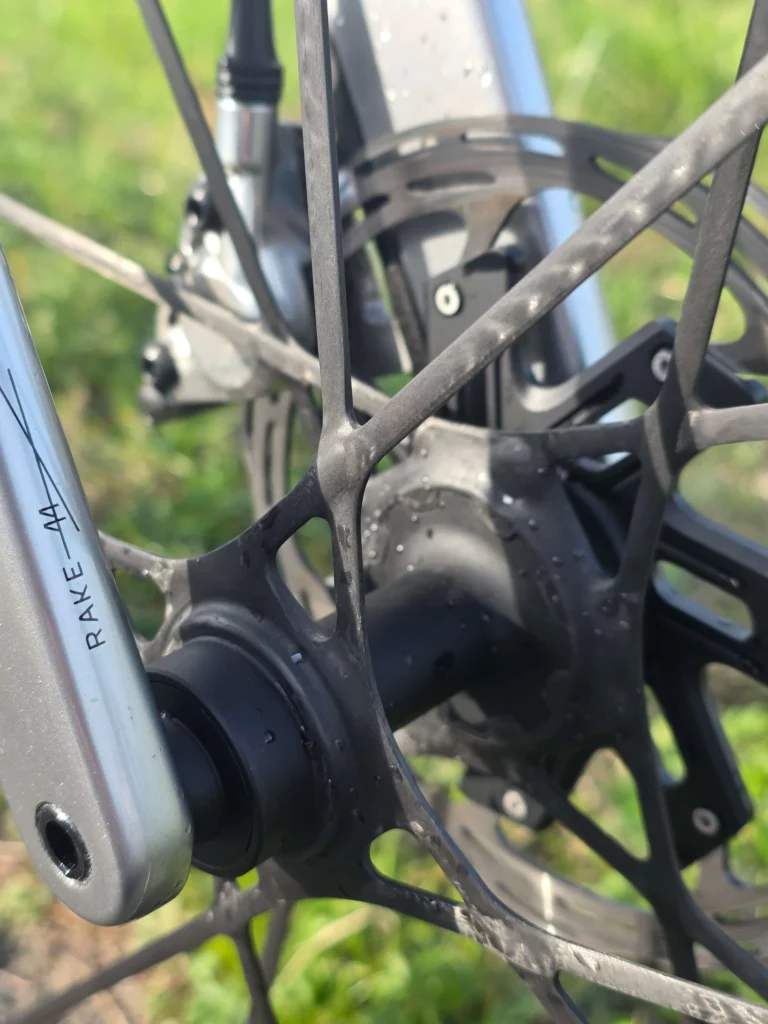
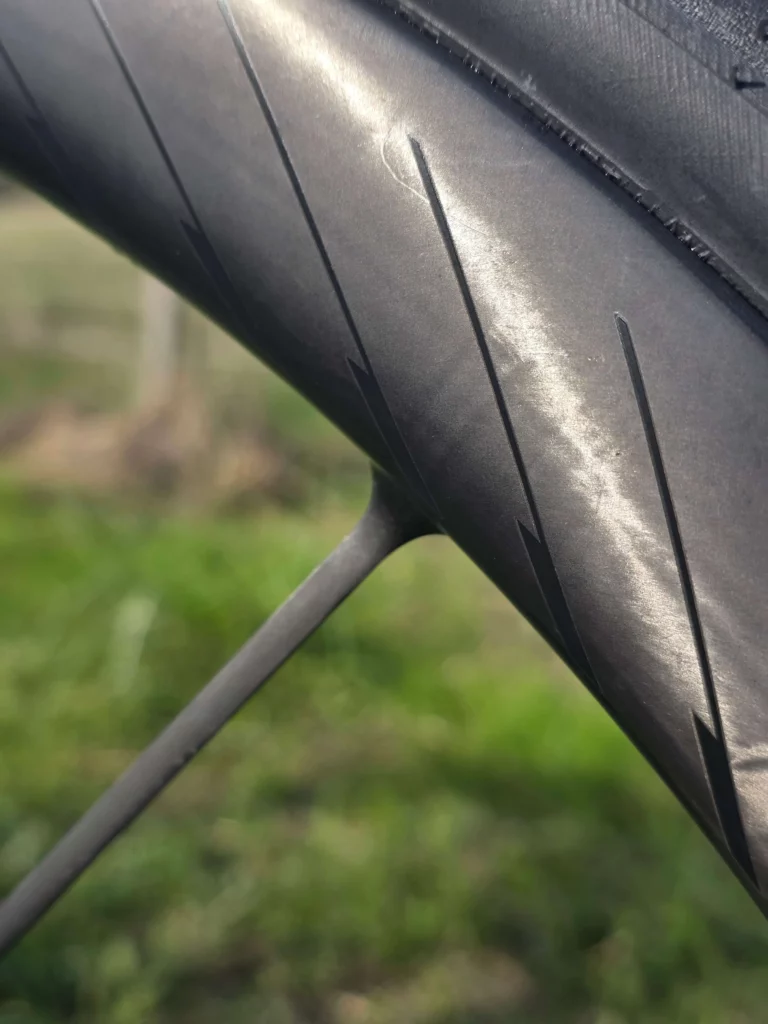
On the rim side, the 40mm depth comes with a 25mm internal width, hookless. Syncros developed these wheels with Schwalbe, which created the Pro One Aero for the occasion, in a front version (aero-oriented) and a rear version (rolling-resistance-oriented), in 28mm only. I did not use it: my test was done on the classic 30mm Pro One. The hubs use DT Swiss 240 internals with a Ratchet EXP freehub, in a specific shell bonded into the carbon structure. The freehub body is offered in Shimano HG or SRAM XDR depending on the market, and braking is Centerlock.
The Monocoque Wheel System: what the brand does not say clearly enough
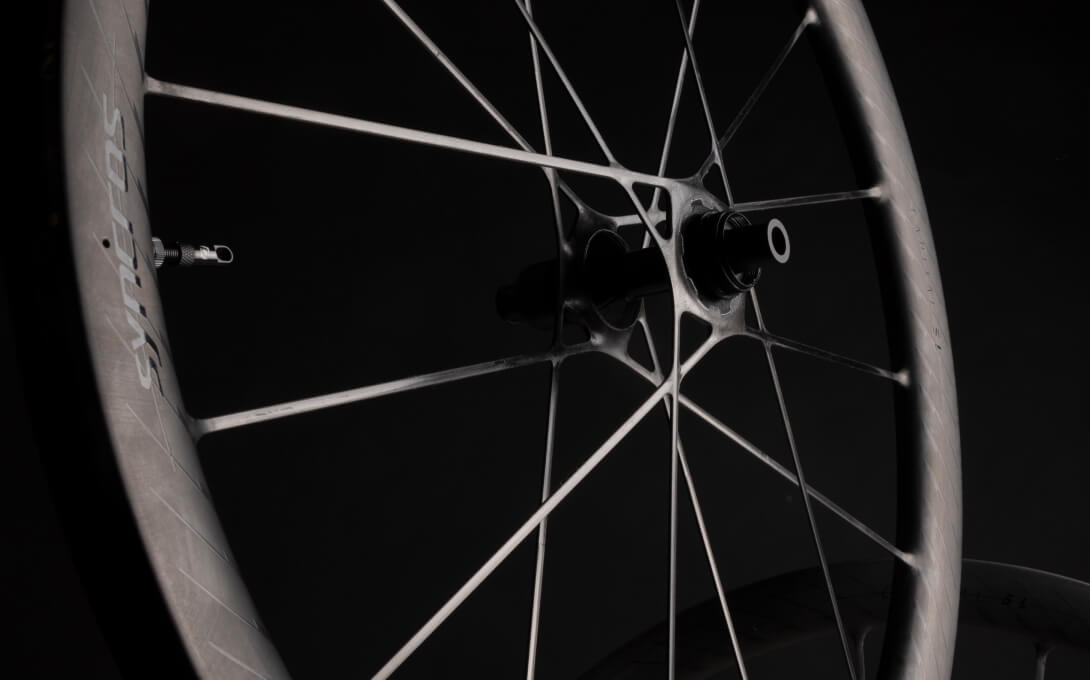
The MWS process is not new at Syncros: it debuted in 2018 on the Silverton SL MTB wheels. On the Capital SL, the principle has been refined. The spokes run from one side of the rim to the other via the hub, and the whole assembly is moulded in a single cure in Toray T1000 and M40 carbon. Tension is not obtained by screwing nipples: it is the insertion of the central part of the hub after curing that spreads the flanges and puts the spokes under tension. Syncros speaks of a “pre-stretching” that guarantees identical tension on all the spokes, and claims carbon spokes 35% stronger than steel spokes.
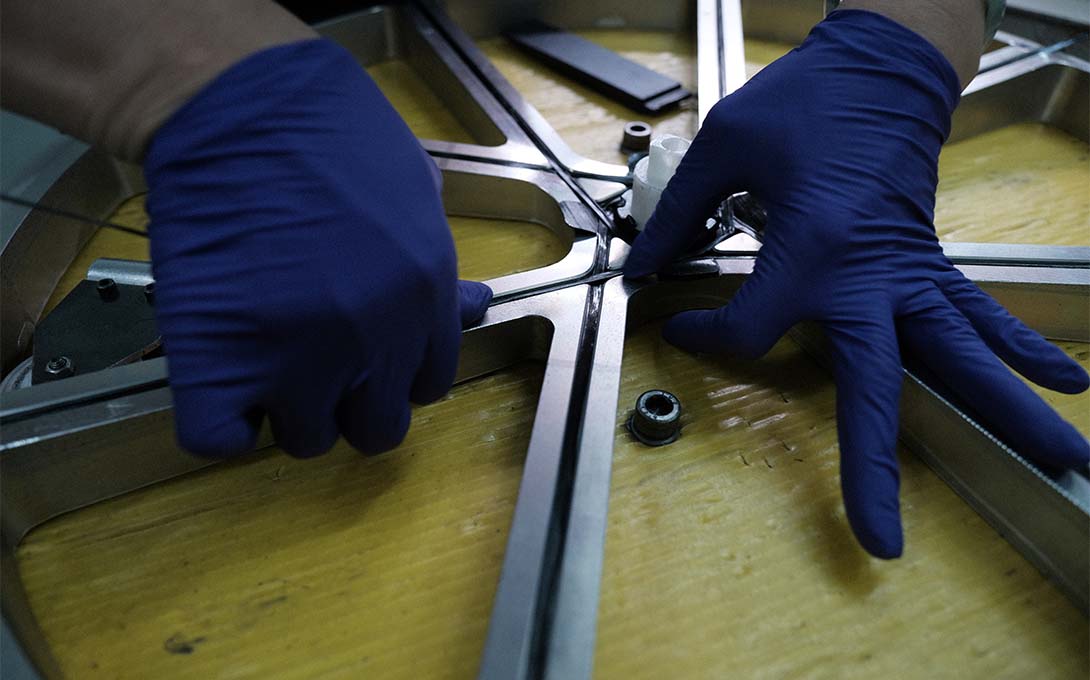
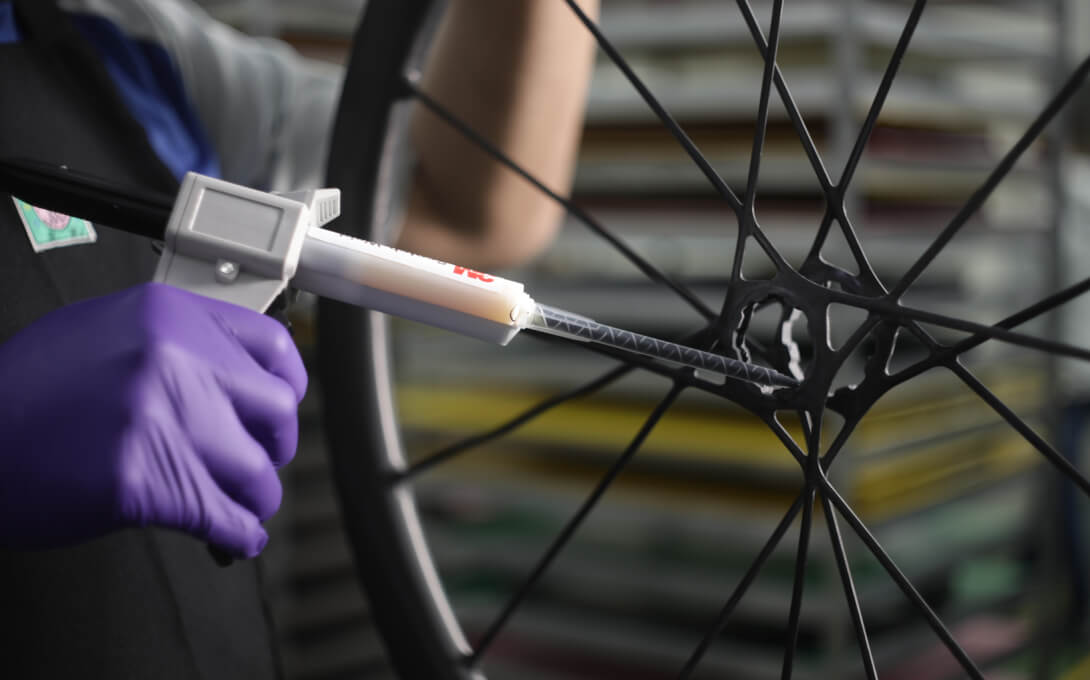
The claimed figures are ambitious: around 7% less drag than a reference wheel (a Zipp 303 Firecrest), based on nearly 200 configurations simulated in CFD then validated in the wind tunnel, and 20% less rotational inertia than a carbon wheel with conventional spokes, the mass being concentrated towards the hub. I have no way of checking the first figure on the road. The second, on the other hand, is felt very clearly, and not always in the way you might imagine. I come back to this below.
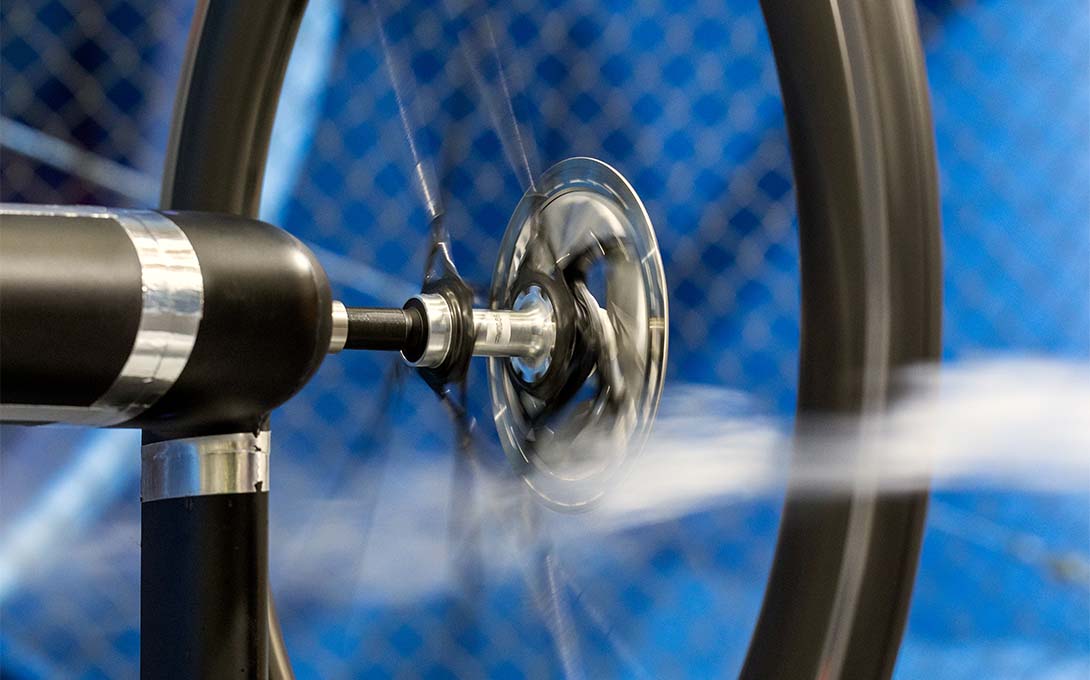
What the brand highlights much less is the other side of the coin. A one-piece wheel cannot be trued, straightened or rebuilt. A broken spoke can write off the whole wheel, whereas a conventional wheel can be repaired for a few tens of euros. The risk is not zero, and it is the main reservation that can be expressed about the concept. Syncros responds with a 2-year warranty and a crash replacement programme, which I detail in the verdict.
On the road
Tubeless set-up and first rides
As it is a hookless rim, the choice of tyre is not free: Syncros publishes a list of approved tyres and imposes a maximum pressure of 5 bar (73 psi). Once this constraint is respected, tubeless set-up is exemplary in its simplicity. The 30mm Pro One went on without forcing and seated without the slightest difficulty. Nothing to report, and that is exactly what you expect from a wheel at this price.
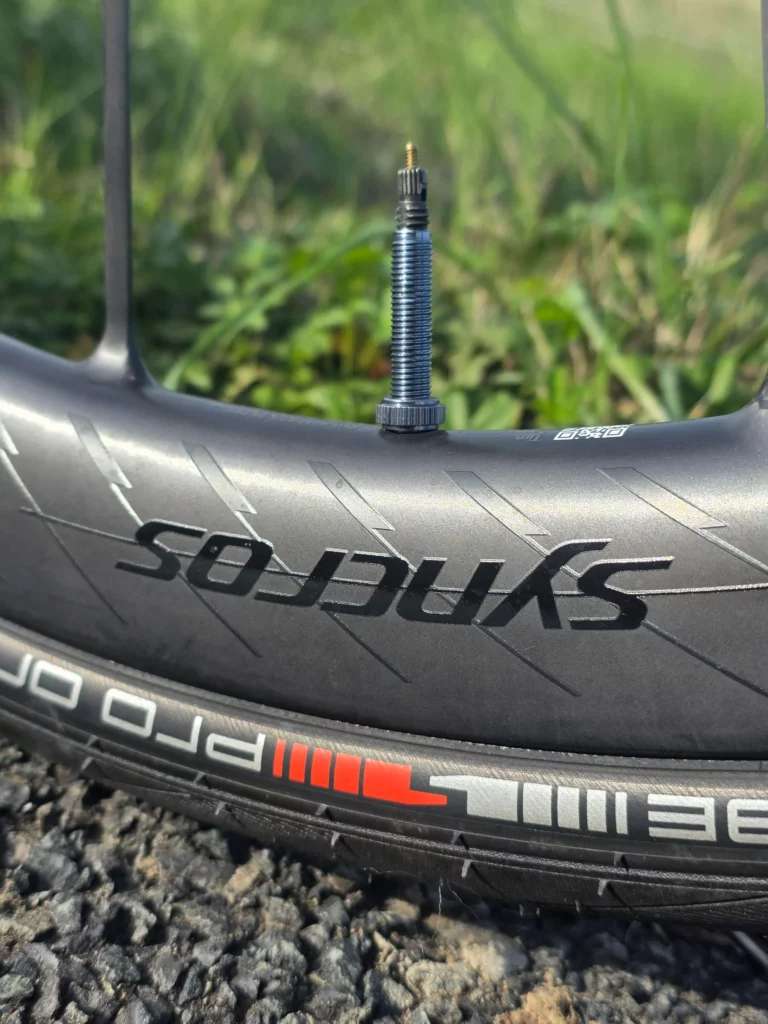
I first rode with Aerothan TPU inner tubes, before switching to tubeless. The choice is not trivial on these wheels: TPU tubes clearly accentuate the discomfort and vibration. And they gave me an unexpected annoyance: repeated shocks of static electricity. Perhaps a personal sensitivity, but extremely unpleasant in the long run. Switching to tubeless improves comfort, without solving everything.
Behaviour on the flat and inertia
The first kilometres on the flat are frankly disconcerting. You do not get the feeling of inertia experienced with other wheels of this depth. The Capital SL are silent in the wind: no rim resonance in crosswinds, no whooshing. The only noise comes from the freehub. The result: neither the impression nor the sensation of speed that wheels of 40 to 45mm usually provide. This is the flip side of mass concentrated towards the hub: less rotational inertia also means less speed “stored” when riding at a moderate pace. On this terrain, I loved the sound and feel of the Newmen Streem Allround Vonoa, that slight whistle of the spokes and that feeling of the road flowing by. I do not find that here.
Everything changes when you start riding hard. Between 40 and 50km/h, these wheels come alive. Their stiffness provides the dynamism needed to lift the pace, and every acceleration translates immediately into speed. It is really at these speeds that you enjoy the Capital SL on the flat. Below that, they do nothing wrong, but they do not provide the easy “flow” you find on wheels with more inertia.
Acceleration and climbing
Naturally, as soon as the road rises, the Capital SL come into their own. All the qualities glimpsed on the flat make sense: lightness, stiffness, liveliness. Out-of-the-saddle accelerations are sharp, the bike responds immediately, and the sensations are fantastic. I found the stiffness of the Corima MCC 45, with perhaps even more dynamism. It was on the cols of the Vercors that I best understood the philosophy of these wheels.
There is one condition, however: you need to be in form. These wheels reward commitment. But when everything comes together, they are a real pleasure to ride. Light and lively, they are a big asset when hunting KOMs.
Descending
Nothing to report on descents, and that is a compliment. The behaviour is sound and predictable, and the wheel is easy to control. The relatively shallow 40mm rim depth makes them reassuring at high speed, even in the wind: you are never caught out by a gust.
Comfort and damping
Slightly curved carbon spokes are readily credited with a “leaf spring” effect that would make these wheels more comfortable than their construction suggests. That is not my experience. This is clearly the weak point of the Capital SL: their stiffness makes them uncomfortable. Too much vibration reaches the rider, particularly on rough roads, and neither the 30mm tyre width nor the switch to tubeless is enough to compensate.
On an occasional ride, you happily accept it in exchange for the liveliness. But day to day, this harshness spoils the experience somewhat, and I fear it could become disappointing in the long term for anyone who rides a lot on broken surfaces.
Freehub
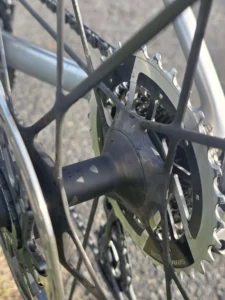
With DT Swiss internals, the sound is very close to that of the Swiss brand’s hubs. It screams, and very loudly. Many see it as a flaw, some even find it grating. I am one of those who love it. Beware if you have sensitive ears, but in town or on a cycle path, it is a very useful warning to announce your arrival. Judge for yourself:
The choice of hub also deserves a comment. Fitting DT Swiss 240 internals to a €4000 wheelset may come as a surprise. With the 240, Syncros ensures optimal reliability and maintenance familiar to every workshop, but the choice remains very conservative and conventional at this price level. Logically, you find the brand’s usual steel bearings. Disappointing on paper for such a price, even though we know how little real benefit ceramic bearings bring on the road.
Syncros Capital SL 40 review: the verdict
After these 2000km, the verdict is mixed. The Capital SL 40 excel where you expect them to: build, lightness, responsiveness. As soon as the gradient gets involved or the pace exceeds 40km/h, they deliver fantastic sensations. But they make you pay in comfort, and they do not give that feeling of easy speed on the flat at a moderate pace.
Then there is the question of price, and it weighs heavily. At €3999.80 a pair, you are buying a wheel that cannot be repaired if a spoke breaks. Syncros’s crash replacement programme is reserved for the first owner, over 3 years, and goes through an authorised dealer: it offers a 50% discount on the retail price in the first year, 30% in the second and 20% in the third. In practice, based on the retail price of the front wheel (€1799.90), a crash in the second year still costs you around €1260 for the front wheel alone. You can quickly end up very much out of pocket. Hence a value-for-money score limited to 5/10, despite a finish that on its own justifies a good part of the price.
These wheels make sense for the climber in form, who rides on good surfaces and is looking for maximum lightness and liveliness for performance days. They make much less sense for the cyclist who wants a single wheelset to ride every day on all surfaces, or who is not ready to accept the risk of an irreparable wheel. For them, the Capital 1.0s range, whose steel spokes can be replaced, is a more reasonable alternative.
Technical specifications
| Model | Syncros Capital SL 40 (ref. 421130 front / 421131 rear) |
| Rim depth | 40mm |
| Weight | 1170g claimed per pair (540g front / 630g rear) / 1202g measured with valves |
| Construction | MWS (Monocoque Wheel System) one-piece carbon: rim, spokes and flanges moulded in one piece, Toray T1000 / M40 carbon |
| Spokes | 16 front / 16 rear, carbon, crossed once and joined at the intersection, no nipples |
| Rims | Hookless carbon, Tubeless Ready, approved tyres only |
| Internal width | 25mm |
| Tyre width | 29 to 50mm |
| Pressure | 1.4 to 5 bar (20 to 73 psi) |
| Hubs | Custom DT Swiss 240 EXP, Ratchet EXP freehub |
| Freehub body | Shimano HG or SRAM XDR |
| Bearings | Steel (DT Swiss 240) |
| Brakes | Centerlock disc |
| Axles | Front 12x100mm / Rear 12x142mm |
| Max system weight | 120kg |
| Warranty | 2 years + 3-year crash replacement (first owner, 50% / 30% / 20% discount) |
| Accessories supplied | Wheel bag, 60mm tubeless valves |
| Price | €3999.80 a pair |
FAQ
What is the real weight of the Syncros Capital SL 40?
On the scales, the pair weighs 1202g including tubeless valves, against the 1170g claimed by Syncros (540g for the front, 630g for the rear). The 32g difference is largely explained by the valves.
Are the Syncros Capital SL 40 comfortable?
This is their weak point. Their stiffness transmits a lot of vibration, particularly on rough roads, even with 30mm tyres inflated to between 3.5 and 4 bar (51 to 58 psi) and set up tubeless. TPU inner tubes make the discomfort even worse.
Which cyclist are the Syncros Capital SL 40 made for?
For the climber in form, who rides on good surfaces and is looking for maximum lightness and liveliness for performance days. They are less suited to everyday use on broken roads, or to anyone who does not accept the risk of an irreparable wheel.
Can a Syncros Capital SL wheel be repaired if a spoke breaks?
No, not in the conventional sense. As the wheel is moulded in a single piece, a spoke cannot be replaced. Syncros offers a 3-year crash replacement programme for the first owner (50%, 30% then 20% off the retail price) and directs limited repairs to a network of authorised workshops.
Which tyres should you fit to the Syncros Capital SL 40?
The rims are hookless, with a 25mm internal width: only tubeless tyres approved by Syncros are permitted, with a maximum pressure of 5 bar (73 psi). The reference tyre is the 28mm Schwalbe Pro One Aero, developed with Syncros in specific front and rear versions.
What is the difference between the Capital SL 40 and the Capital SL Aero 60?
Both share the one-piece construction and DT Swiss 240 EXP hubs. The SL Aero moves to a 60mm rim depth, with a 23mm internal width at the front and 25mm at the rear, for a claimed 1290g a pair and €4199.80 at launch.
Leave a Reply