Bicycle tire pressure calculator: ultimate tool
We've long thought we had to swell his tires. « as hard as possible » to go fast. It is a physical error that costs a lot, both in comfort and pure performance.
I still see it too often: cyclists who inflate at 8 bars on tires of 28 mm because « That's what we've always done ». Yet the pressure on your tires is the only point of contact between your power and the road. Improper pressure is like driving a sports car with welded suspensions: it taps, it bounces, and it doesn't move as fast as it should.
To help you not to grope, I developed this algorithm. It is not just your weight: it takes into account the actual width of your tires, your type of mounting (tubeless/tubetype) and even a often forgotten detail: the inner width of your rim.
Pressure calculator
*Recommended indicative values. Always respect the maximum pressure on the sidewall of your tires.
Why did I stop following the « 10 % rule » ?
For decades, the empirical rule in platoons was to inflate to 10% of its weight (e.g. 7 bars for 70 kg). With the evolution of equipment, this rule has become obsolete. Worse, it's counterproductive.
Physics has changed (and your tires too)
Today, we are no longer driving in 19 or 23 mm. The standard has passed to 25 mm, 28 mm, or even 30 mm on the road, and well beyond 40 mm engraved.
Physics is simple: The larger a tire, the less pressure it needs to withstand the same load.
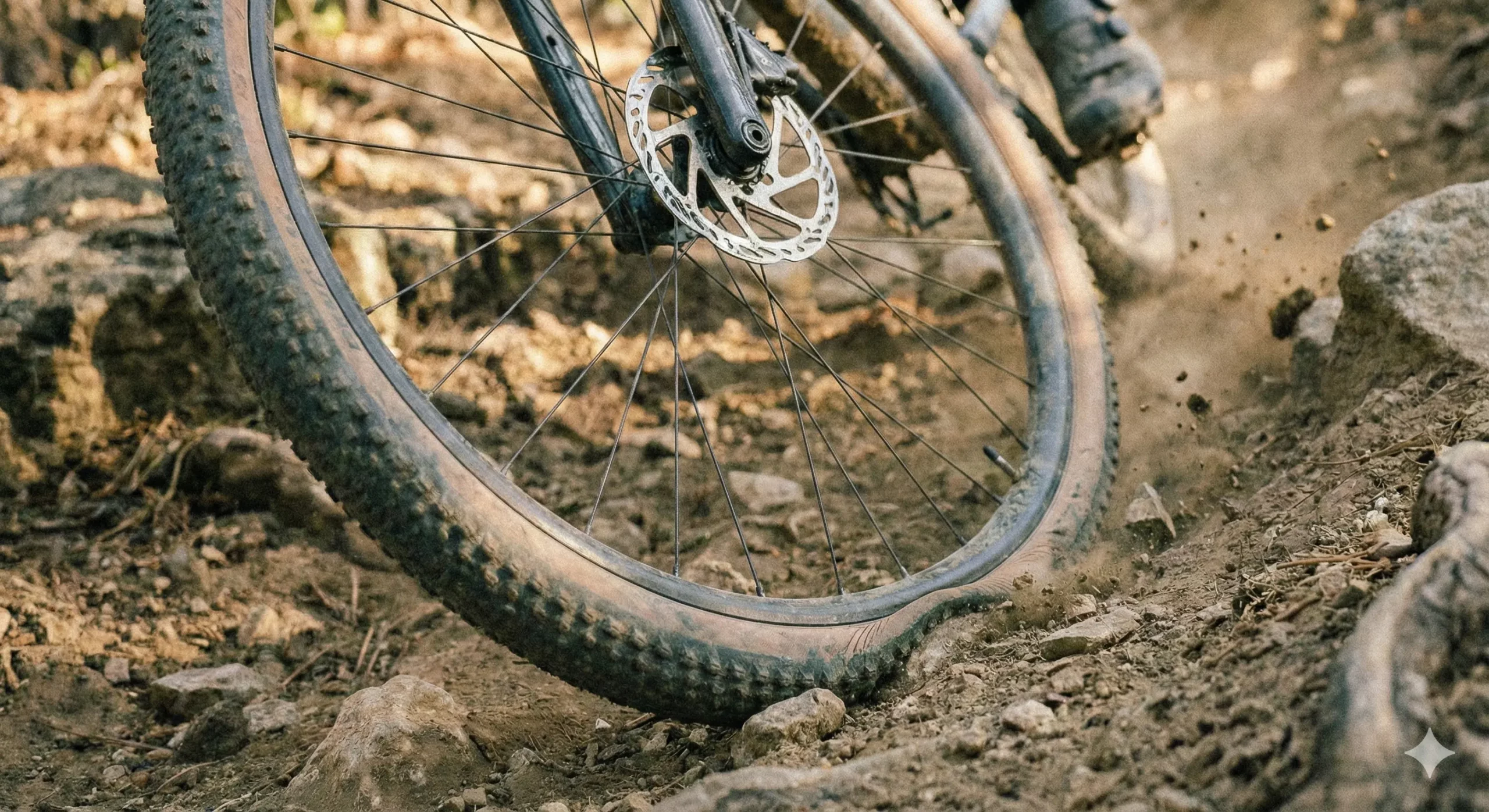
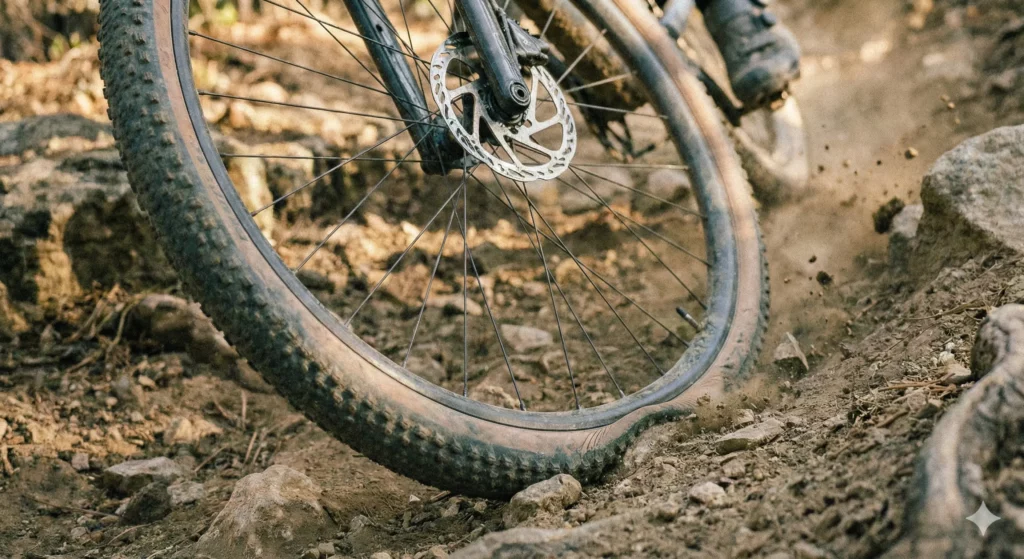
If I inflate a tire from 28 mm to 7 bar, I create a carcase so rigid that it will bounce over each micro-difficulty of the bitumen instead of absorbing. This is called impedance losses. Instead of riding on the road, you shoot against his flaws.
Stan's advice
On a granular road, reducing its pressure by 1 bar can make you win up to 5 to 10 watts resistance to rolling through better vibration absorption. Comfort is not the enemy of speed, it is his ally.
The details that refine my calculation
To understand the results that the calculator gives you, you need to analyze the variables that I have integrated into the algorithm.
Total weight (pilot system + bike)
Pressure is primarily used to prevent the rim from touching the ground (the « bottom out »). The relationship is not linear: if you weigh 100 kg, you should not double the pressure of a 50 kg driver. J
The inner width of the rim: the secret of experts
This is the parameter that most basic calculators forget. But if you read my wheel tests, you know it's crucial.
- A narrow rim (15-17 mm) « pliers » the tire, giving it a bulb shape. We need more swelling to avoid lateral floating.
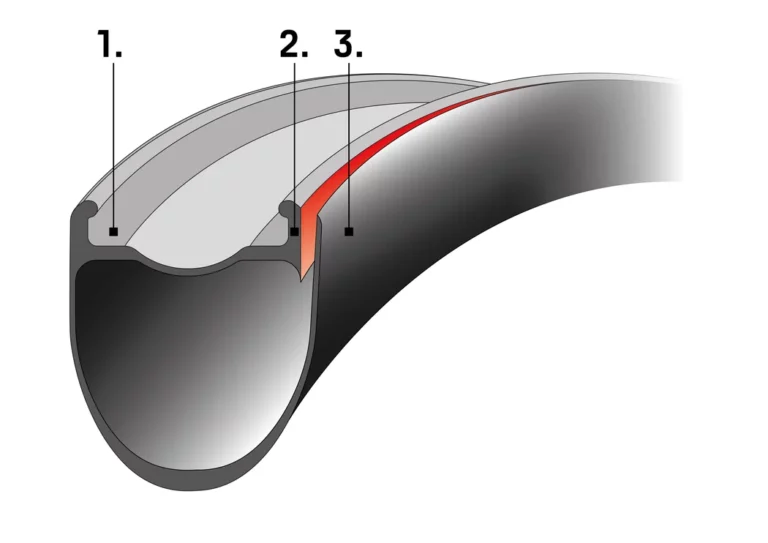
- A modern wide rim (19 mm, 21 mm or even 25 mm engraver) opens the tire in the shape of a « U ». The real air volume is increasing considerably.
Outcome: The wider your rim, the lower the pressure I recommend.
 The volume of air depends on the tyre to rim torque. A wide rim allows to roll at lower pressure.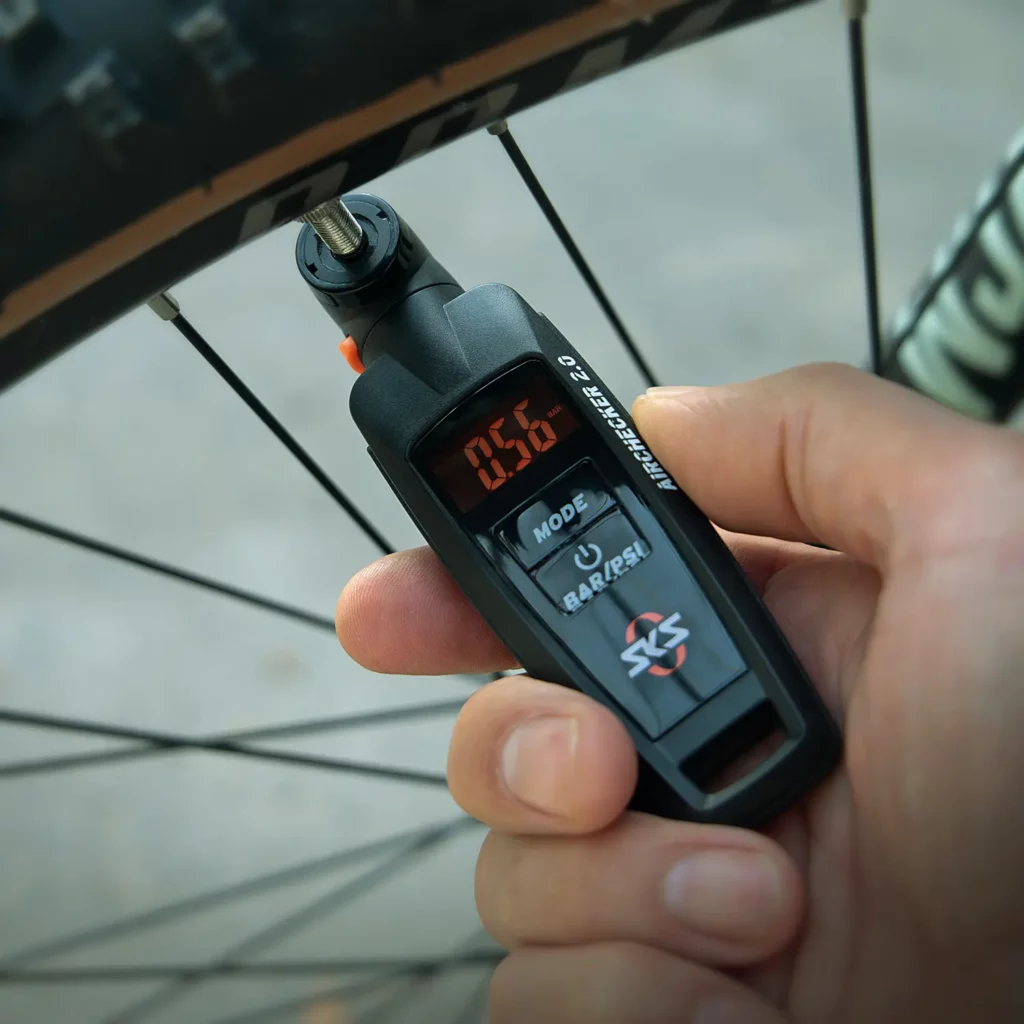
Tubeless vs. air chamber
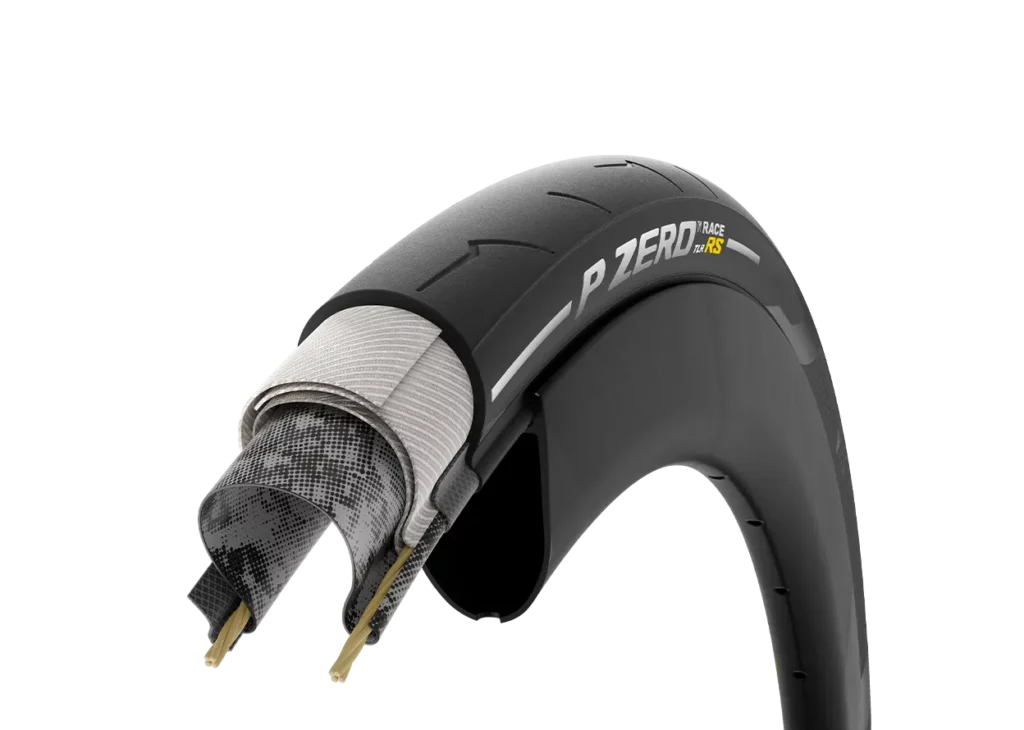
Tubeless is not just anti-puncture technology. Without the friction between the air chamber and the tire, the wheel is more flexible (less hysteresis). In addition, the absence of risk of pinching the chamber allows reduce pressure from about 10 to 15 per cent. That's where the real difference between grip and bend is made.
How to read your results?
My tool gives you two values: before and rear. Why? Because the weight distribution on your bike is not 50/50. It is generally 40 % front and 60 % rear.
- Rear wheel: It's the driving and carrier wheel. It requires more pressure to protect the rim and ensure power transfer.
- Front wheel: It's the steering wheel. It requires less pressure to maximize adhesion (the « grip ») curve and filter the shocks that go up in your arms.
A weather note
If you select « rain » in the calculator, I automatically reduce the recommendation. On wet soil, the pure yield is not sought, but to increase the surface of contact on the ground (the « patch ») to avoid slipping.
FAQ: Frequently Asked Questions
Conclusion
Pressure is not a magic and fixed value. It changes according to your weight (if you wear a backpack for example), your equipment and the terrain of the day. Use this calculator as a solid base, then refine by +/- 0.2 bar depending on your sensations.
Do you have any doubts about your rim/pneu couple? Ask me your question in comment with your exact configuration, I will help you find the right setting.
To go further
4 responses to « Bike tire pressure calculator: ultimate tool »
-
Hello.
Thanks for this calculator, but when you compare 2 different wheels of the same brand, you don't know which wheel is the fastest because the calculator gives the answer only the mark, and not the model 😉-
It's settled, thanks!
-
-
Hello, for the width of the tire, we must fit the tyre width or the one measured after mounting on the rim (for a 28 in Conti, jai 30,5)
Cdlt-
Good evening,
Ideally the true width of the tire you measured, i.e. 30,5.
Stan
-



Leave a comment