

Scope Cycling and INEOS Grenadiers: The technological bet that must win the Tour
The world of professional cycling equipment is often made up of traditions and locked contracts. Yet this early 2026 marked a tectonic break in the WorldTour peloton. After years of trusting the Japanese reliability of Shimano or the American exoticism of Princeton CarbonWorks, armada INEOS Grenadiers decided to change his shoulder rifle.
The UK team signed an exclusive three-year contract with Scope Cycling, a Dutch brand that has made biomimetism its signature. But INEOS is not alone in this adventure: training Polti Visit Malta joins also the ship. Why do these teams put their season on wheels with textured rims and 3D printed hubs? Diving into the heart of a technical alliance designed for one reason only: go and get an 8th victory on the Big Loop.
Sacred union for performance: INEOS and Polti in the front line
For INEOS Grenadiers, 2026 is not a year of transition, it is the year of reconquest. Faced with the recent dominance of competing teams, the British structure has initiated a complete overhaul of its material approach. This partnership with Scope goes beyond simply sponsoring: it is a total technical collaboration. Scope engineers are now working hand in hand with the wind tunnel engineers to optimize each watt.
This strategy is time-consuming and concerns the entire team pyramid. As of this year, the new INEOS Grenadiers Racing Academy equip his young talents, such as Josh Charlton or Hugo Boucher, with this cutting-edge equipment. The goal is clear: to prepare the next generation to ride with the highest technological standards even before their arrival in the WorldTour.
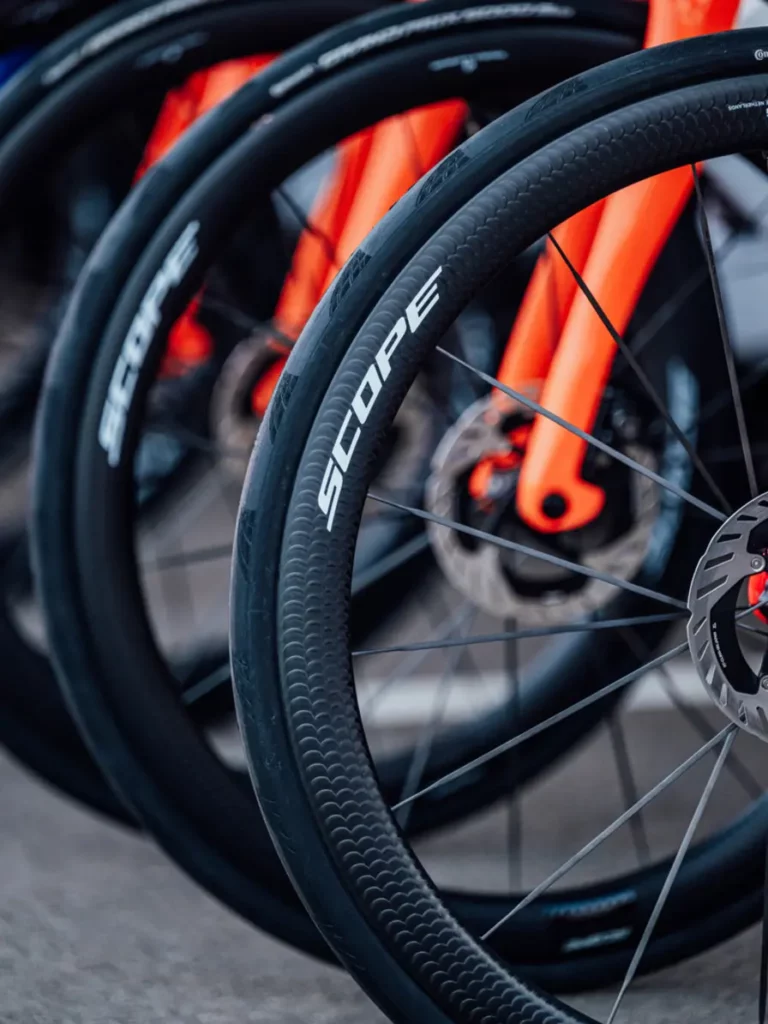
On the Polti Visit Malta, the choice is just as strategic. Validated by Ivan Basso and Alberto Contador, this partnership proves that Scope technology is not a lab gadget, but a weapon capable of facing the harshness of the Giro. Seeing these two structures with different ambitions — One playing the general of the Tour, the other animating the escapes on the Italian roads — validating the same material is a strong signal sent to the market.
The end of the « secret agreements » ? The Platoon Dilemma
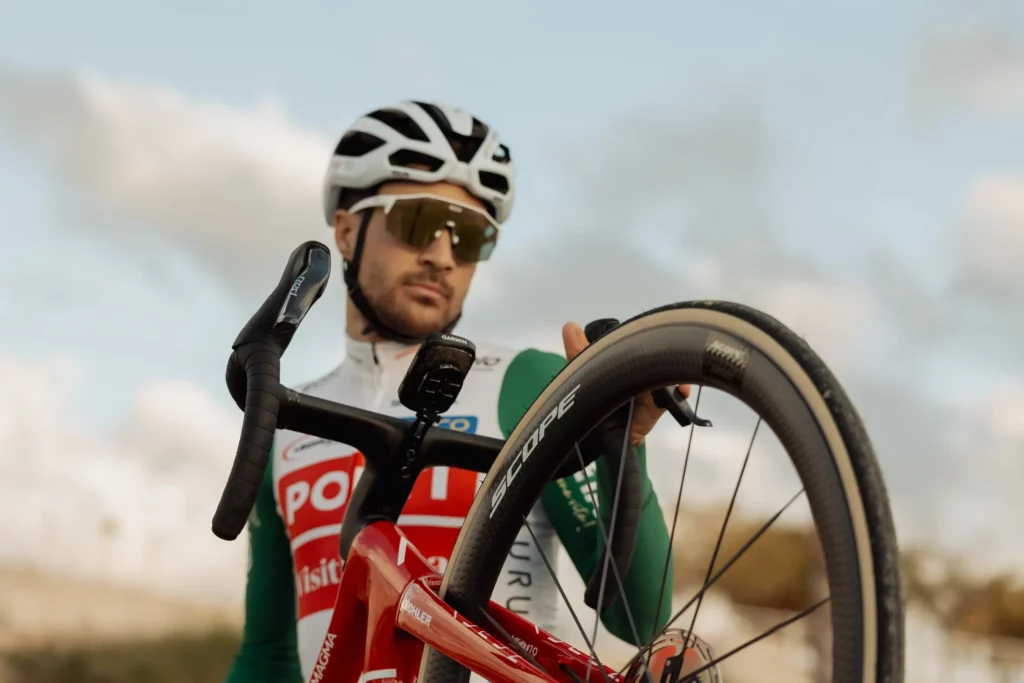
Does this official partnership with INEOS ring the bell of uses « Illegal » Who'd been shaking paddocks in the last few months? For attentive observers, the arrival of Scope at the summit is not a surprise: it was the least well-kept secret of the WorldTour.
Even before this formalisation, several teams under contract with other major manufacturers did not hesitate to use the Artech wheels, often rid of their logos, to seek decisive marginal gains.
- At DSM-Firmenich PostNL: We saw the climber. Oscar Onley use the Artech in the high mountains on the last Tour de France, preferring their lightness to the wheels of its official sponsor.
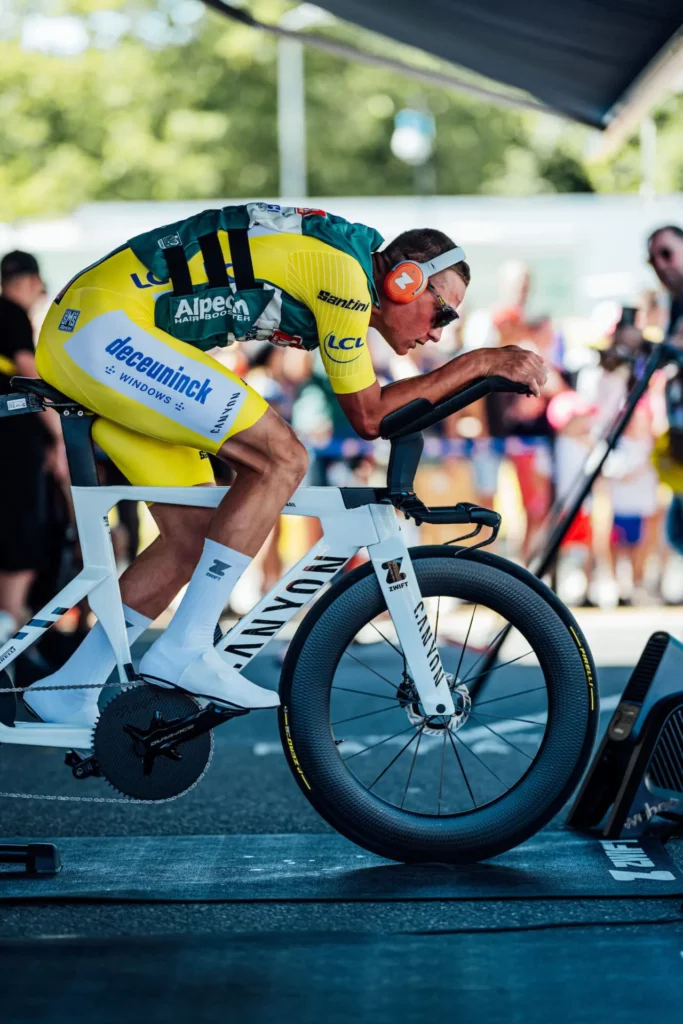
- The stars of Chrono: Persistent rumours and stolen photos have shown runners of Lidl-Trek and even some leadersAlpecin-Deceuninck (the entourage of Mathieu van der Poel is known to test everything that is best done) test these wheels during decisive time trial.
The question that is now annoyed: Now that Scope is the partner « Premium » Will the British team accept that its direct rivals continue to buy (even discreetly) the same technology? Access to the latest Artech innovations is likely to become much more restricted for competing teams, giving INEOS and Polti Visit Malta an exclusive technical advantage for 2026.
Artech: When biomimetism reinvents the wheel
What seduced the managers of performance at INEOS is above all the range Artech. Scope Cycling has taken the bold side of taking inspiration from nature to deceive the wind.
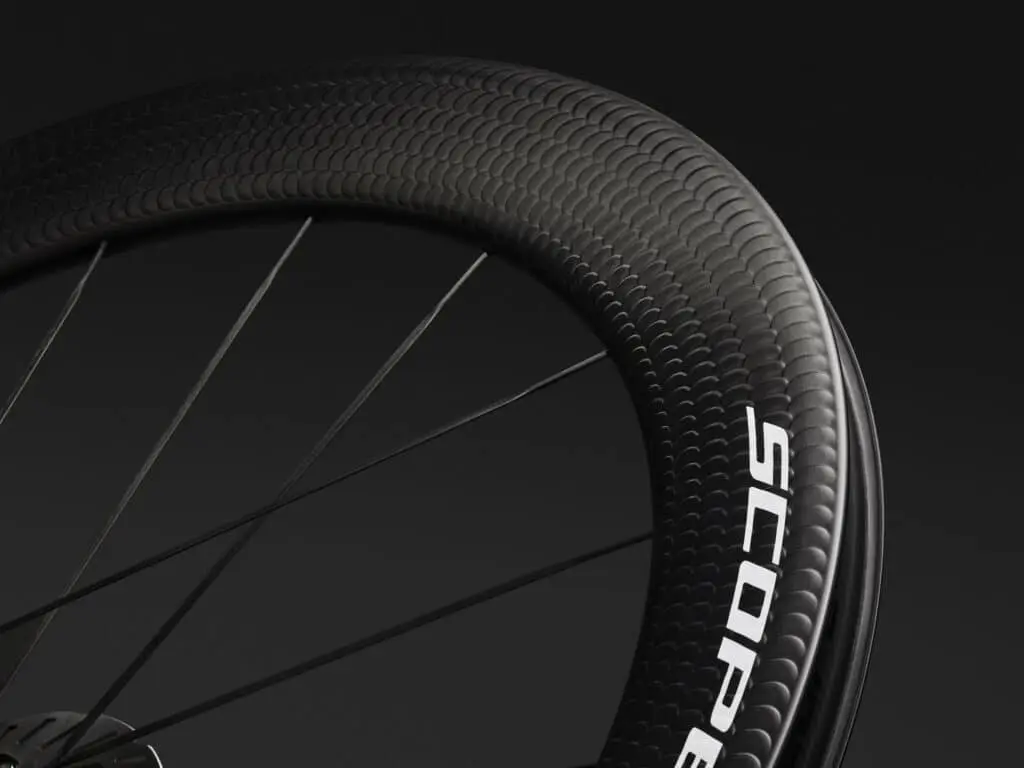
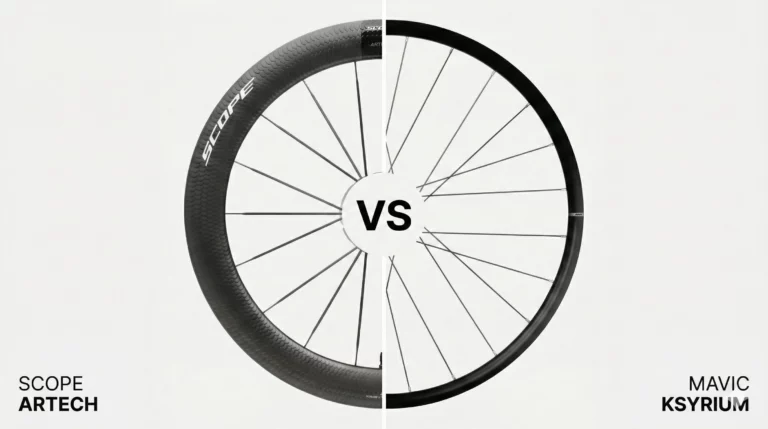
Perhaps the most visible feature is technology. Aeroscales. By observing the skin of some fast fish, Dutch engineers have developed a texture in « scales » on the rim surface. Far from being aesthetic, this relief generates controlled microturbulences that stabilize the air flow. The wind tunnel result is without appeal: a gain of 10.5 watts at 40 km/h relative to a standard aero wheel.
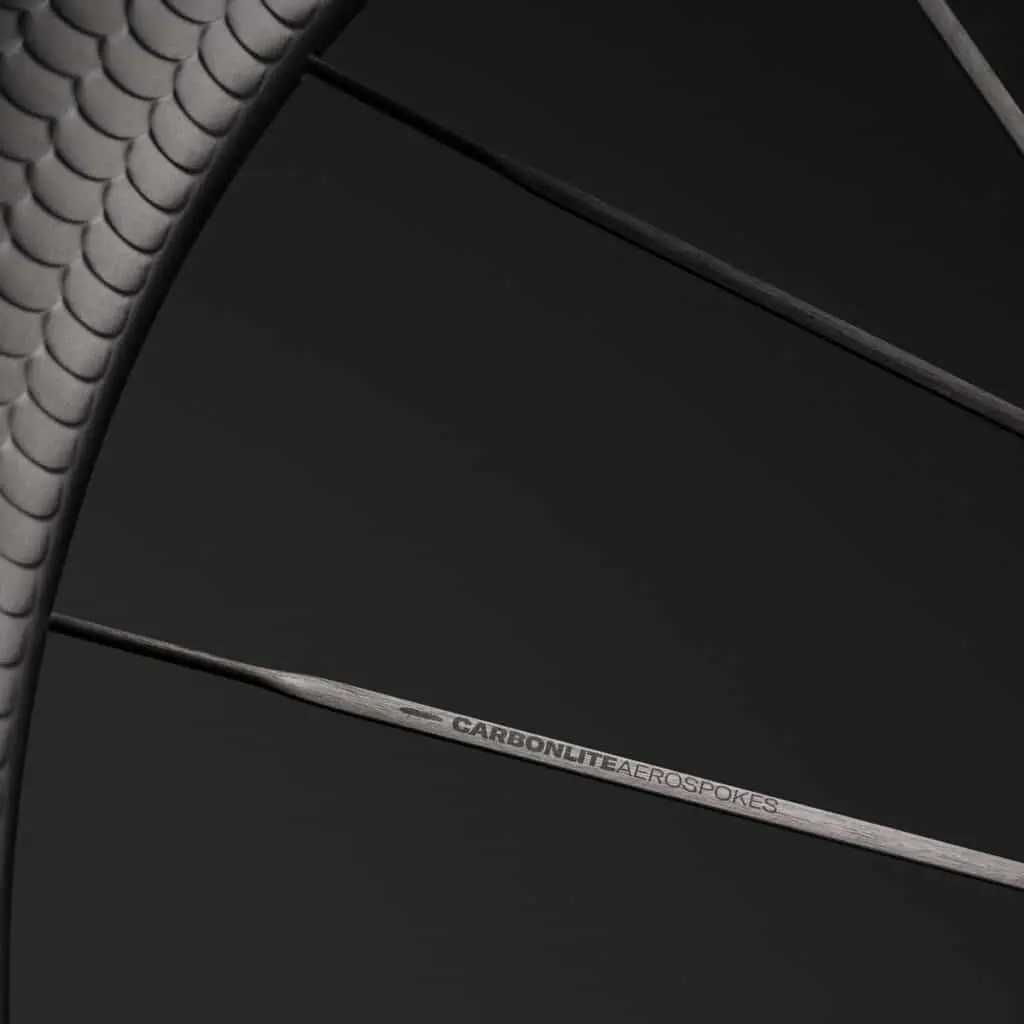
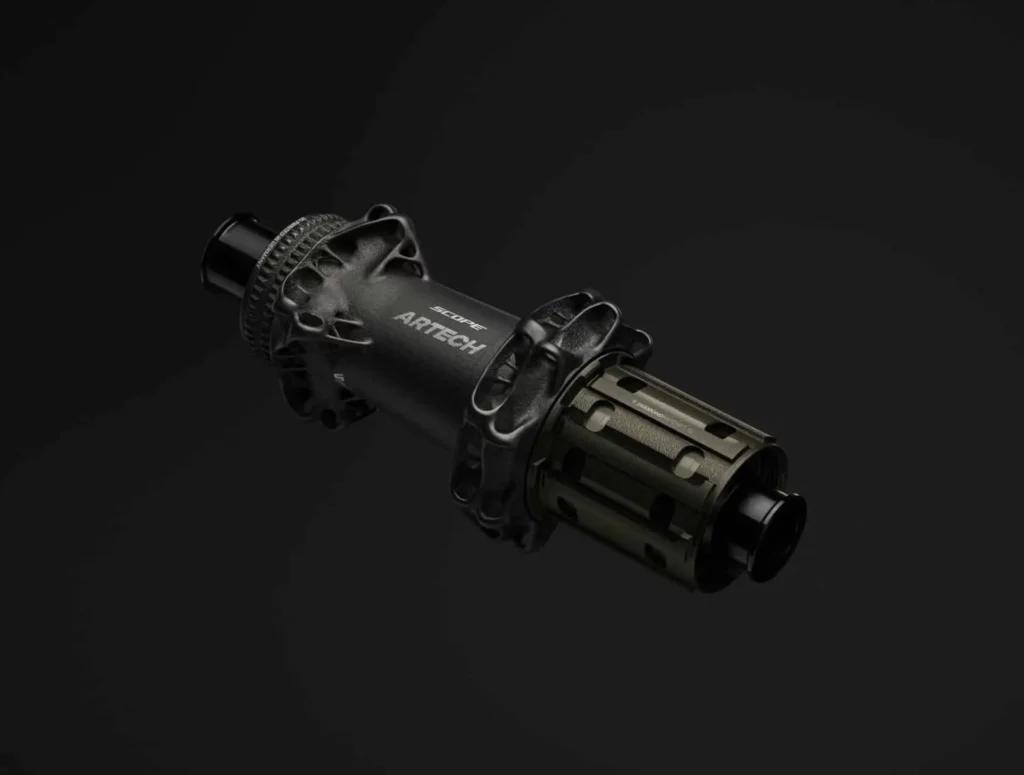
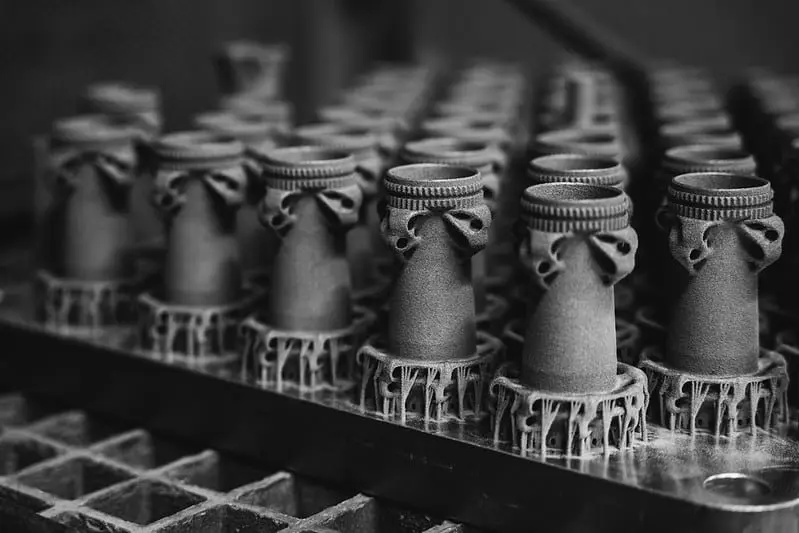
But the true feat is hidden in the centre of the wheel. The Artech hubs are not machined, they are printed in 3D in Germany, using Scalmalloy, an alloy of scandium and aluminum from aerospace. The structure is « bionics », avoided where the material is useless, recalling the internal structure of a bone. This makes it possible to achieve competitive weights: barely 965g for the mountain version (Artech 2) and an incredible 1244g for the 65mm aero model (Artech 6).
For the timed events, war nerve at INEOS, the system was designed as a whole: the front wheel Artech 8.T and the full rear wheel Artech Disc work in symbiosis to split the air.
Expert eye: Does performance have a price?
At Velo Expert Wheels, we do not just read the fact sheets. If Scope's numbers make you dream, use on the ground requires some lucidity. However, it is important to put things in perspective for material of this standing.
The first point concerns the Scalmalloy. Independent testing, including Cyclingnewssurface sensitivity was observed on this raw material. This is not a structural defect, but rather a characteristic related to the absence of varnish (to gain weight). In practical terms, this simply requires a meticulous maintenance : it is enough to dry the hubs well after washing or exiting in the rain to avoid the appearance of small marks of surface oxidation. This is the price of exclusivity to ride with an aerospace alloy.
In addition, we appreciate the Dutch brand's responsiveness to feedback. On the very first Artech series, a slight lateral game could quickly appear once the wheels were mounted and placed on the frame. Scope immediately reacted in updating the design of its axes and ends. This technical correction now completely eliminates this micro-movement, ensuring lateral rigidity and reliability in line with the requirements of a team like INEOS Grenadiers.
It is precisely this type of reactivity and continuous improvement that reassures when you invest in a pair of wheels around 4,000 €.
The Race 2026 Series: Accessible Excellence?
Recognizing that not everyone has the budget of the INEOS team, Scope takes advantage of this highlight to re-shape its range of audiences: Race Series (R-Series).
This is probably the best news for amateur cyclists. By 2026, these wheels inherit the aerodynamic profile « EEA » (Algorithm Enhanced Aerodynamics) developed for Artech. The shape of the rim is identical, offering a very similar penetration into the air. The difference? You won't find the famous « scales » (Aeroscales) and hubs are made of conventional CNC machined aluminium rather than 3D printed.
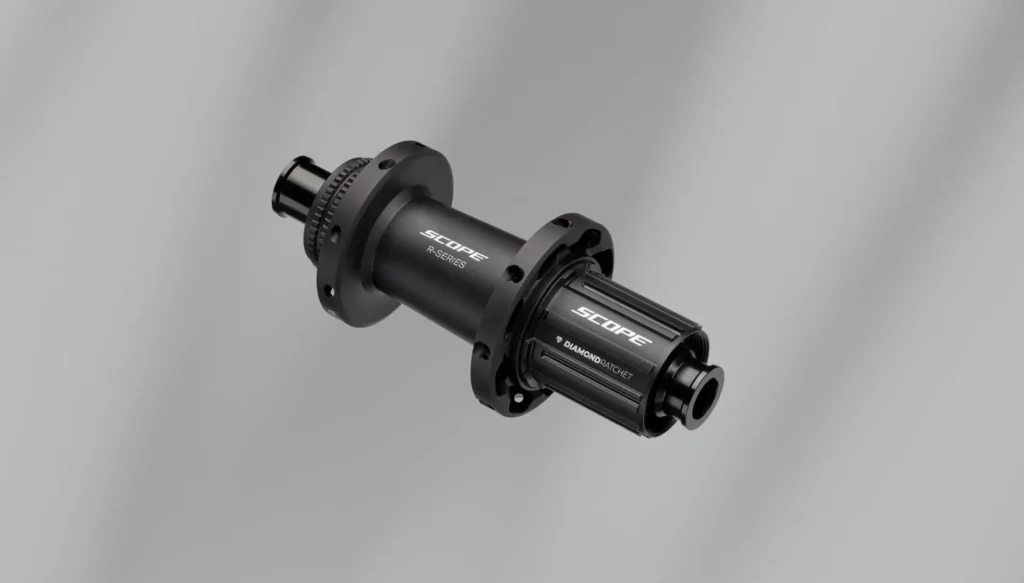
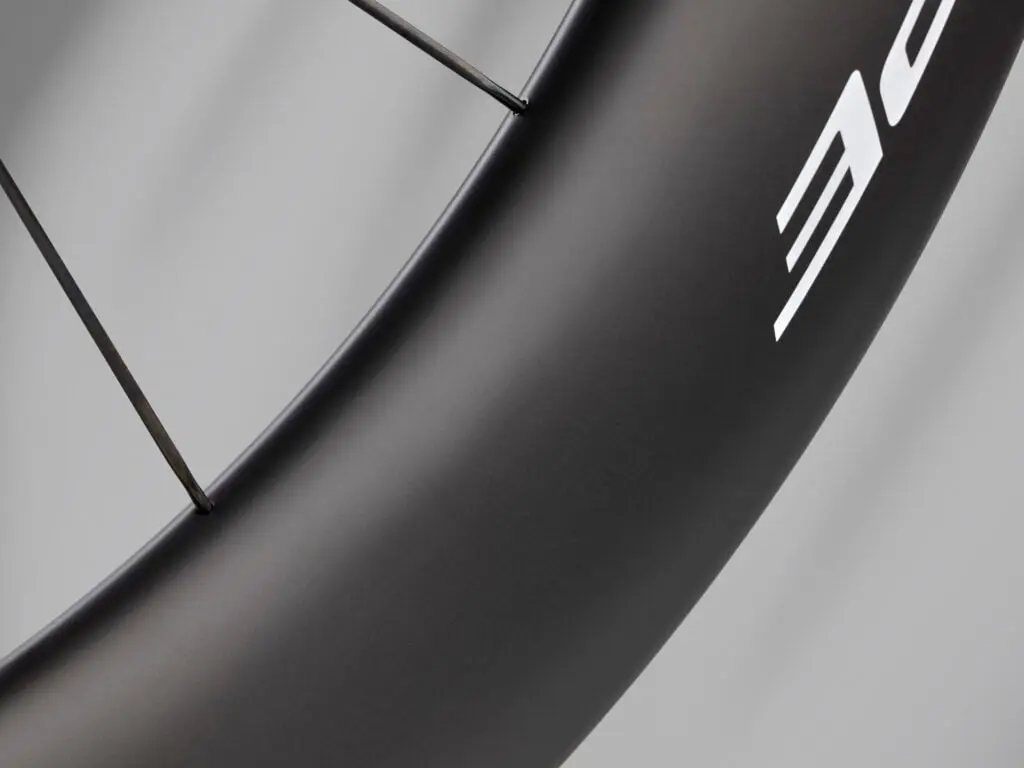
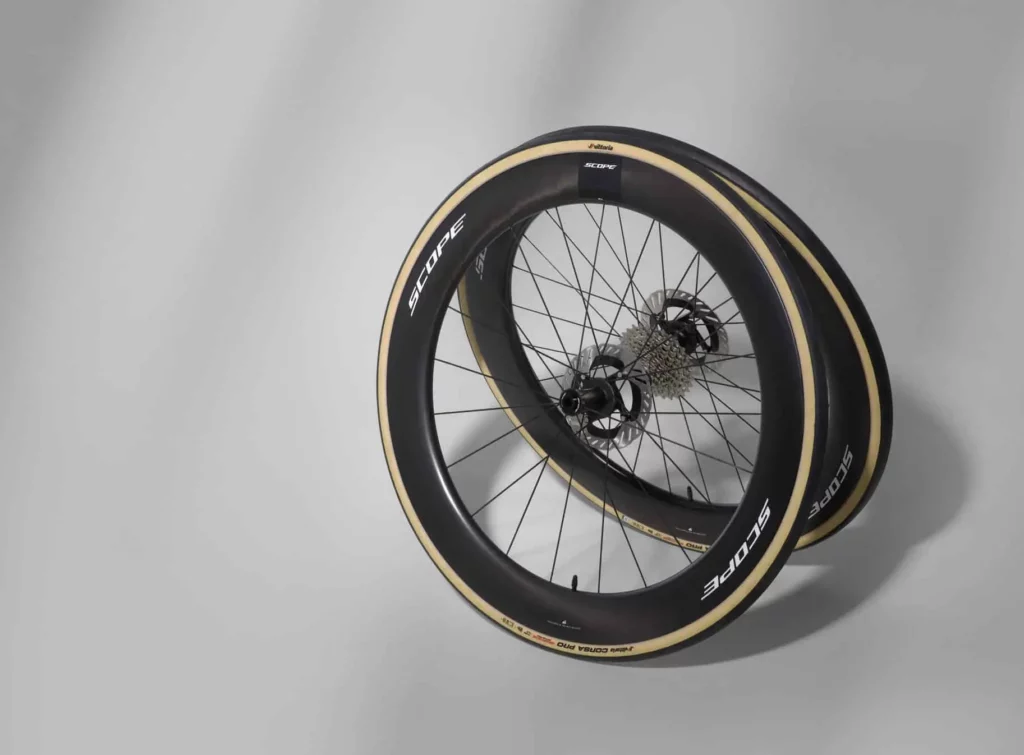
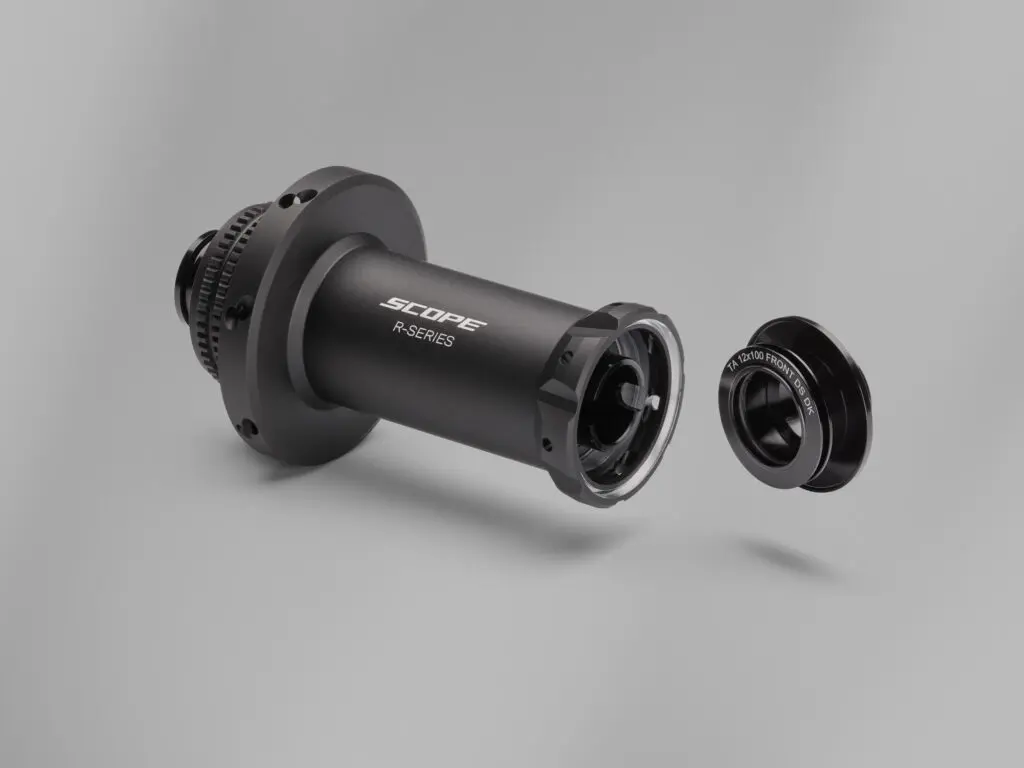
This compromise makes it possible to offer a pair of high-performance wheels around 1 800 €, making WorldTour technology suddenly much more accessible to the common mortals.
Our verdict
The transition fromINEOS to Scope is more than a transfer of sponsor; This is the validation of a fracture engineering. If the Artech remains a demanding technological showcase product, the arrival of these innovations in the Race range is a golden opportunity for cyclists looking for speed.
Leave a comment