
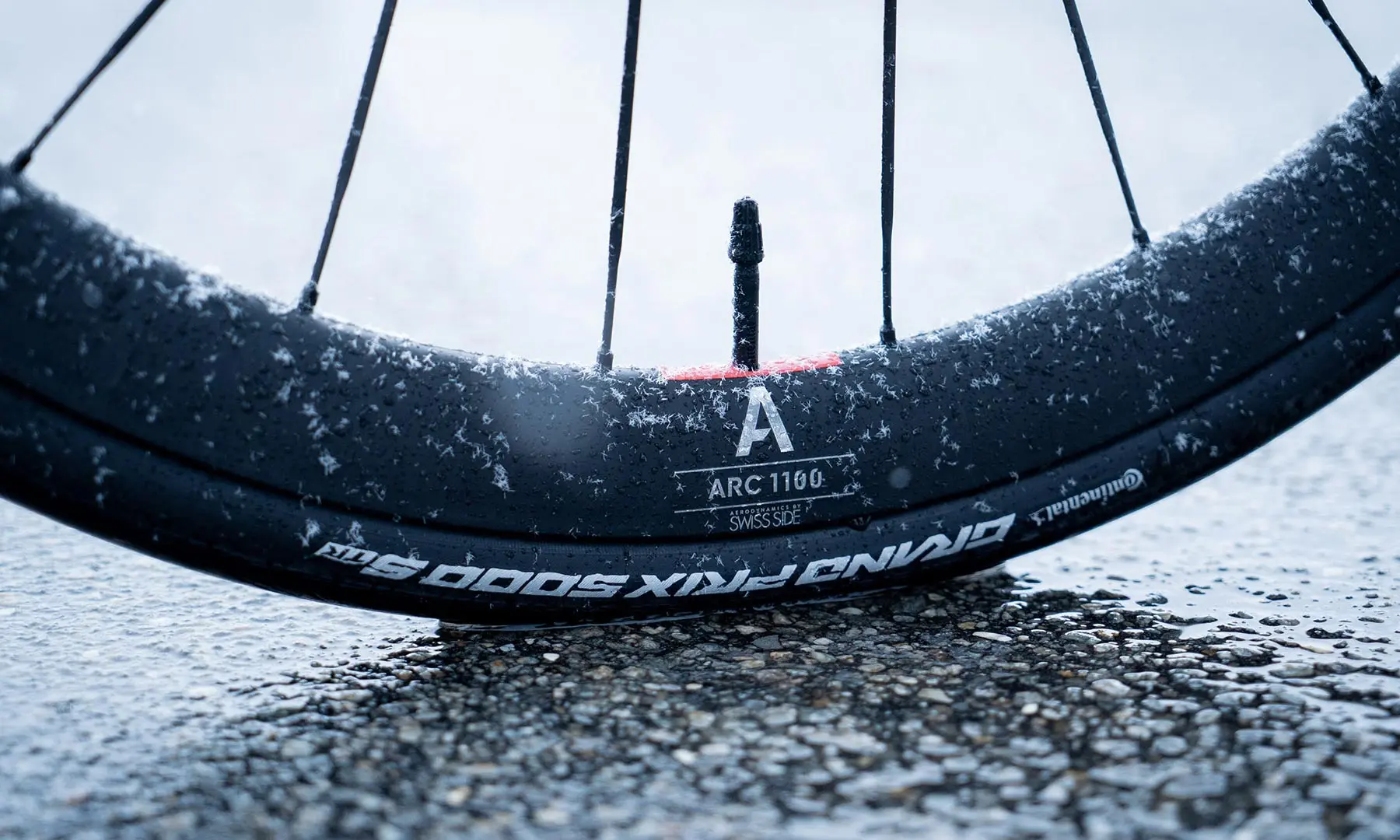
DT Swiss ARC 1100 CS: The end of steel hegemony?
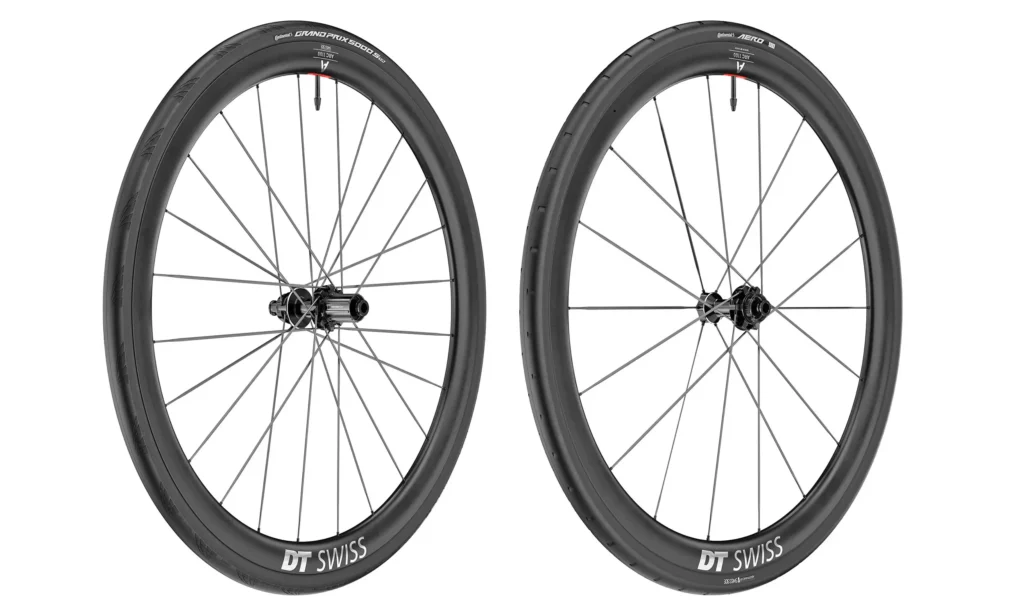
It is a small revolution that has just taken place in Biel, Switzerland. DT Swiss, a world leader in stainless steel radius and guardian of a certain manufacturing tradition, has just crossed a major technological path. For the first time in its history, the brand launches a pair of wheels equipped with carbon rays: the DT Swiss ARC 1100 CS.
Known for its prudence and the legendary reliability of its components, has the Swiss firm managed its bet drastically reduce its climber wheels without sacrificing rigidity? We shelled the data sheet of this ultra-exclusive rolling train.
Carbon rays... made by Vonoa
This is the central point of this novelty. To gain weight on its ARC (Aero Road Carbon) range, DT Swiss had to resolve to temporarily abandon steel. The lens was clear: go below 1200 grams for a pair of medium profile wheels (38 mm).
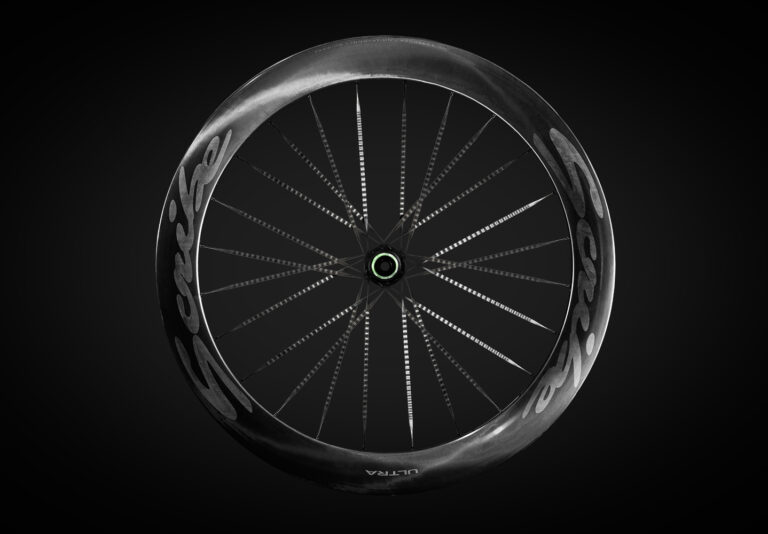
The result is convincing: 1174 g on the balance, a savings of 125 g compared to the previous version equipped with flat steel spokes. However, a technical detail calls on purists. DT Swiss does not manufacture these rays internally. Brand associated with specialist Vonoa (already seen at Newmen or Hunt) to provide these rays « Aero carbon T-head ».
These spokes have a specific T-head and integrated aluminum nuts (hidden nipples). Thanks to higher tensile stiffness than steel, DT was able to reduce the number of spokes on the front wheel, from 24 to only 18 (radial mixed lacing and crossed by 2). The rear retains 24 rays with a 2:1 lacing to manage the transmission torque.

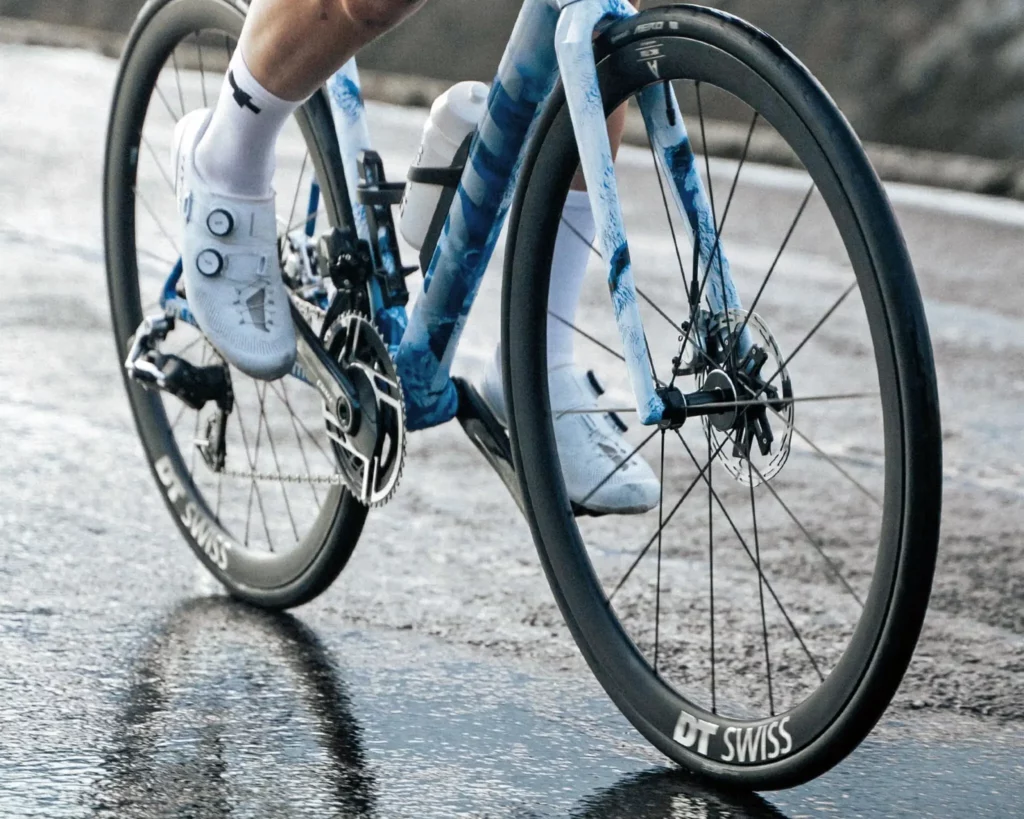
Wheels 180 and rims « Pure » : the DT ecosystem
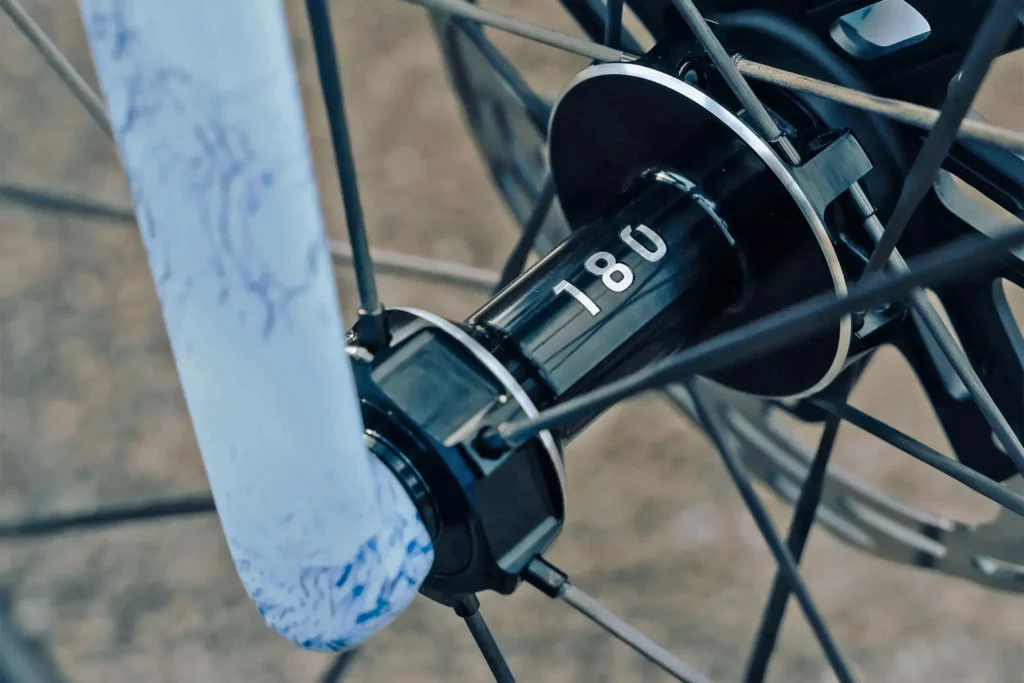
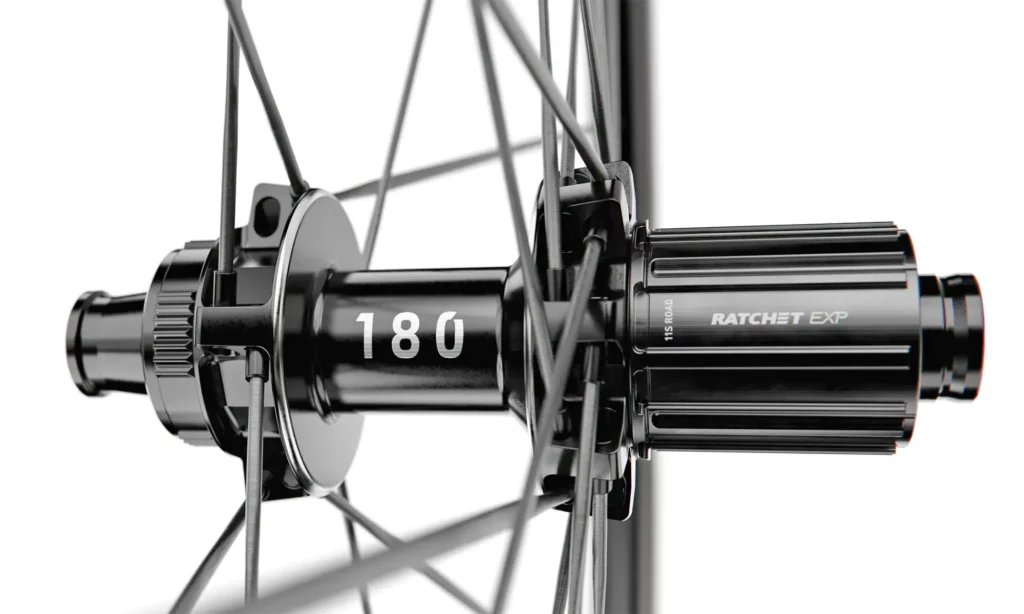
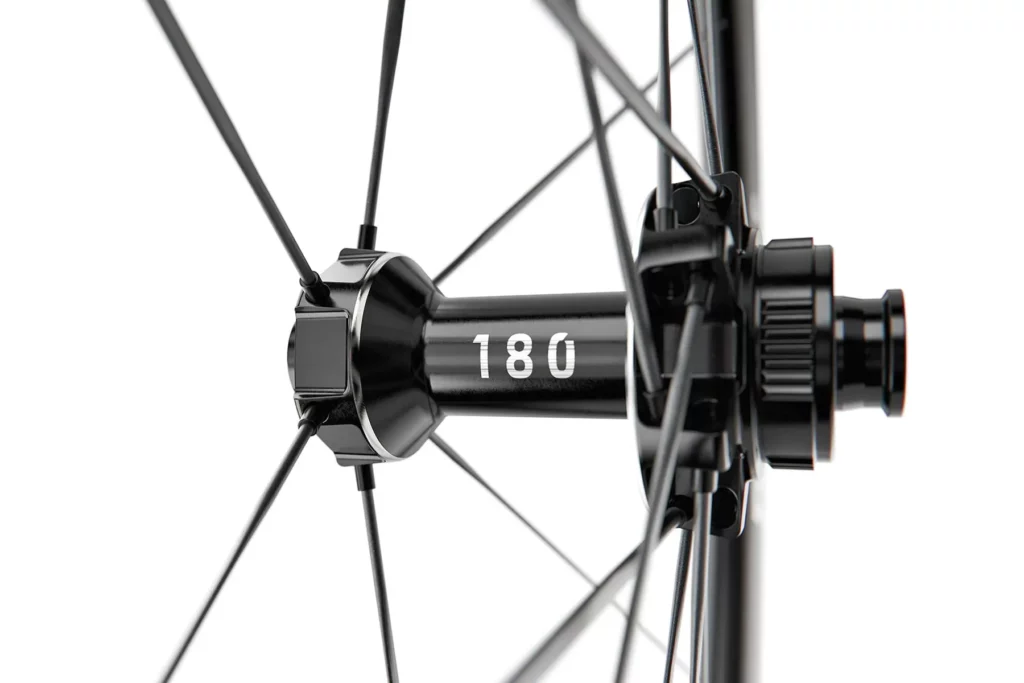
If the rays are outsourced, the rest of the set breathes Swiss engineering. The hubs are a specific evolution of the famous DT Swiss 180, modified in flasks to accommodate larger carbon ray heads.
- Mechanism : EXP 36T Ratchet for quick engagement and simplified maintenance.
- Bearings : SINC Ceramic, the top of the brand to reduce friction.
- Axis : Standard 12×100 mm and 12×142 mm.
A rim with a conservative profile
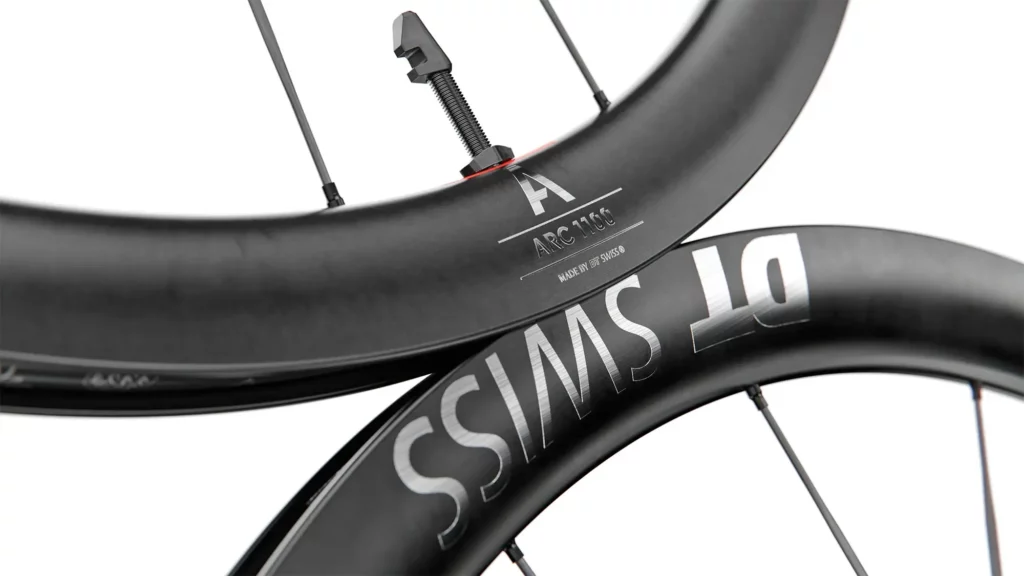
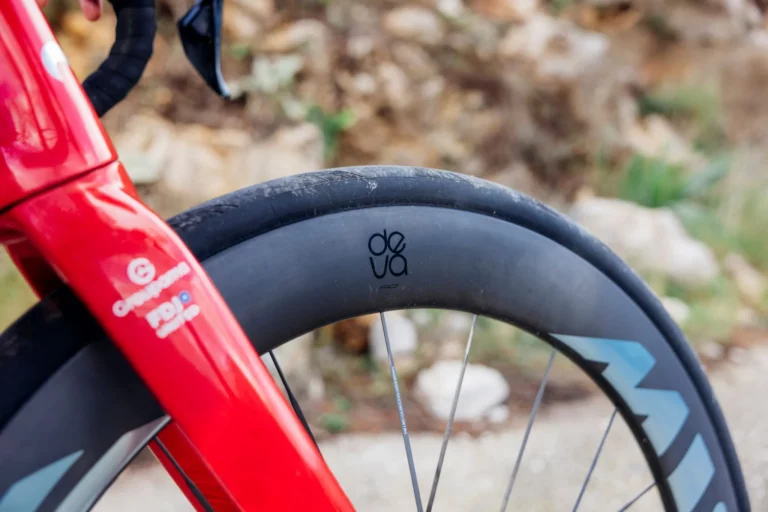
On the rim, DT Swiss uses its new manufacturing process « PURE » which optimizes the carbon layup to eliminate unnecessary layers. However, measurements may surprise in 2025.
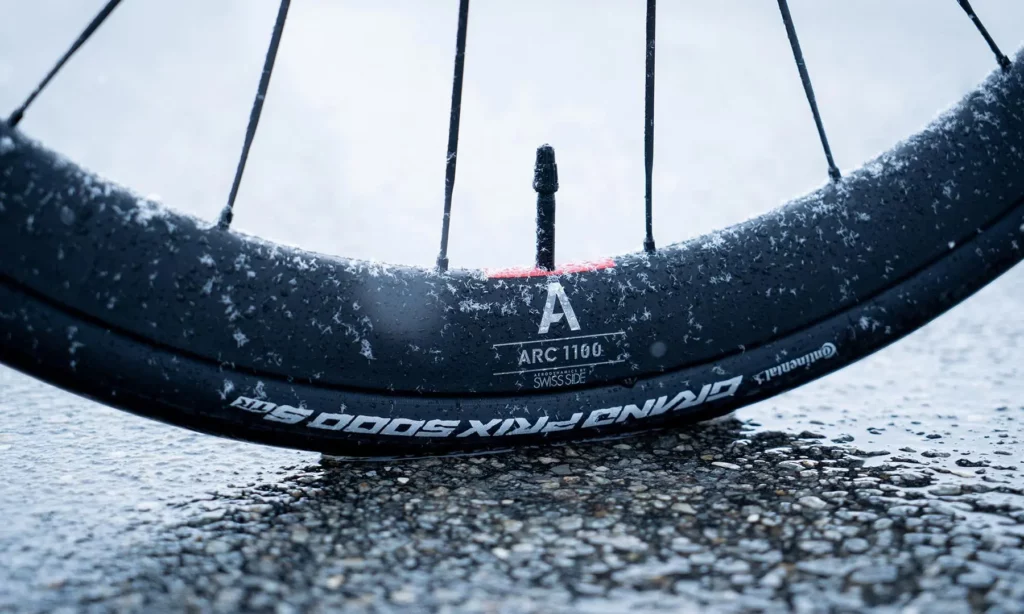
While the trend is to internal widths of 23 or even 25 mm for gravel and endurance, DT Swiss remains on a 20 mm internal width and external 26 mm. It's a decisive choice « road performance » and aero, optimized for tires from 25 to 28 mm, but offering less air volume than standards « Wide » current.
Important point for safety and versatility: the rim keeps hooks (hooked). So you are free to use any tubeless tire or air chamber (including TPU) without hookless pressure restrictions.
Detailed technical specifications
- Weight of pair : 1174 g
- Rim height : 38 mm
- Internal width : 20 mm (Hooked / Hooks)
- External width : 26 mm
- Moths : 180 Spline CS, Ratchet EXP 36T, SINC Ceramic bearings
- Rays : Vonoa Carbon Aero (18 av / 24 ar)
- System weight limit : 110 kg
- Public price (WTS) : 3 199 €
Availability and verdict
For this launch, DT Swiss imposes a format « WTS » (Wheel Tire System). The wheels are only sold as a complete kit, mounted with a front tire Continental Aero 111 (26 mm) and one rear tyre Continental GP 5000 S TR (28 mm), as well as Continental TPU air chambers.
Posted to 3 199 €, the DT Swiss ARC 1100 Spline 38 CS position themselves directly against premium offers such as Roval Alpinist CLX or Lightweight wheels. The weight gain is undeniable and the manufacturing quality of the 180 hubs is no longer to be proved.
It is a niche product for wealthy climbers who want to remain true to the DT Swiss ecosystem while benefiting from the reactivity of the carbon beam. It remains to be seen whether this technology « external » will be generalized to future ranges or if it will remain a technological showcase.

Leave a comment