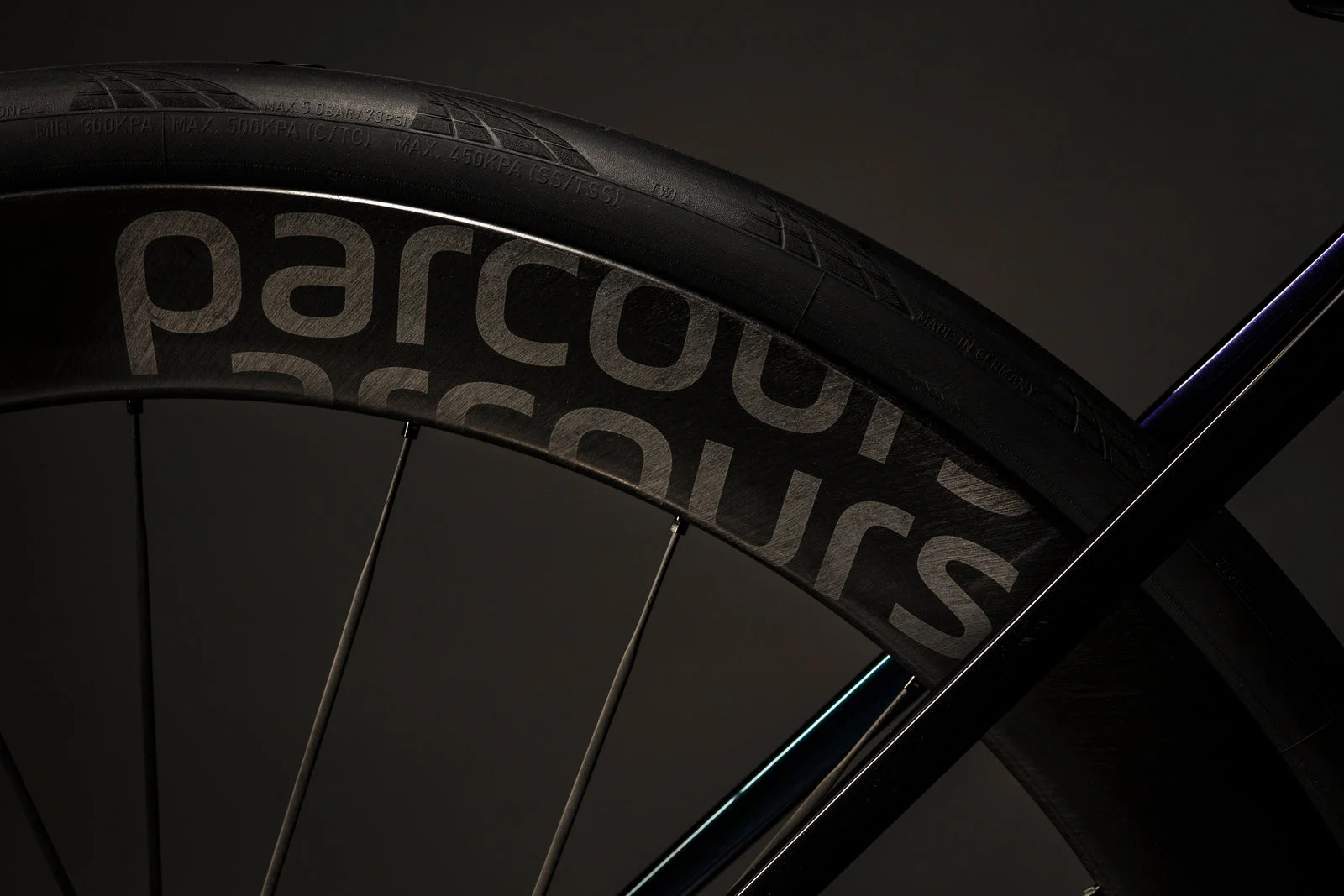
Strade GT course: when recycled carbon becomes a performance argument
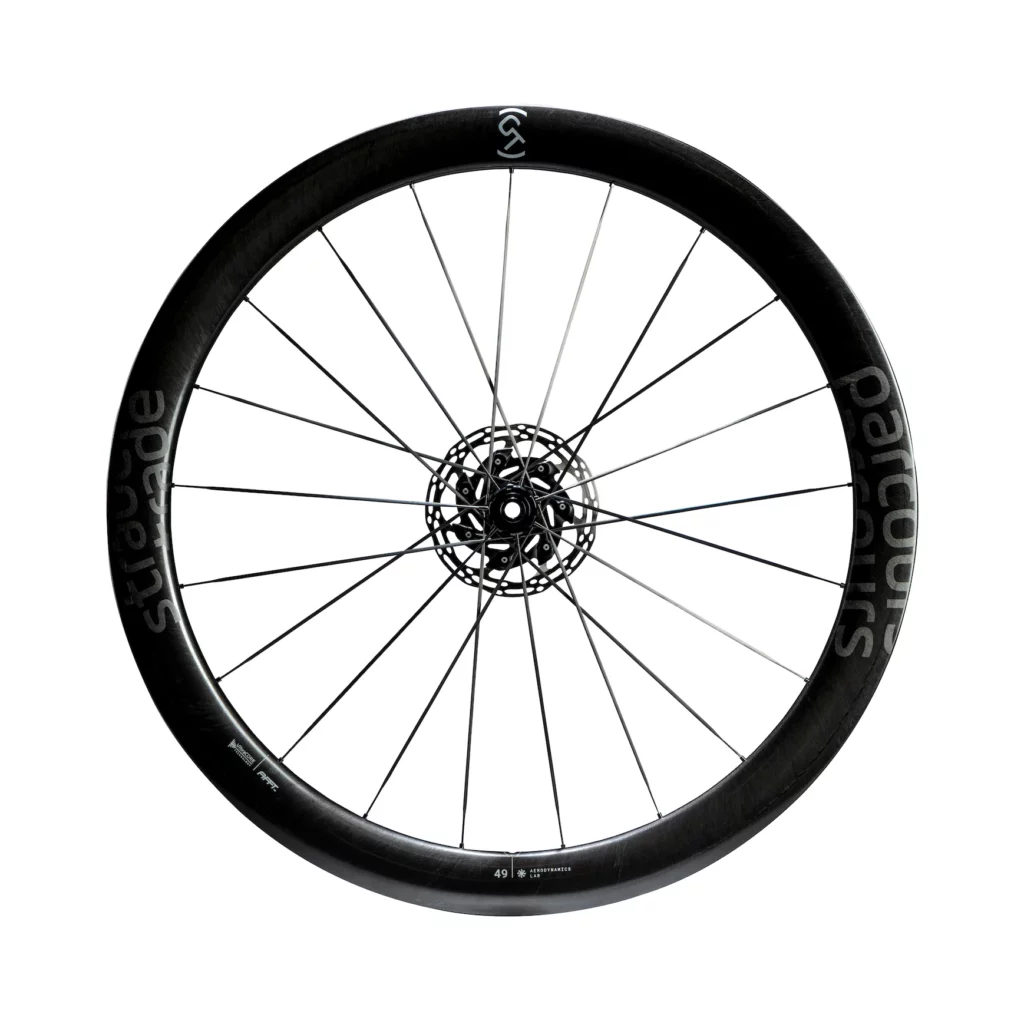
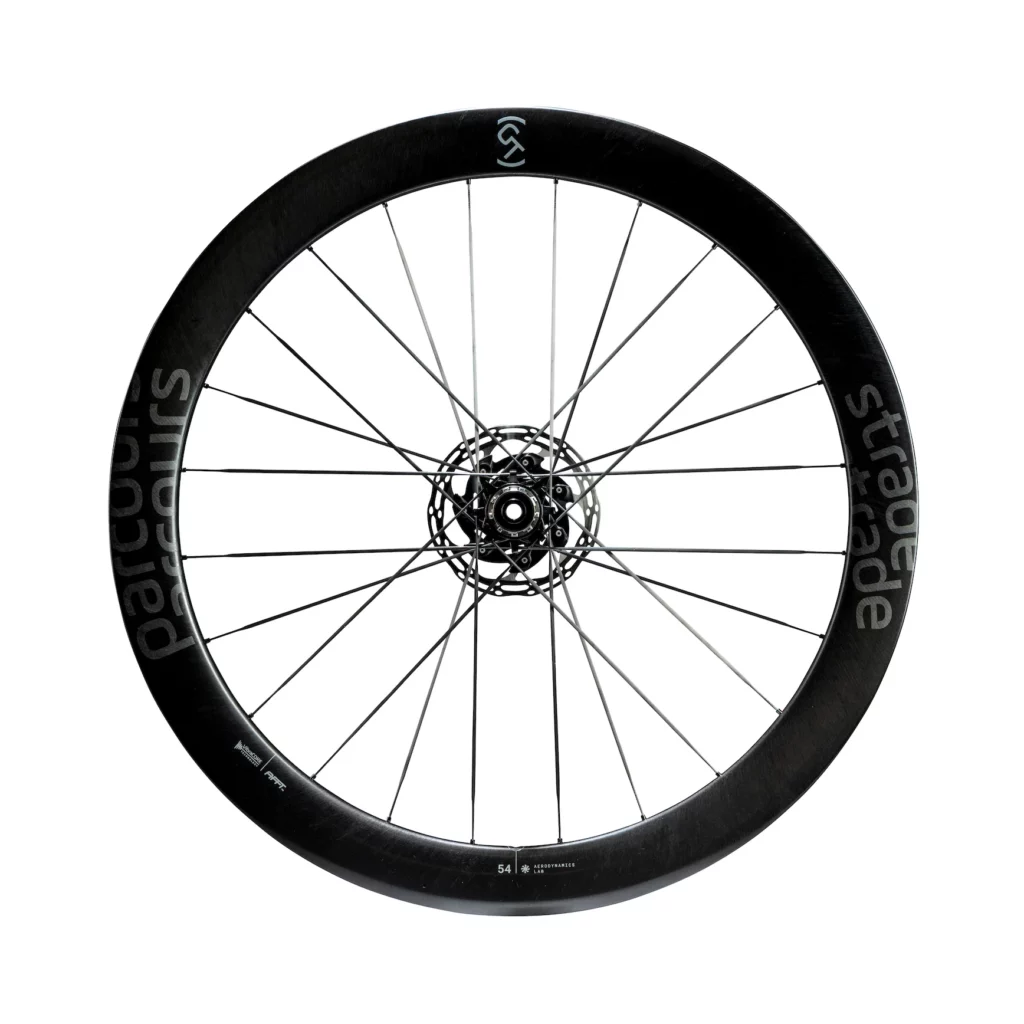
And if the next significant gain in carbon wheels came neither from the air nor from the weight, but from the material itself? This is the bet that Run with the Strade GTs, launched in April 2026. The UK brand incorporates recycled carbon in its rims via VibraCORE technology, developed with Lineat and the University of Nottingham Trent. The Strade GT VibraCORE tracks display 1130g announced in profile 49/54mm with Alpina Carbolite carbon rays, and promise a measured 23% reduction in vibration in critical frequencies for cyclists, all for 3199€. We do what's behind the numbers.
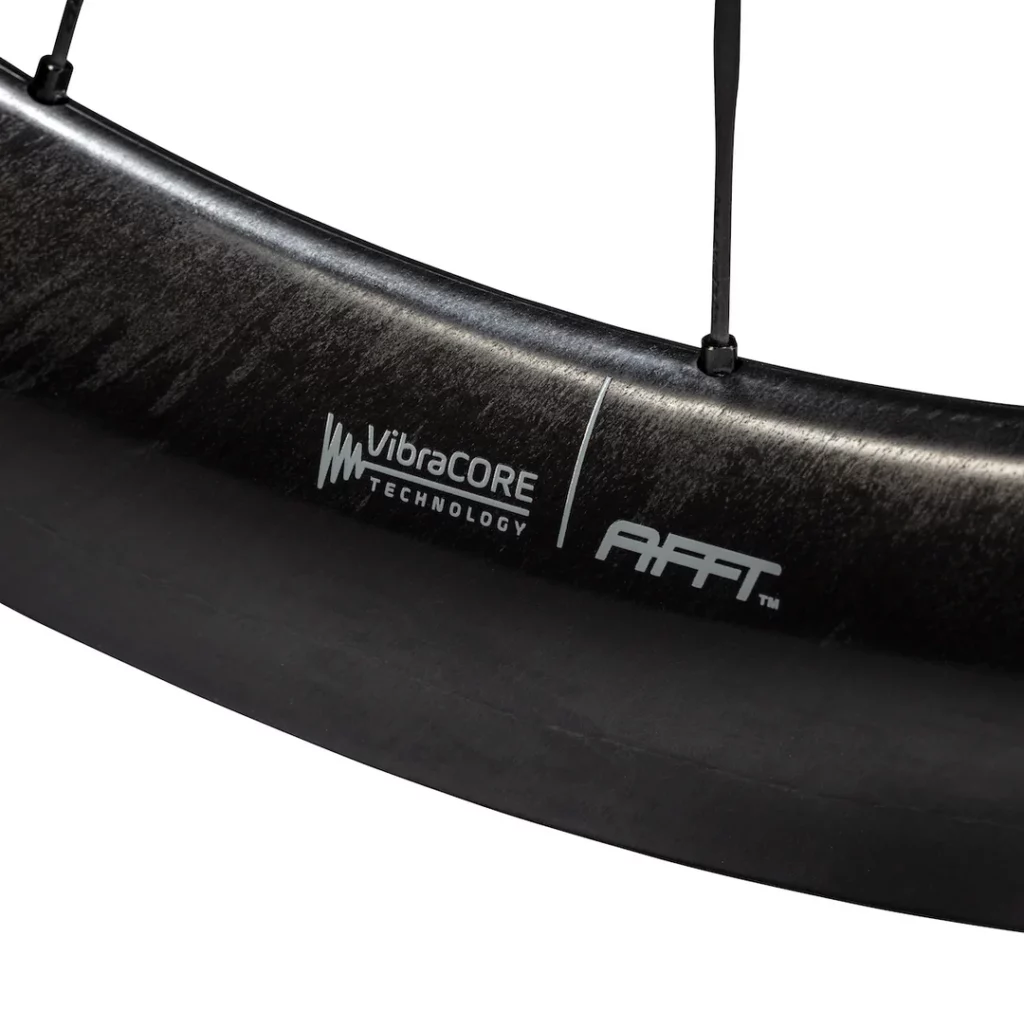
VibraCORE : Recycled carbon in the heart of the rim
The technical heart of the Strade GT is VibraCORE. In concrete terms, the aim is to integrate into the rim a layer of AFFT (Alined Formable Fibre Technology) material produced by Lineat, a Welsh company specializing in the re-use of carbon fibres. The process recovers short fibres from composite waste, then re-aligns them to form a composite tape that retains about 30% of the virgin carbon traction module.
This material represents 12 to 15% of the total rim volume, the rest being in conventional continuous carbon fibres. The placement is strategic: the beam bed is the area where vibrational energy enters the wheel structure. By changing the energy transfer between the laminate layers at this precise location, VibraCORE acts upstream of the entire chain, before the frame, before the contact points. This is a key distinction from the usual approaches (tire pressure, flexibility of the framework) which all intervene downstream.
Figures: -23% vibrations, but under what conditions?
The University of Nottingham Trent validated its measurements with a serious protocol: multi-axis sensors on the gallows and upper tube, 5 testers from 55 to 105 kg, several types of frames (carbon, titanium, alu), standardized tires (Vittoria Corsa Pro 28 and 30mm) at three controlled pressures (2.75, 4.1 and 5.5 bar), on the real road.
Results at 4.1 bar showed a reduction in RMS vibrational energy of 23% in the 4-12Hz band and 19% in the 20-50Hz band. These ranges correspond to the resonances of the human body most related to fatigue: trunk (4-12Hz) and soft tissues (20-50Hz). This effect is translated by an equivalent of 0.5 to 1 bar of pressure less, without the associated compromises (roll resistance, steering accuracy).
The white paper details with honesty the limits: at 2.75 bar, the profit decreases by about 50% because the tire already absorbs a lot. At 5.5 bar, the absolute reduction remains similar but the percentage drops. The sweet spot is located around the 4 current bar, which corresponds to the actual use.
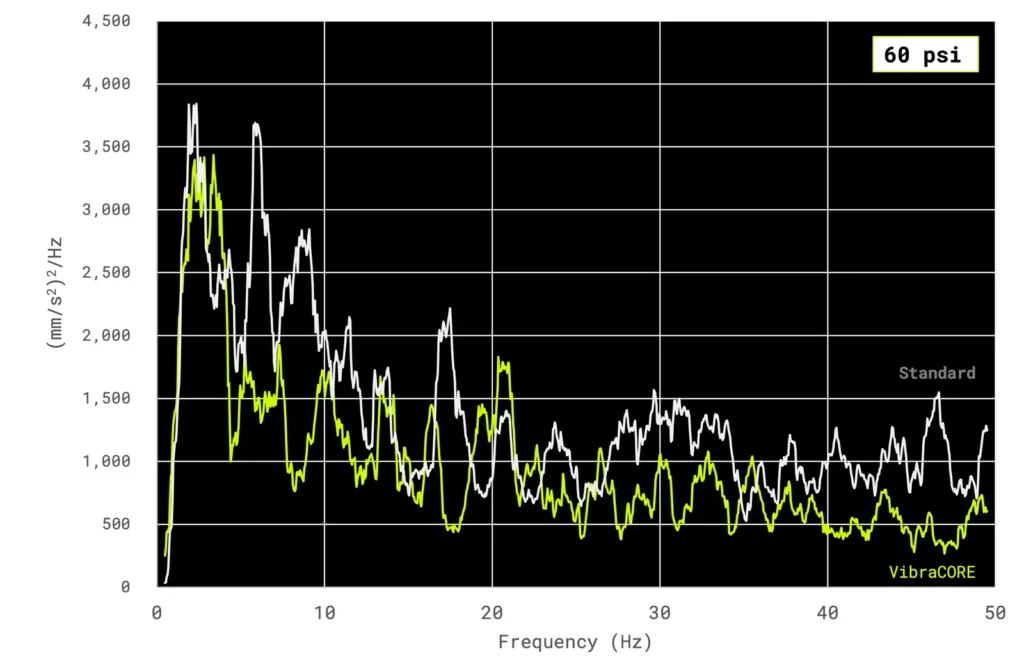 The VibraCORE curve (yellow) shows a net reduction in vibration energy compared to the standard rim (white), particularly visible between 20 and 50Hz.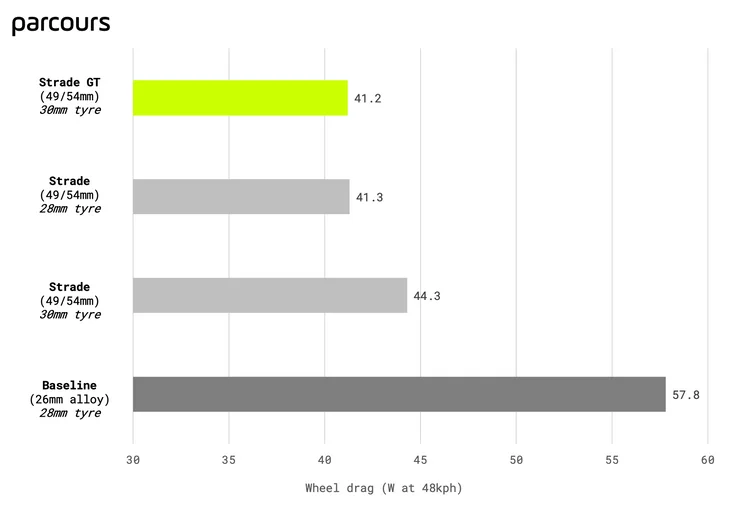
Aero, weight and carbon rays: the rest of the equation
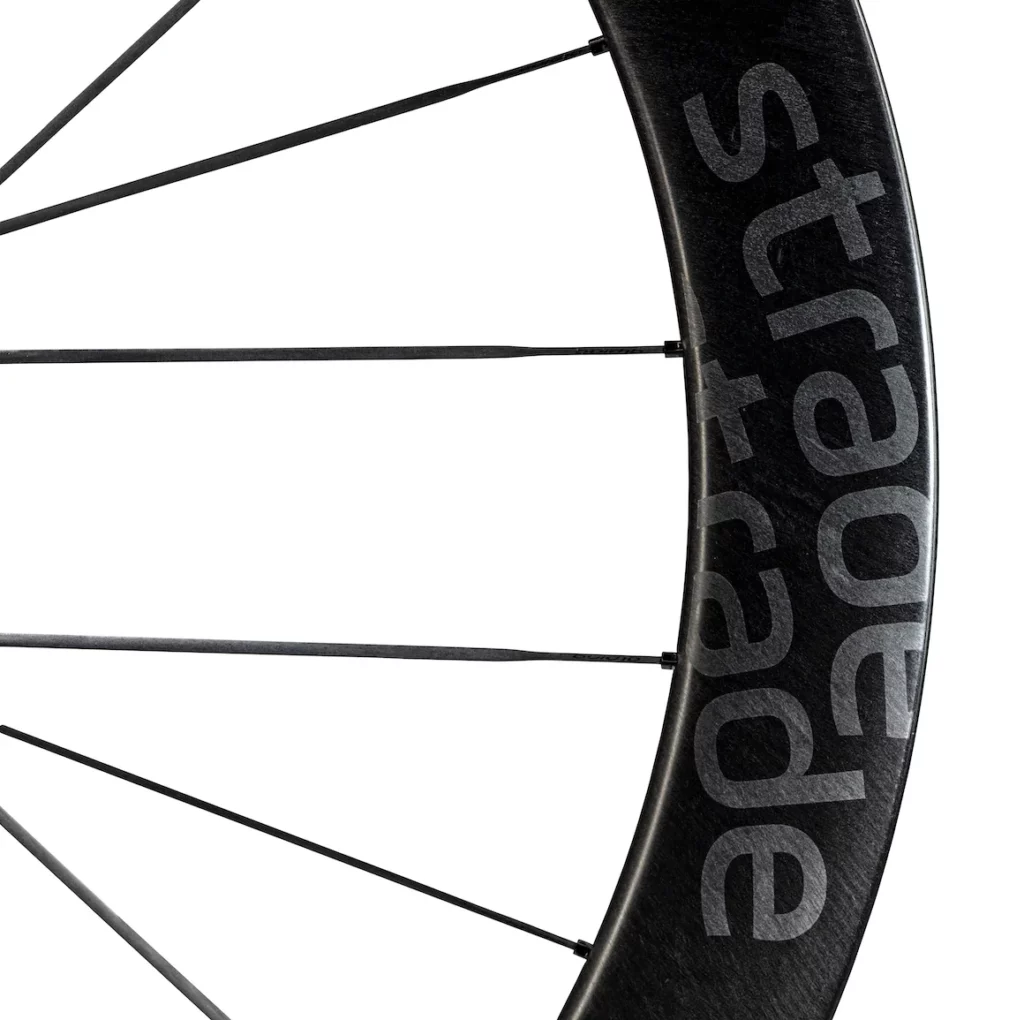
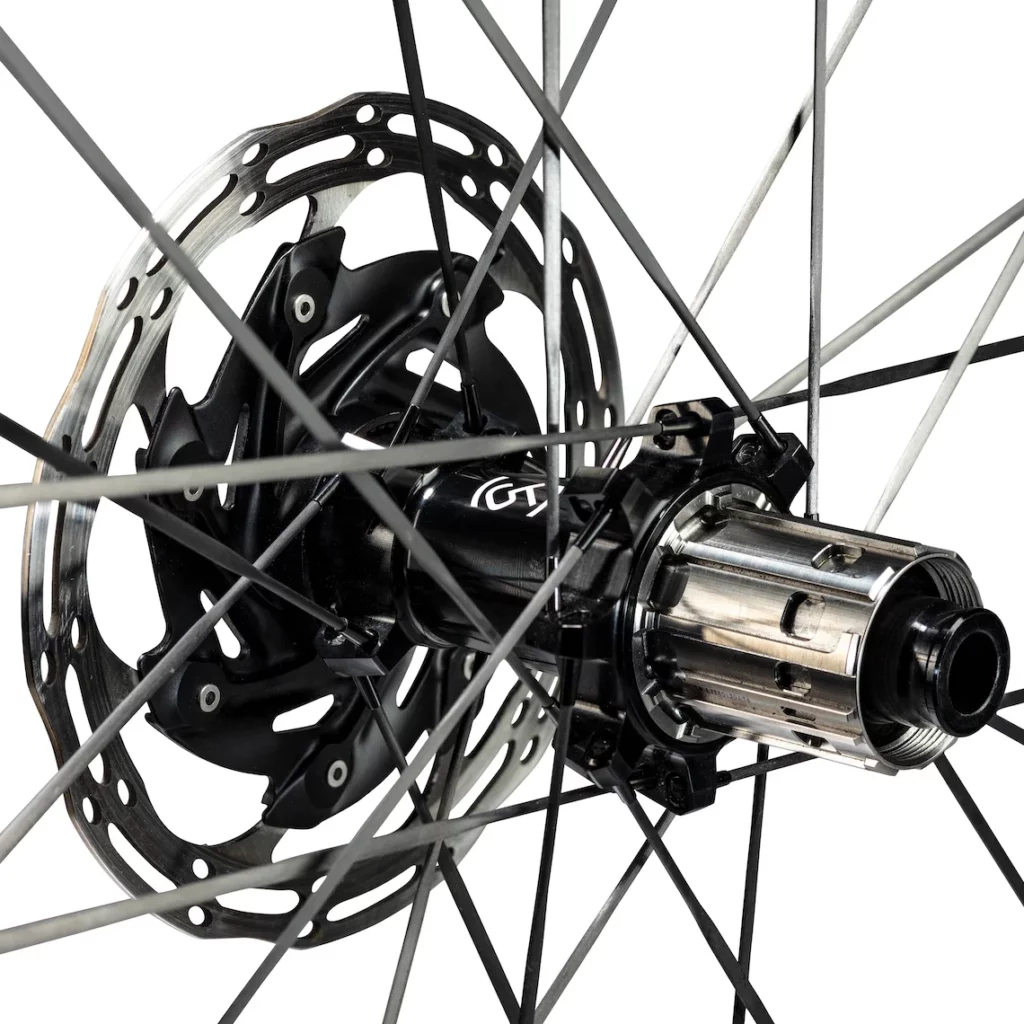
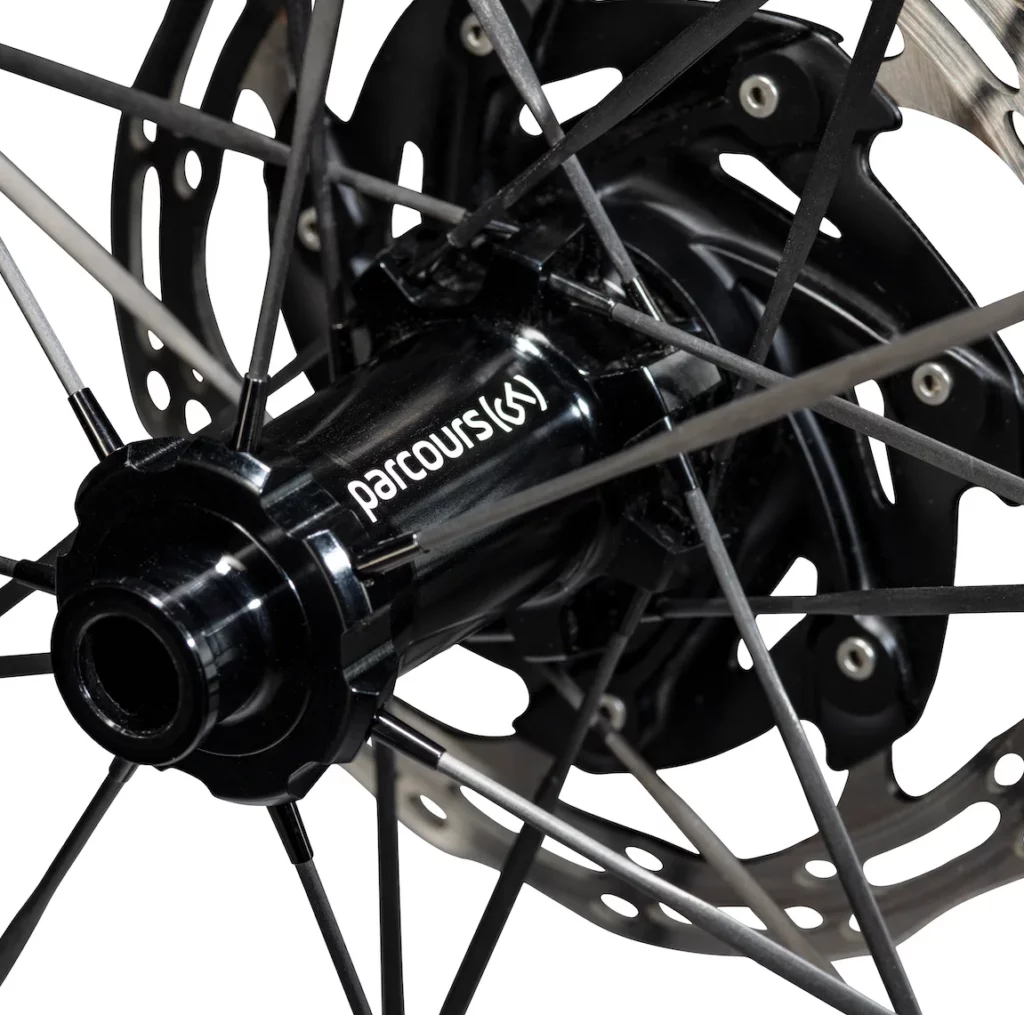
VibraCORE is not the only change. The rim profile has been optimized for a 30mm tire (internal width 23.5mm), resulting in a 3.2W aero gain compared to the previous Strede with a 30mm at 48km/h, and a 15% reduction in lateral crosswind force. The Strade GT also inaugurate carbon rays at Parcours, with the Alpina Carbolite lacing 21/24 (ratio 2:1). The white paper notes that these rays behave in a similar manner to a flat steel radius in terms of elasticity, which alters the bias of excessive rigidity often associated with carbon rays.
The weight of the rims has increased from 470/480g (Strade) to 370/385g thanks to the more efficient VibraCORE layout, and the impact resistance exceeds 140J against 40J required by the UCI.
Drafting opinion
The Strade GT VibraCORE Routes are an approach that is rarely seen in the wheel industry: a manufacturer who publishes a 30-page white paper, details its test protocol, recognizes the limitations of its technology (reduced benefit at low pressure) and quotes its academic partners. This is the opposite of hollow marketing. The 23% vibration reduction measured at 4 bar is a concrete figure, validated in real conditions on several cycling profiles, giving credit to promise.
The point of vigilance: at about 3199€ (steel coils), we are in the very high range. And it will take a field test to check whether the 23% vibration reduction translates into perceptible sensation over 150km of degraded road, or whether the gain remains mainly measurable per sensor. The Strade GT Routes are a convincing proposition for demanding long distance cyclists, provided that the experience in the field confirms what the data announce.
Technical specifications
- Profile: 49mm (front) / 54mm (back)
- Weight: 1130g the pair (announced)
- Rim weight: 370g (front) / 385g (back)
- Internal width: 23.5mm
- Moths: Course (new design, captive spoke)
- Rays: Alpina Carbon Carbolite, 21 Front / 24 Rear (Ratio 2:1)
- Bearings: Steel (standard) or ceramic (option)
- Tire compatibility: Tubeless Ready, rim hooked
- Price: 3199€ (steel coils) / 3489€ (Camera roll)
- Availability: April 2026