Fore Carbon – Mavic
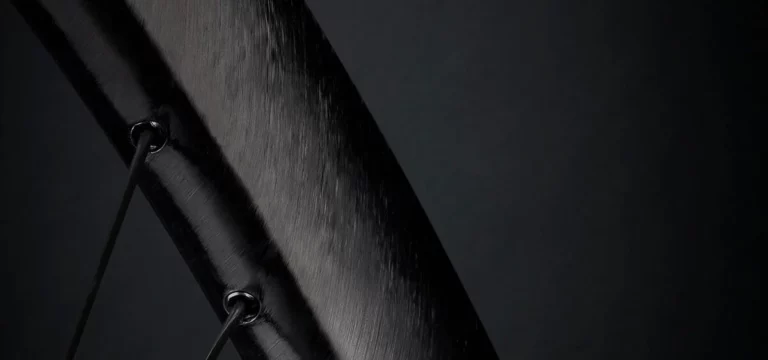
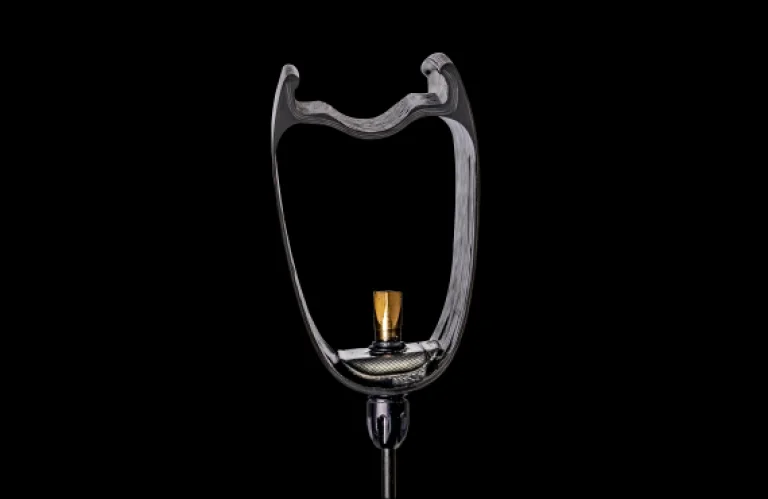
At Mavic, the connection between the rays and the carbon rim does not involve a conventional drilling. Fore Carbon technology uses metal inserts drowned in carbon during moulding, allowing the upper deck of the rim to be completely intact. This system can be found on the flagship models of the range, including Cosmic Ultimate 45, Cosmic SLR 45 and Cosmic SL. This article details the operation of Fore Carbon and its concrete consequences on the rigidity, sealing and weight of the wheel.
What is Fore Carbon?
The problem of conventional drilling
On a classic carbon wheel, each radius is attached to the rim via a nut through a hole drilled in the two bridges of the rim (lower and upper). This double drilling weakens the structure and requires the use of a rim bottom to guarantee tubeless mounting.
The Fore Carbon principle
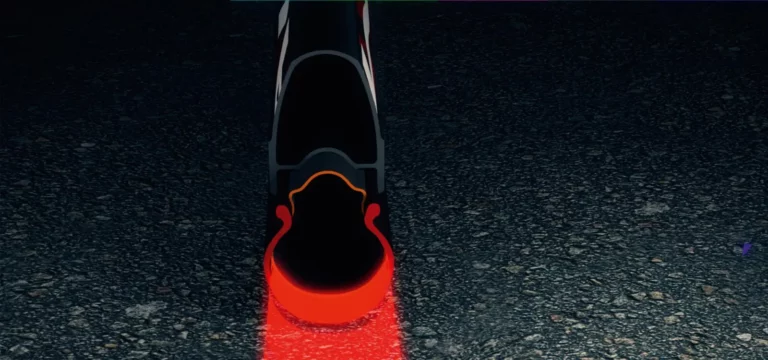
With Fore Carbon, threaded metal inserts are integrated directly into the dredging of the lower deck of the rim during the casting phase of the carbon profile. The rays are directly in these inserts. The upper deck, the one in contact with the tire, is never pierced. It remains continuous, which ensures a native seal without any rim bottom.
Comparison with the Fore Alu
The principle is identical on Mavic's aluminium rims (Fore Alu technology), but the process differs: on aluminium, threading is carried out simultaneously at the bottom deck, the rays screwing directly into the wall. On carbon, it is the co-moulded metal insert that plays this role, because carbon fiber cannot be threaded directly.
The concrete benefits of Fore Carbon
1. Increased rim rigidity
By keeping the upper deck intact and undrilled, the rim keeps a continuous closed section. This tubular structure is mechanically more resistant to deformation than a rim whose deck is weakened by 20-24 holes. The result is a higher lateral rigidity, perceptible in reviving and turning.
2. Native tubeless without rim bottom
The absence of a hole in the upper deck means that the rim is waterproof by design. There is no need for rim bottom, a component that weighs about 30 g per wheel, that ages, that can take off and cause pressure loss. Tubeless mounting is therefore simplified and more reliable over time.
3. Weight gain
The removal of the rim bottom represents a saving of about 30 g per wheel (60 g per pair). It is a direct mechanical gain, without compromise on the structure, since it results from the removal of a component that has become useless.
4. More stable assembly
The rim-ray interface via a co-moulded insert offers a very homogeneous anchor. Mavic claims a radial-jante link area designed for a more stable assembly and a more constant radius tension, which contributes to the accuracy and responsiveness of the wheel.
On which wheels do we find Fore Carbon?
Fore Carbon equips all of Mavic's carbon road range:
- Cosmic Ultimate 45 Disc – the absolute high-end (profil 45 mm, 1 255 g the pair, R2R carbon rays)
- Cosmic SLR – the performance model with ceramic bearings and Adaptive Lay Up (profile 45 mm, about 1,480 g)
- Cosmic SL – the carbon intermediate range (profiles 40 and 65 mm)
Conclusion
Fore Carbon is one of the most structuring technologies in Mavic's carbon offering. By integrating the anchoring of the spokes from the moulding phase of the rim, Mavic eliminates the need for rim bottom, strengthens stiffness and simplifies tubeless mounting. This is a particularly relevant approach for cyclists who want a reliable tubeless system without additional maintenance, and who value the lateral rigidity of their wheels. Other brands offer comparable solutions (co-moulded inserts at Zipp, for example), but Mavic is one of the few manufacturers to deploy it across its entire carbon range.