Mavic
Founded in 1889 in Lyon, France, by Charles Idoux and Lucien Chanel, Mavic – the acronym for Manufacture d'Articles Vélocipédiques Idoux and Chanel – has moved from the manufacture of modest parts to a world renowned in the field of wheels. From its beginnings in the shadow of the velocipedes to its emblematic role in the Tour de France, here we trace its course, anchored in the French tradition and marked by periods of glory and challenges.
The history of Mavic: From Lyon to the tops of cycling
1889-1930: The first steps in a changing world
The history of Mavic began in 1889 in Lyon, a prosperous industrial city in the heart of France. Charles Idoux and Lucien Chanel founded the Manufacture of Vélocipédiques Idoux and Chanel at a time when the bike, still called « Velocipede », is experiencing a revolution with the advent of the « safety bicycle » – an equal two-wheel model and chain transmission. The company starts modestly, producing mudguards, pedals and metal parts for these nascent devices. The context is favorable: cycling becomes a popular leisure in Europe, carried by a middle class in search of mobility.
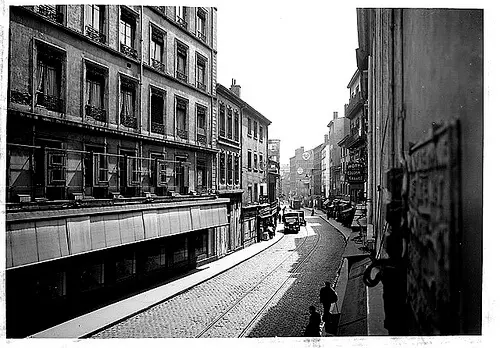 First locals Manufacture of Vélocipédiques Idoux and Chanel
In the 1890s, Mavic remained a small structure, operating in the shadow of more established manufacturers. Shortly after its creation, the founders gave direction to Henry Gormand, a Lyon industrialist who took over at the turn of the century. Under its governance, the company expands its scope, manufacturing wooden rims – the standard of the time – and accessories for emerging racing bikes. In the 1920s, as the Tour de France, launched in 1903, gained prestige, Mavic began to become interested in competition, directing his production towards more technical solutions under the impulse of Gormand.
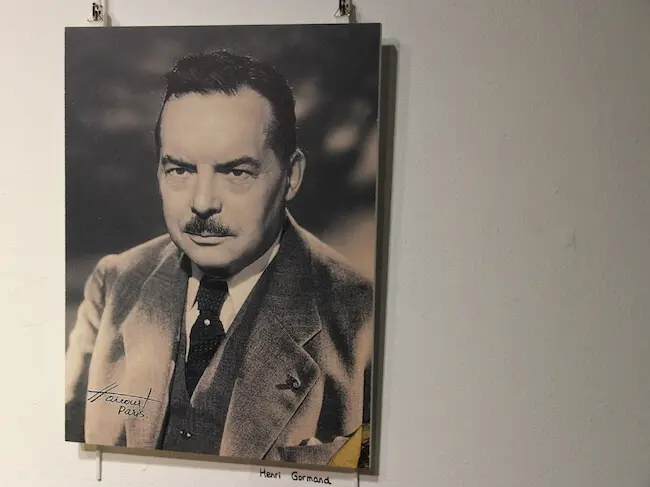 The portrait of Henry Gormand
1930-1950: The emergence and adoption of aluminum
The 1930s marked a significant turning point for Mavic. In 1934, the company introduced a major innovation: the Duralumin rim, a lightweight and robust aluminium alloy, weighing 750 g against 1.2 kg for the then dominant steel or wood rims. Known as « Dura », this rim attracts the attention of the riders. A famous anecdote surrounds its launch: during the 1934 Tour de France, Antonin Magne, winner of the 1931 edition, uses these Dura rims painted in wood colour to circumvent the strict rules of the UCI, which only allows traditional rims. Magne dominates the race, keeping the yellow jersey from the second stage to win the Tour, giving Mavic a resounding victory and a first world recognition.
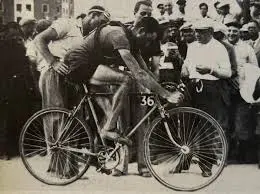 Antonin Magne at the time of his sacre
In the 1930s, Mavic also diversified its activities, producing children's pedal cars with spoke wheels and chain transmissions, a niche market that temporarily expanded its portfolio. The Second World War interrupted this progression. Lyon, under occupation, saw its factories slow down, but Mavic maintained minimal activity thanks to military orders for wires and light parts. After the war, in the 1940s, the company resumed its growth, taking advantage of the reconstruction and renewed enthusiasm for cycling in France. Dura rims are a standard among cyclists, strengthening Mavic's position as a manufacturer of reliable components.
1950-1970: Consolidation and modernization
The 1950s and 1960s were a period of stable growth for Mavic, while professional cycling was organised and events such as the Tour de France were captivating an increasing audience. Under the direction of the Gormand family, with Bruno, son of Henry, playing a key role, Mavic perfected its aluminium rims and expanded its production to other essential components: hubs, pedals and pedals. Lyon remains the key centre of the company, but its products start to export across Europe and beyond, carried by a reputation of quality combining technical rigour and French heritage.
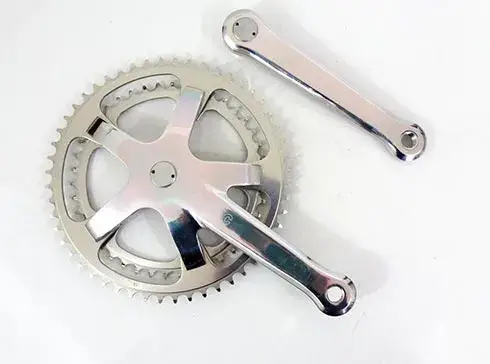 Mavic Starfish pedal
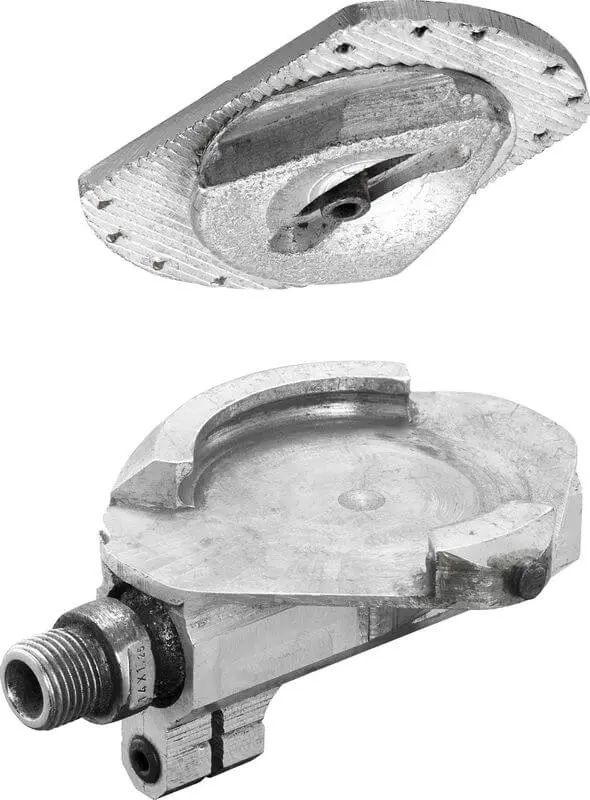 The first automatic pedals
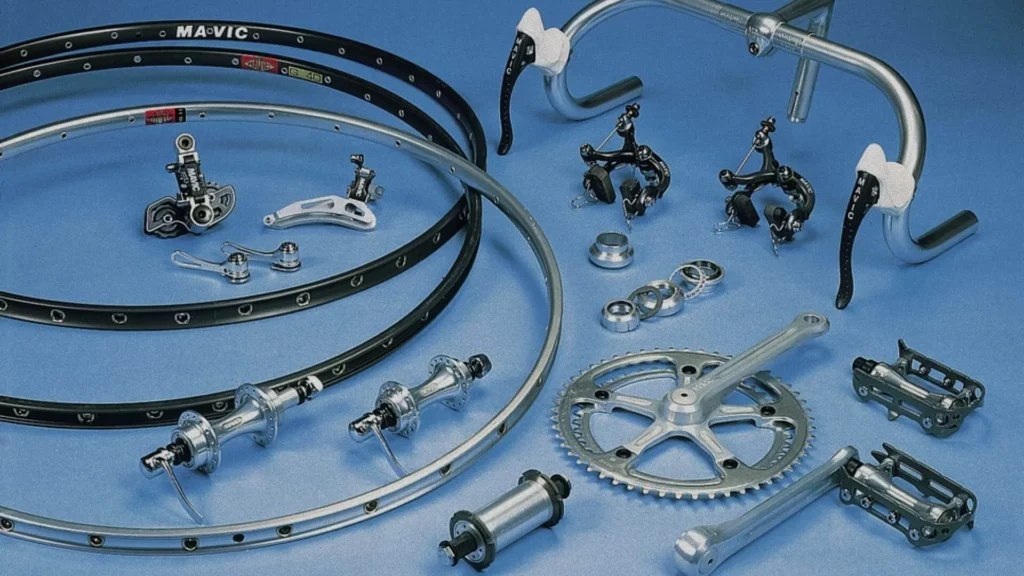 The very first Mavic group
In the 1960s, Mavic reinforced his commitment to the needs of riders. The company invests in more modern production equipment and starts working with professional teams to test its components in real-life conditions. This period saw Mavic laying the foundations for a more prominent presence in high-level cycling, while remaining a family business attached to its Lyon roots.
1970-1990: Age and institution of neutral service
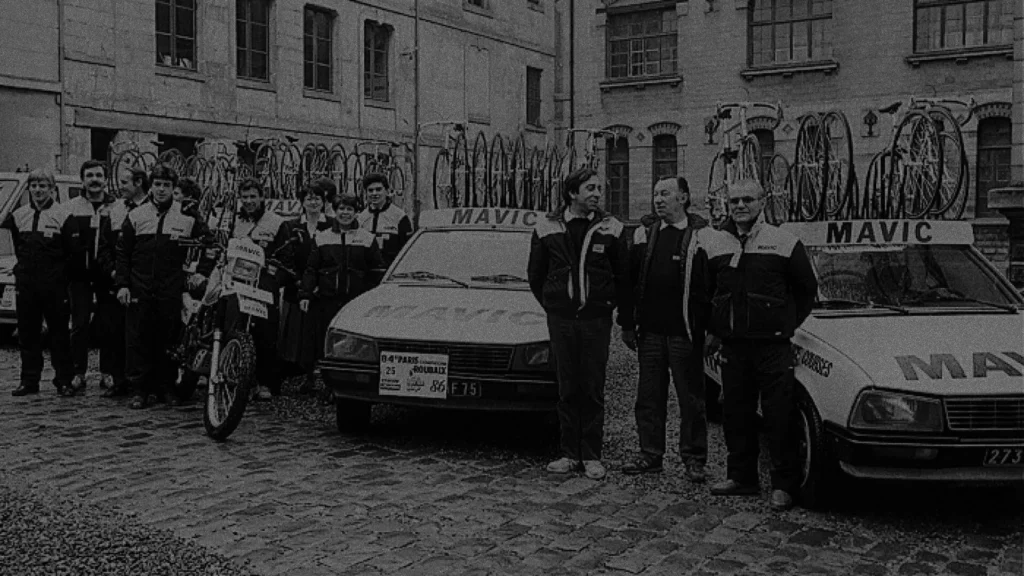
The 1970s brought Mavic to the forefront of global cycling. In 1972 Bruno Gormand, then president, initiated an innovative project: a neutral support service for riders, regardless of their team. Tested during the Critérium du Dauphiné Libéré in 1972, this concept was formalized in Paris-Nice in 1973, with the Mavic yellow cars following the peloton to provide emergency wheels and quick repairs. This service becomes an institution in the Tour de France, enhancing the visibility of the brand and its essential role in major races.
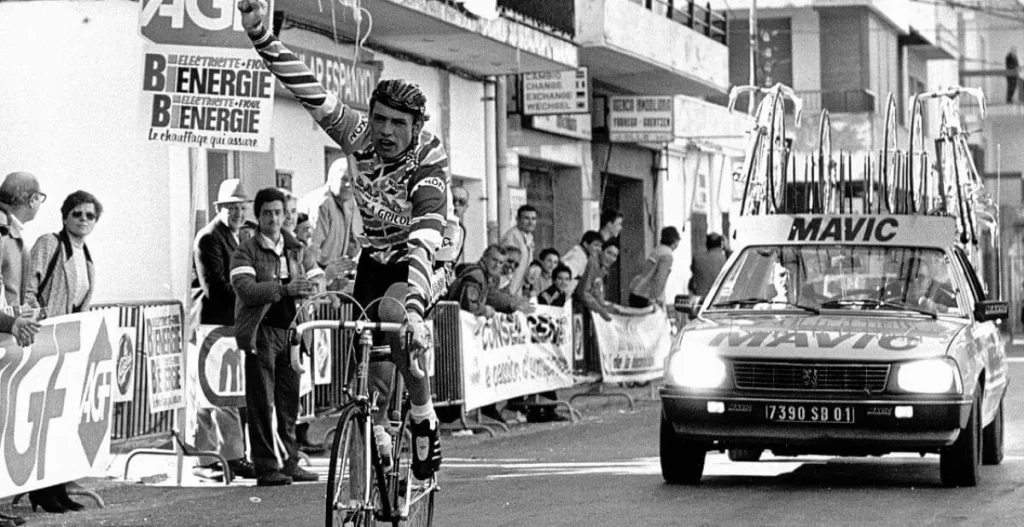
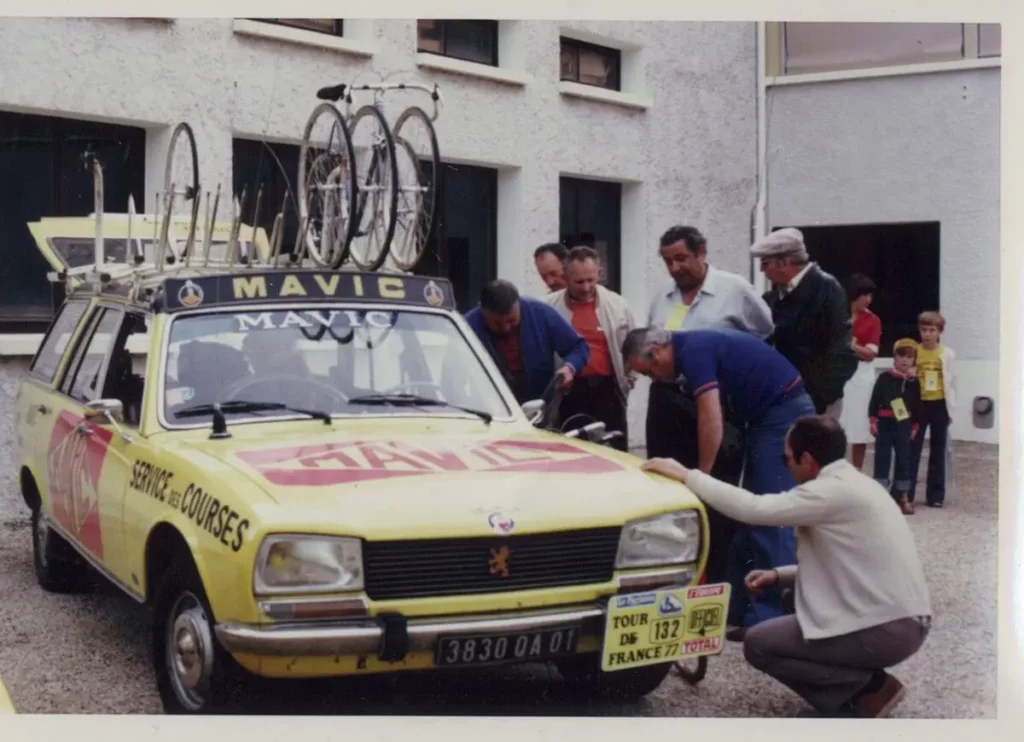
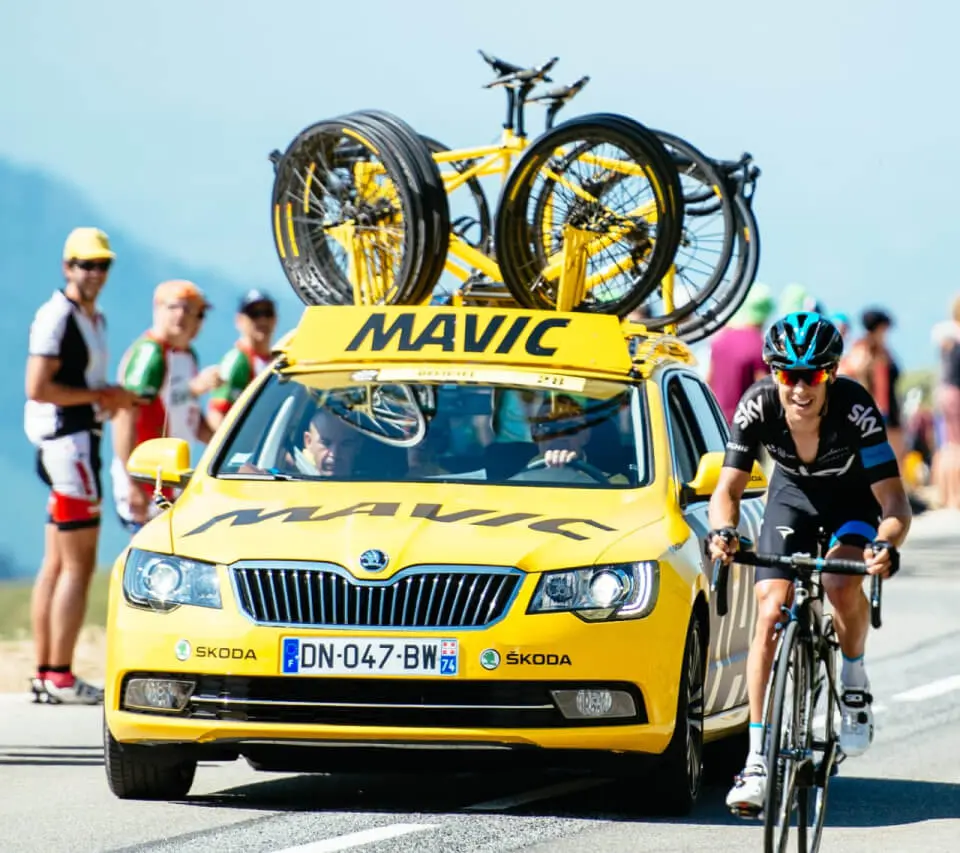
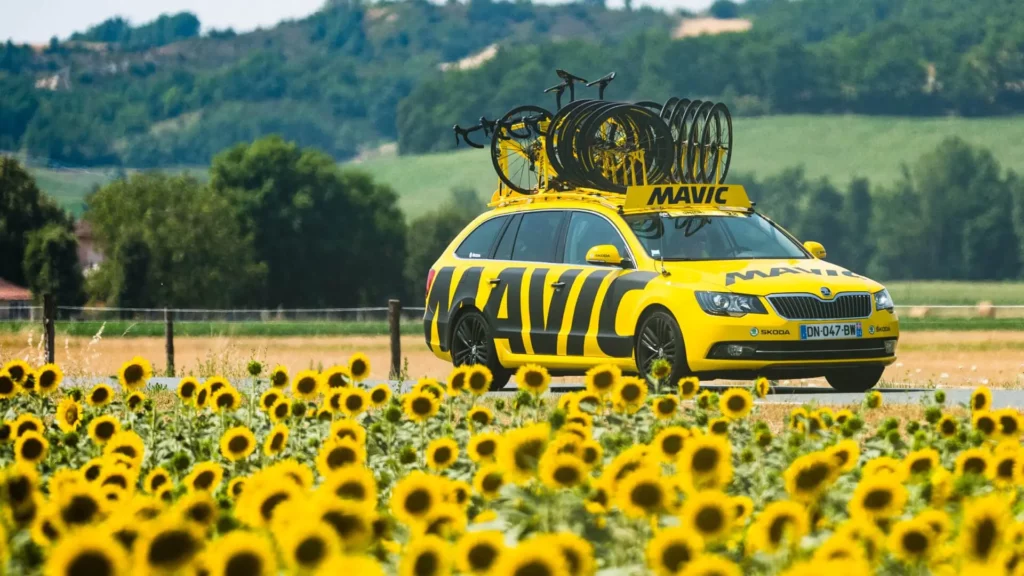
In 1979, Mavic launched the « All Mavic », a complete group comprising hubs, pedals, pedals and rims, which equips renowned riders in major competitions. The 1980s confirmed this dominance, with a growing presence in the professional platoon. In 1985, the tragic death of Bruno Gormand in a car accident shook the company, but his wife, Cécile Gormand, took the lead and maintained the course. In 1989, Mavic celebrated a historic victory when Greg LeMond won the Tour de France on a bike fully equipped by the brand, consolidating his status as a leader in performance cycling.
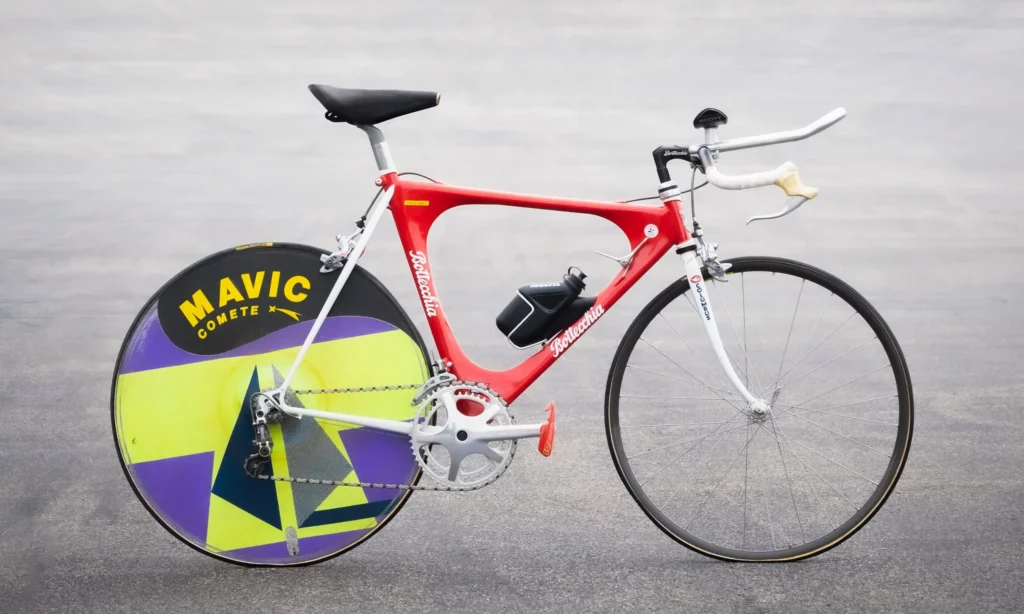 The famous bike « Mavic » by Greg Lemond
1990-2010: Global expansion and major innovations
Under the leadership of Cécile Gormand, the 1990s marked an international expansion phase for Mavic. In 1994, Cécile orchestrated a buy-out management, allowing four executives, supported by an investor, to buy Mavic. That same year, Mavic revolutionized cycling with the launch of the Zap group, the first electronic speed change system on the market. Introduced in 1994, the Zap offers precise changes via electric controls, a pioneering advance long before the Di2 systems of the Shimano or EPS of Campagnolo, although its adoption remains limited to the dominant mechanical groups of the time. In 1996, the brand was acquired by Salomon, a French manufacturer of winter sports equipment, which merged with Adidas in 1998 to form Adidas-Salomon. In 1999, Mavic introduced two major innovations: the Universal System Tubeless (UST), developed with Michelin and Hutchinson, which eliminates air chambers to reduce punctures and improve adhesion, becoming a reference in the MTB before spreading to the road; and the wireless group Mektronic, an evolution of the Zap. The Mektronic, launched in 1999, uses a radio transmission for speed changes without cables, tested by the Once team on the Tour de France, but its adoption remains marginal due to its complexity and cost.
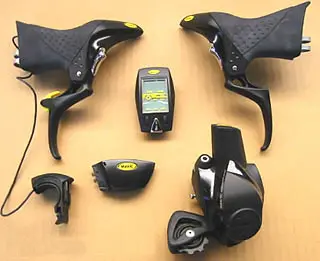 Mektronic Group
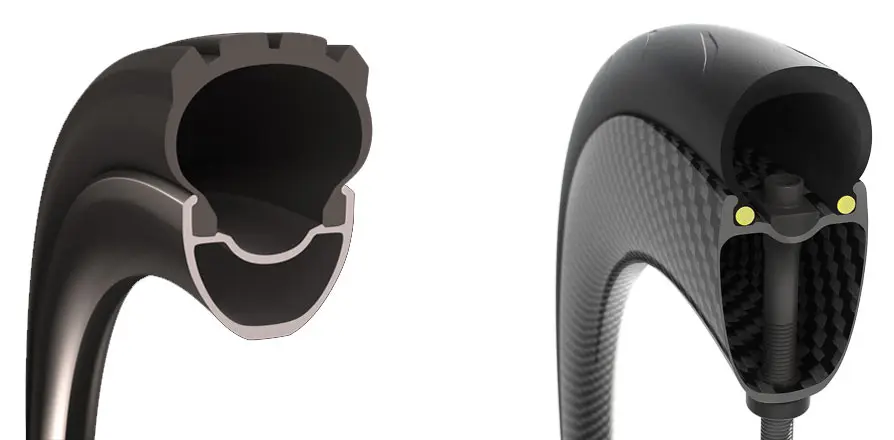 UST system
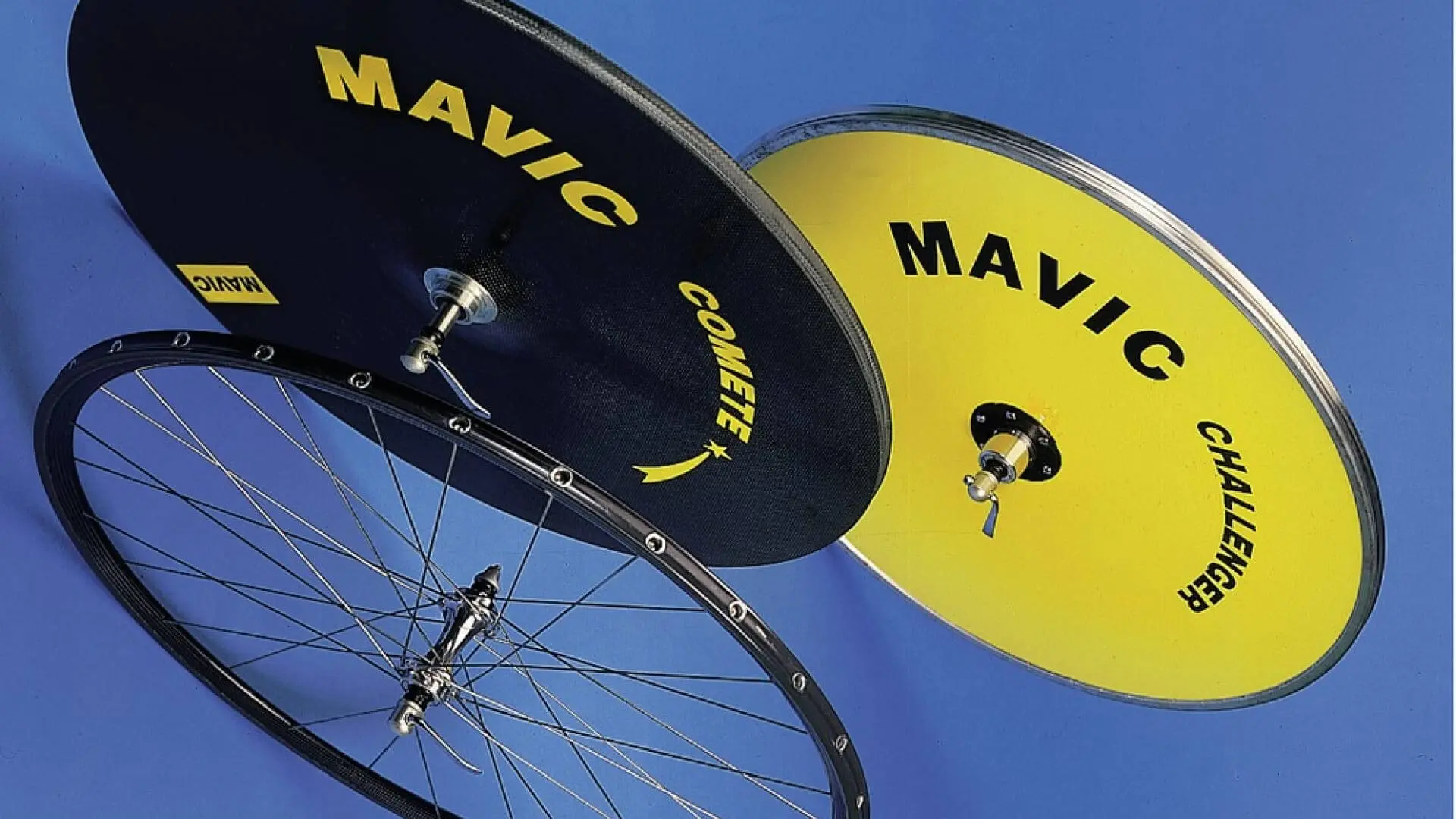
It was also in the 1990s that the history of the Cosmic wheel began to flourish. In 1985, Mavi marketed the Comet paracular wheels in carbon fiber, followed in 1989 by Comet « + and -« , a version with peripheral alveoles allowing to adjust steel masses from 130 to 780 g according to the test needs – a bold idea to optimize inertia. This innovation culminated in 1989 when Greg LeMond used a Comet lenticular wheel to win the Tour de France, beating Laurent Fignon by 8 seconds in a memorable time trial. This success inspired the launch in 1994 of the Cosmic, a carbon wheel designed to combine aerodynamics and lightness, becoming a performance symbol for road cyclists. Tested on track in 1984 with the French team at the Los Angeles Olympics, then refined with the 3G three-stick profiled wheel that dominates Barcelona in 1992, the Cosmic line still evolves with the Cosmic Ultimate, entirely made of carbon in the Annecy workshops, embodying Mavic's French know-how.
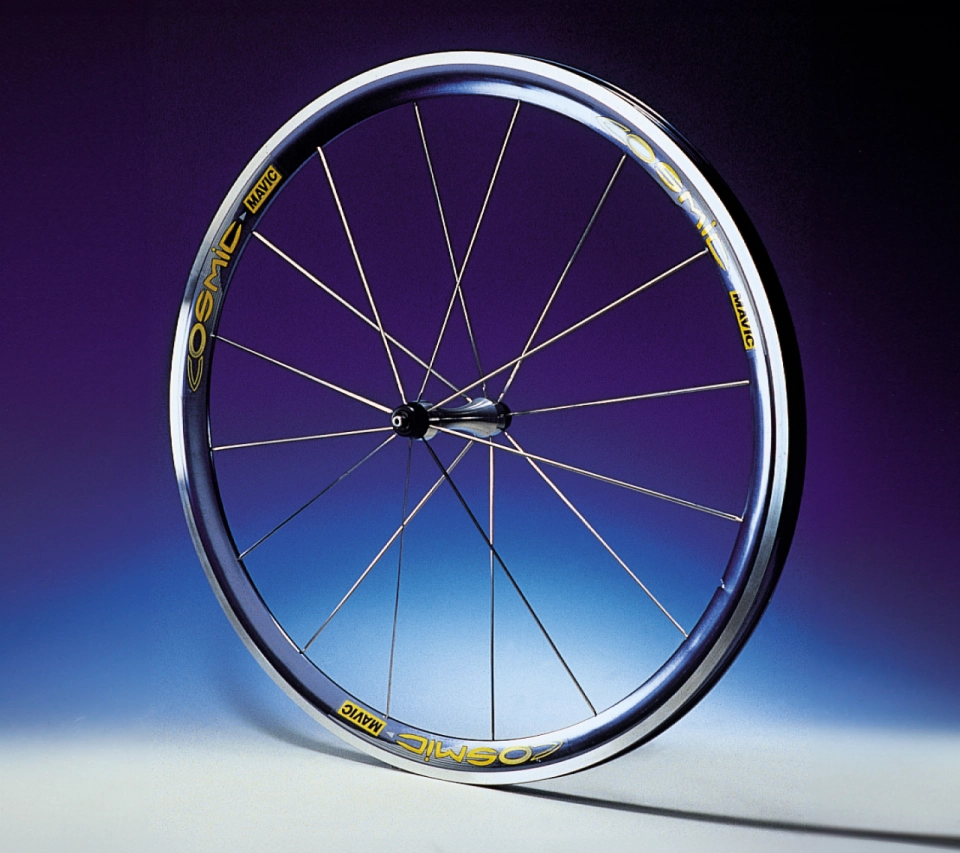 The first Cosmic...
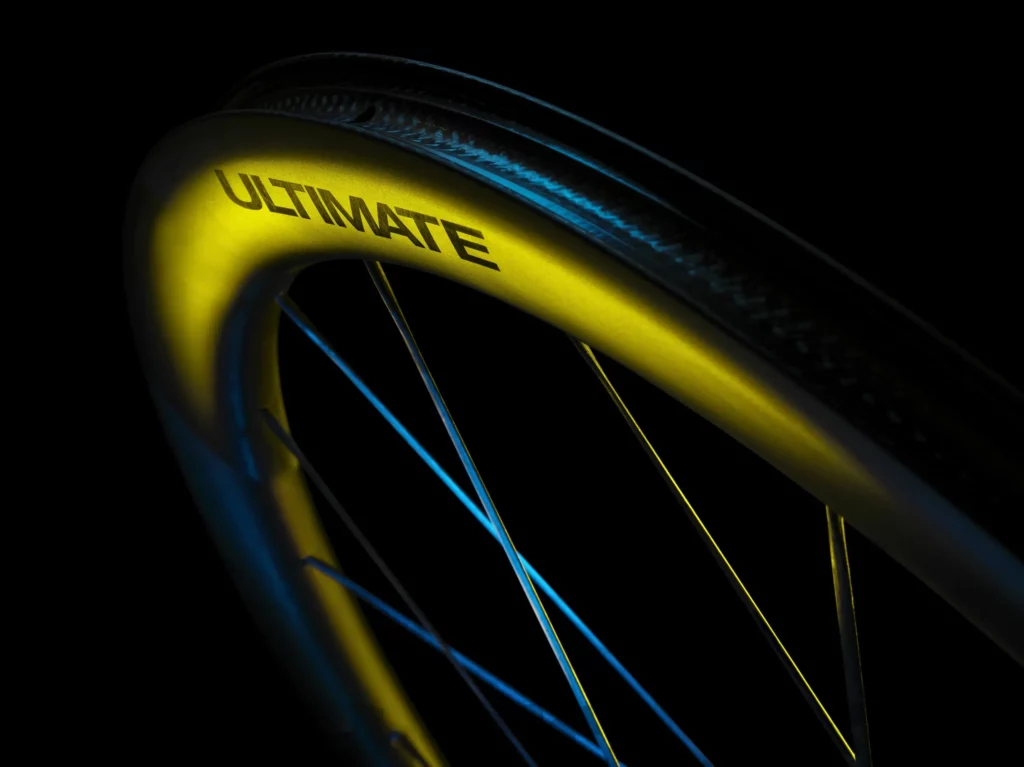 ...and the latest generation
In 2005, the group came under the control of Amer Sports, a Finnish conglomerate, beginning a more industrialised production era. Mavic moved its headquarters to Annecy, at the foot of the Alps, while maintaining a rim production plant in Saint-Trivier-sur-Moignans. This period saw the company strengthen its role in the Tour de France, where its neutral service continues to equip the peloton with greater efficiency. Internationalization is accelerating, with products distributed in key markets such as the United States and Asia, while Mavic retains his French identity despite changes in ownership. Innovations such as Zap, Mektronic, UST and Cosmic demonstrate the brand's ambition to push the technological boundaries of cycling.
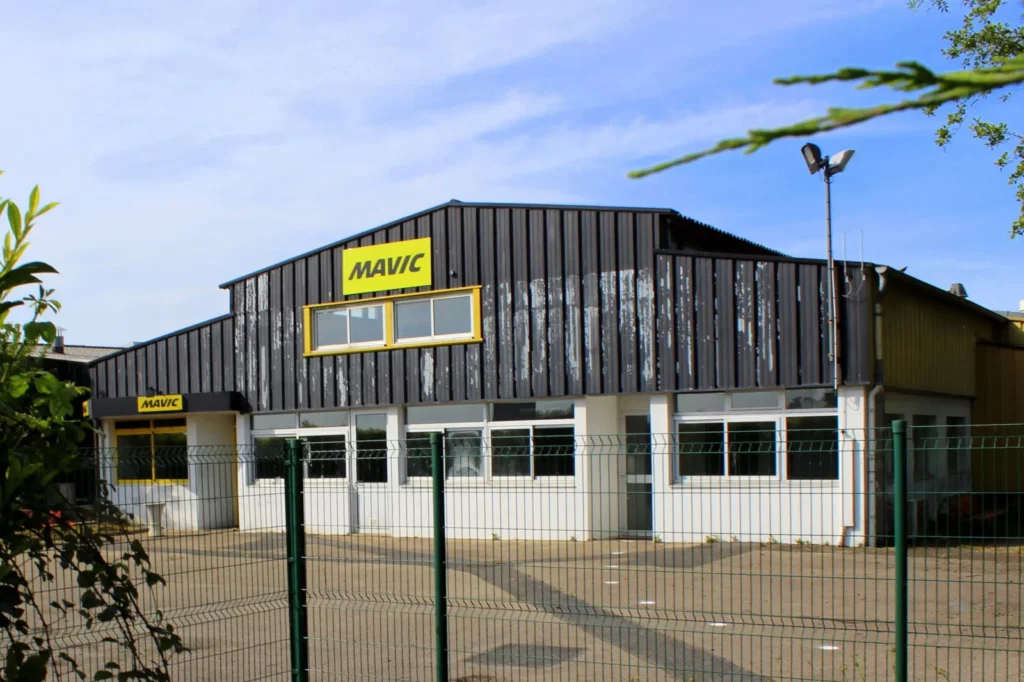 Saint-Trivier plant
2010-2025: Financial Challenges and Rebirth
The 2010s bring significant challenges. In 2019, Amer Sports sold Mavic to Regent LP, a US private equity firm, but administrative errors revealed in 2020 that the real buyer is M Sports International LLC, an obscure entity based in Delaware. This confusion plunges Mavic into uncertainty, and in May 2020 the company was placed under judicial review by the Commercial Court of Grenoble, under pressure from creditors concerned about its financial situation. After six months of observation, Mavic was bought in July 2020 by the French group Bourrelier, an operation that ensured the survival of the Saint-Trivier factory and the headquarters of Annecy.
Under Bourrelier, Mavic regains relative stability. In 2023, the brand celebrates its 134th anniversary with an exhibition at Annecy, highlighting its legacy in cycling. However, in 2022 Mavic lost his role as a neutral service at the Tour de France, given to Shimano after nearly five decades of iconic presence. Today, in March 2025, Mavic employs about 200 people in France and remains a respected name in cycling. Its carbon wheels continue to equip amateur and professional riders around the world, demonstrating the resilience forged by more than a century of history. From its Lyon origins to innovations such as the Dura rims, the Zap group, the Mektronic, the UST system and the legendary Cosmic, Mavic embodies a journey marked by ingenuity, adaptation and a deep link with sport.
Evolution of the Mavic logo since 1923
 1923
1923 1945
1945 1973
1973 1988
1988 1996
1996 2015
2015