
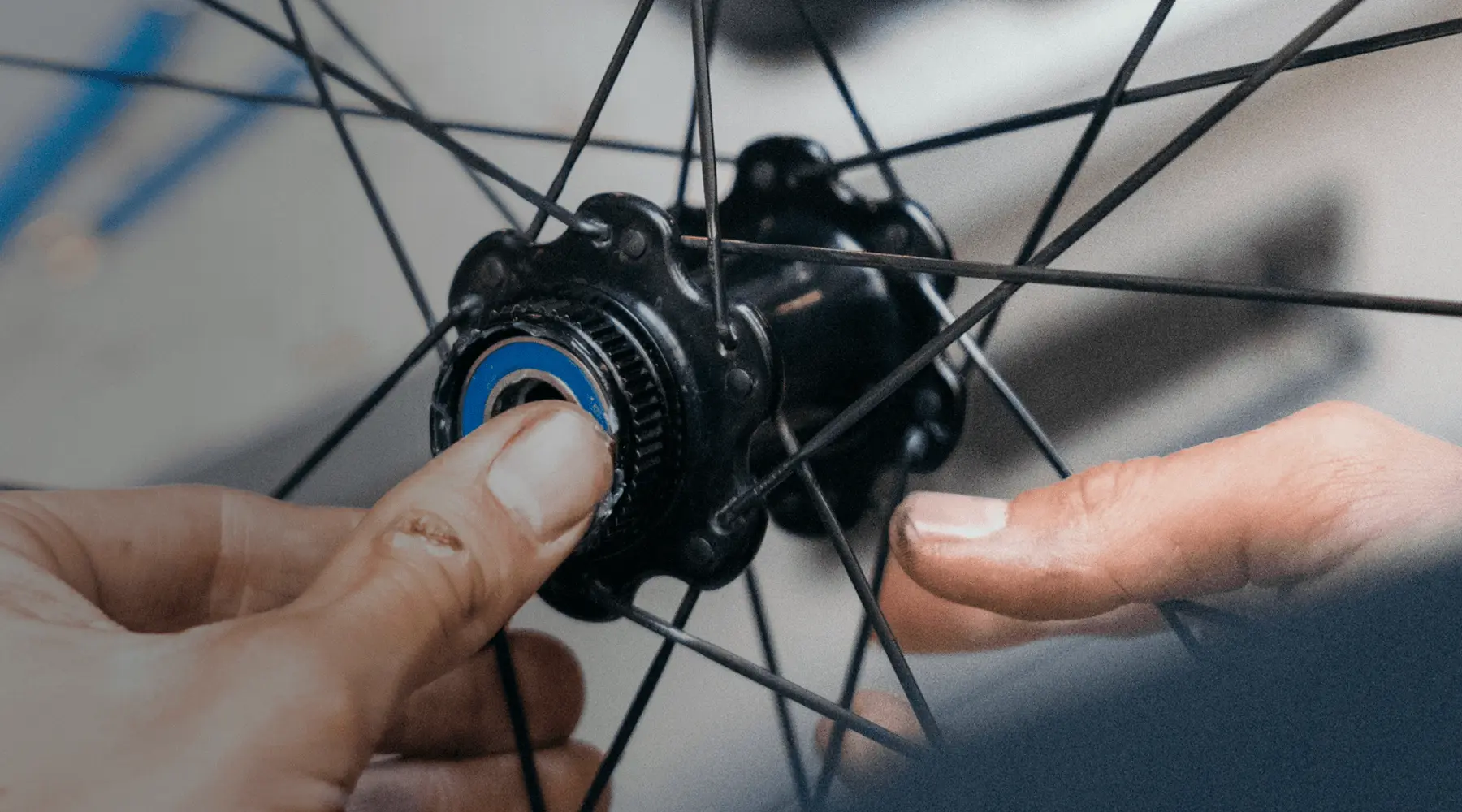
Ceramic rollers for bicycle wheels: all you need to know
Ceramic bearings have become a must in the cycling world, often presented as a major innovation to improve the performance of bike wheels. But what about it? Between promises of speed gains, increased durability and high costs, this technology raises as much enthusiasm as questions. In this article, we will explore in detail what ceramic bearings are, their advantages and limitations, their relevance according to your practice, and the best ways to maintain them. Whether you're a seasoned competitor or an amateur cyclist, here's a complete guide to understanding whether this technology deserves your attention.
Why are we talking so much about ceramic bearings?
In the world of cycling, where every detail can influence performance, bearings play a discreet but essential role. Located at the heart of the wheel hubs, they reduce friction and ensure smooth rotation. In recent years, ceramic bearings have become an alternative to traditional steel bearings, with attractive promises: less friction, better longevity and measurable gains in speed. According to a study conducted by Friction Facts in 2013, resumed and confirmed by more recent tests in 2022 by CyclingCeramic, ceramic bearings could reduce friction losses by 20 to 30% compared to standard steel bearings.
But are these impressive figures sufficient to justify their massive adoption? With prices sometimes three to five times higher than those of steel bearings, it is legitimate to ask whether this investment is relevant for all cyclists. This article offers an in-depth analysis to demystify this technology and help you decide if it meets your needs in 2025, a year when cycling innovations continue to push the limits of performance.
What is a ceramic bearing?
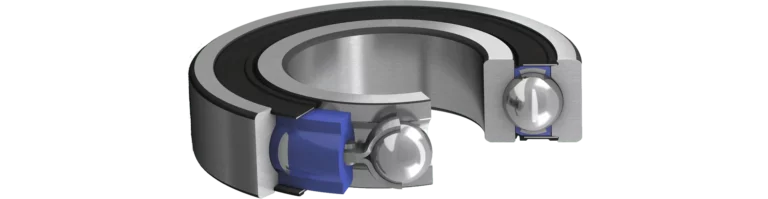
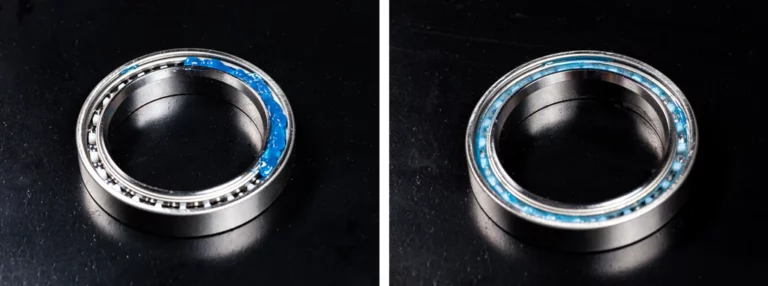
A bearing is a mechanical part composed of balls, held between two rings (internal and external), which allows the rotation of an element – here, the hubs of the bike wheels.
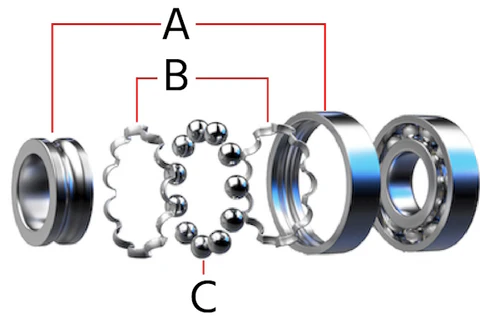 Bearing
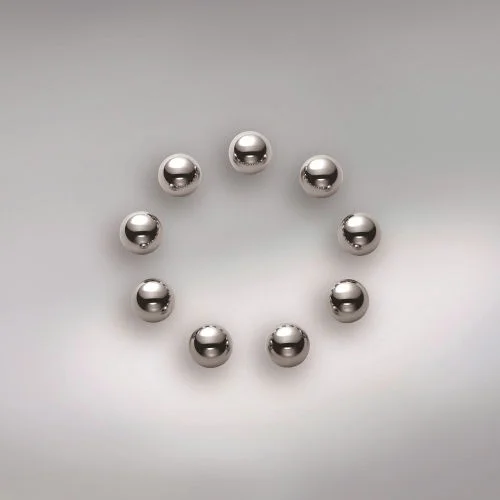 Bills
Bills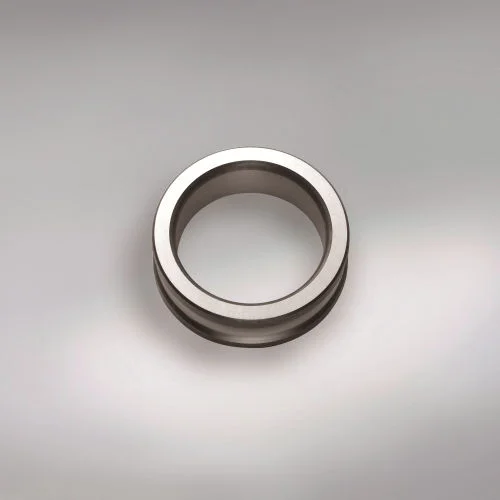 Inside ring
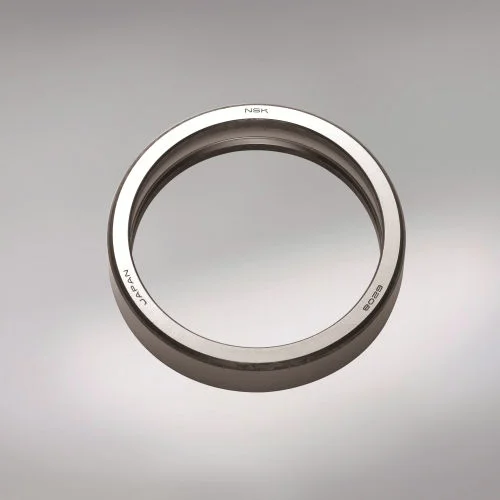 External ring
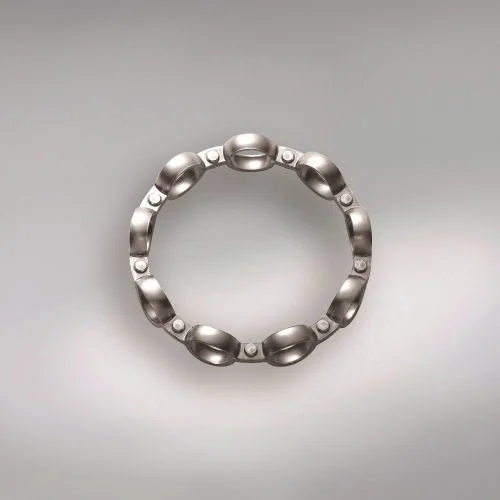 Cage
Cage
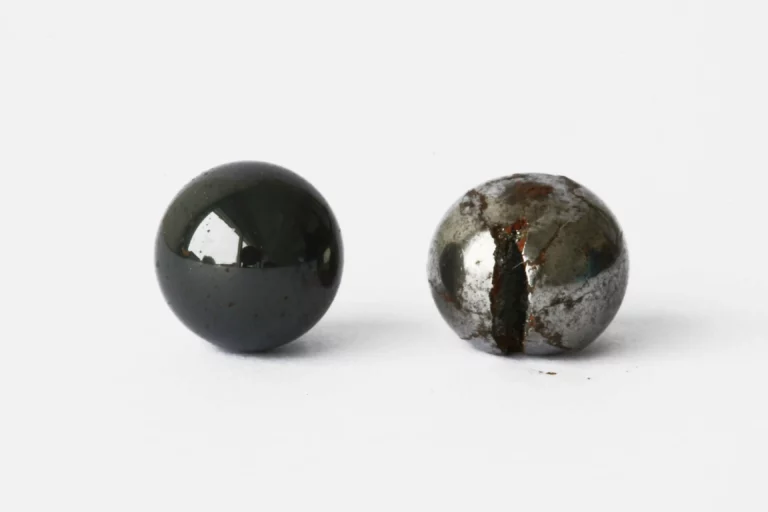
Traditionally, these balls are made of chromed steel, a robust and economical material. Ceramic bearings, on the other hand, use silicon nitride balls (Si3N4), a non-metallic ceramic material known for its exceptional hardness (about 1400 Vickers versus 700 for steel) and lightness (density of 3.2 g/cm3 versus 7.8 g/cm3 for steel).
There are two main types of ceramic bearings in cycling:
- Hybrids : The balls are ceramic, but the rings remain in steel or stainless steel.
- Full ceramic : Bills and rings are entirely ceramic, a more rare and expensive option, reserved for high-end applications.
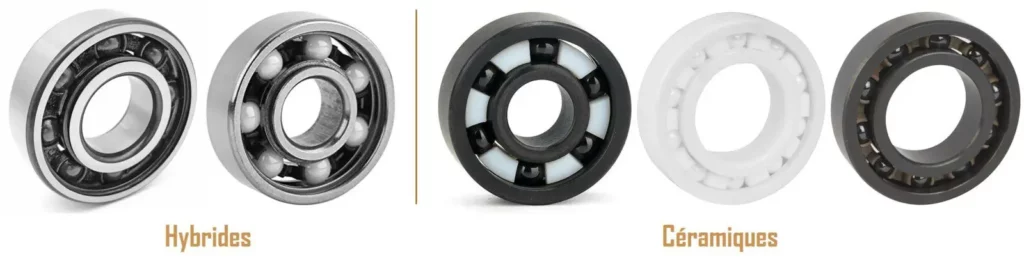
These bearings are found mainly in wheel hubs, but also in pedals or derailleur pebbles. Their main asset? A smoother surface and higher hardness, which minimizes friction and wear. According to a study CeramicSpeed (2021), the average roughness of ceramic balls is 0.02 micrometres, compared with 0.1 micrometres for polished steel, which significantly reduces rolling resistance.
Advantages: Why do cyclists love it?
Ceramic bearings offer several measurable benefits, which explain their growing popularity among professional cyclists and demanding amateurs. Consider them in detail:
Reduction of friction
The main argument in favour of ceramic bearings is their ability to reduce friction losses. An independent study carried out by Friction Facts showed that hybrid ceramic bearings reduce the resistance from 1.5 to 2 watts per wheel compared to standard steel bearings. For a complete bike (front and rear wheels), this represents a potential gain of 3 to 4 watts. While this figure may seem modest, it becomes significant in competitions where each second counts. For example, on a 40 km to 45 km/h time trial, this gain could result in savings of 10 to 15 seconds, according to simulations carried out by Cycling Power Lab.
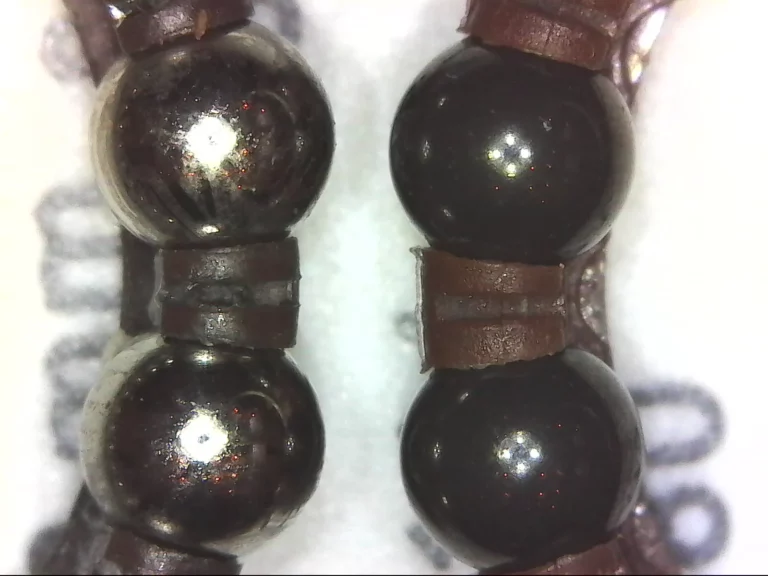
Increased sustainability
Ceramics are more resistant to corrosion and wear than steel. Analysis shows that hybrid ceramic bearings have an average life of 3-5 times longer than steel bearings in wet or dusty conditions, due to their rust insensitivity and resistance to abrasive particles. This makes it a preferred choice for cyclists riding all the time.
Lightness
Since ceramic balls are 60% lighter than their steel counterparts, they reduce the total weight of bearings. For a pair of high-end wheels, this represents a savings of 10 to 20 grams – a modest advantage, but appreciated by climbers or competitors seeking to optimize every detail.
High speed performance
At high speeds (over 40 km/h), friction in bearings becomes more significant. A study of CyclingCeramic (2022) showed that ceramic bearings maintain their thermal and mechanical efficiency where steel heats and loses fluidity, thus providing a tangible advantage in descent or on fast runs.
These benefits are particularly noticeable for professional cyclists. Several teams, including Ineos Grenadiers, used ceramic bearings CeramicSpeed on their wheels, assigning to this technology part of their results on timed steps. When not sponsored, teams buy and discreetly change bearings to maximize performance.
The limits: Not everything is perfect
Despite these advantages, ceramic bearings are not free of defects. A balanced assessment must take into account their limitations:
High cost
Price remains a major brake. In 2025, a set of hybrid ceramic bearings for hubs costs between 100 and 200 €against 20 to 50 € for good quality steel bearings. For a complete pair of wheels with ceramic hubs, the extra cost can reach 300 to 500 €. This investment is difficult to justify for leisure use.
Sometimes subtle gains
The benefits in terms of performance are real, but their impact varies depending on the level of the cyclist. One study compared ceramic and steel bearings on a 50 km flat track: at an average power of 200 watts, the performance gain was only a few percent. For a casual cyclist, this gain is imperceptible, unlike a competitor with 400 watts or more.
Specific maintenance
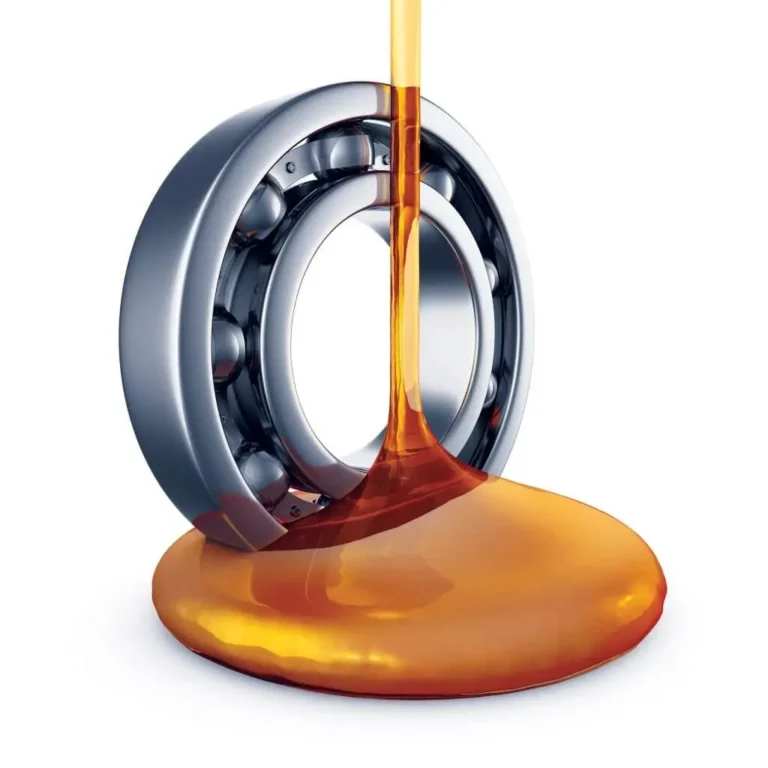
Although more durable, ceramic bearings require careful maintenance. Mud, sand or inadequate lubrication can reduce their efficiency. According to CyclingCeramic (2023), excessive lubrication with thick fat can increase friction by 10 to 15%, partially cancelling their benefits.
So it's worth it for you?
The choice of ceramic bearings depends on your profile and objectives. Here is an analysis to guide you:
For competitors and enthusiasts
If you are participating in races or looking to optimize each watt, ceramic bearings are a relevant investment. Accumulated gains (speed, durability, fluidity) can make a difference on demanding routes. Professional teams, such as those equipped by CeramicSpeed or CyclingCeramic, are proof of this.
For occasional cyclists
For leisure or moderate outings (less than 5,000 km per year), quality steel bearings (ABEC grade 5 or 7) are sufficient. The extra cost of ceramics does not bring an advantage proportional to your use.
A compromise?
Some brands, such as Black Bearing or Enduro Bearing, offer hybrid bearings at intermediate prices (70-100 €). They offer much of the benefits of ceramics without reaching the top tariffs of high-end models. If possible, try a pair of equipped wheels before deciding – personal sensations remain a key criterion.
A technology that turns the heads
Ceramic bearings represent a significant step forward in the field of bicycle wheels, with tangible advantages in terms of friction reduction, durability and performance. The data are clear: a decrease of 3 to 4 watts of friction, tripled longevity in wet conditions, and fluidity appreciated by pros. However, their high cost and sometimes subtle gains limit their relevance to the most demanding cyclists.
In 2025, while cycling technologies continue to evolve, ceramic bearings are a strategic choice for those aiming for excellence, but they are not a necessity for all.
Bonus: What is a grade?
Here is a detailed table showing the different grades of bearing balls, especially for bearings used in bicycle wheels (steel or ceramic). These grades, defined by standards such as those ofABEC (Annular Bearing Engineers) orISOmeasure the precision and tolerance of the balls, which affects their performance and cost. I will explain the most common grades and include information relevant to cyclists.
Table: Grade presentation of bearing balls
| Grade | Tolerance (μm) | Roughness (Ra, μm) | Typical materials | Use in cycling |
|---|---|---|---|---|
| Grade 25 | ±25 | ~0,025 | Chromed steel, ceramic | Basic bearings (entry bikes) |
| Grade 10 | ±10 | ~0,015 | Chromed steel, ceramic | Standard hubs, mid-range bikes |
| Grade 5 | ±5 | ~0,010 | Steel, hybrid ceramics | High-end hubs, occasional competitions |
| Grade 3 | ±3 | ~0,005 | Ceramic hybrid, full ceramic | Running Bearings (Pro Level) |
| Grade 1 | ±1 | ~0,002 | Full ceramic | Ultra-specialised applications (aeronautics, extreme pro bike) |
Detailed explanation
- Grade and tolerance :
- The « grade » indicates the dimensional tolerance of the balls (micrometres, μm), i.e. the maximum deviation from a perfect sphere. A lower grade (e.g. Grade 3 vs Grade 25) means a more accurate ball.
- For example, a Grade 25 ball may vary by ±25 μm, while a Grade 3 ball may vary by ±3 μm.
- Rusty (Ra) :
- The average roughness (Ra) measures the fineness of the surface of the balls. A lower value (e.g. 0.005 μm for Grade 3) reduces friction, a key criterion for high-end ceramic bearings.
- Materials :
- Chromed steel : Standard for grades 25 to 5, economical and durable, but heavier and prone to corrosion.
- Hybrid ceramics : Silicon nitride boxes with steel rings, popular in grades 5 and 3 for cycling.
- Full ceramic : Ceramic billets and rings, reserved for grades 3 or 1, ultra-light but expensive.
- Use in cycling :
- Grade 25 : Sufficient for a city bike or basic use, where performance is not critical.
- Grade 10 to 5 : Standard in quality hubs (e.g. Shimano Ultegra, Campagnolo Chorus), suitable for most amateur cyclists.
- Grade 3 : Used by brands like CeramicSpeed or CyclingCeramic for professional competitors, where each watt counts.
- Grade 1 : Extremely rare in cycling, reserved for industrial or experimental applications.
- Advantages and disadvantages :
- High grades (3 and 1) offer exceptional fluidity, but their cost and fragility (especially ceramic) limit their use.
- The lower grades (25, 10) are robust and affordable, but generate more friction, reducing efficiency at high speed.
Context for bicycles
In cycling, standards ABEC (e.g. ABEC 1, ABEC 3, ABEC 5, ABEC 7, ABEC 9) are often used to simplify the classification of bearings, although they do not directly reflect the grades of the balls alone, but all the bearing (beads + rings + joints). Here is an approximate correspondence:
- ABEC 1 Grade 25
- ABEC 3 Grade 10
- ABEC 5 Level 5
- ABEC 7 Level 3
- ABEC 9 Level 1
For ceramic bearings, manufacturers such as CeramicSpeed or CyclingCeramic often advertise Grade 5 or 3 balls, ensuring optimal accuracy to reduce energy losses. A study indicates that Grade 3 silicon nitride balls reduce friction by 25% compared to Grade 10 steel balls.
Overview of the biggest brands
Bearings are at the heart of the performance of road bike hubs, and the choice of brand can make all the difference in terms of fluidity, durability and cost. The following table presents a selection of the main bearing manufacturers, specialized in steel or hybrid ceramics, and recognized for their quality in cycling or their industrial applications. Whether you're looking to optimize your wheels for competition or replace a worn-out bearing, these brands offer a variety of options to meet all needs and budgets.
Final table: Bearing marks for road bike hubs
| Make | Specialty | Bearing types | Highlights | Price range (indicative) |
|---|---|---|---|---|
| CeramicSpeed | High-end ceramic bearings | Ceramic hybrid, full ceramic | Ultra-low friction, durability | 50-300 € per game |
| CyclingCeramic | Affordable ceramic performance | Ceramic hybrid, full ceramic | Excellent value for money | 40-200 € per game |
| SKF | Industrial and cycling rollers | Steel, hybrid ceramics | Reliability, availability | 10-100 € per game |
| NTN | Japanese precision | Steel, hybrid ceramics | Robustness, precision | 15-120 € per game |
| NSK | Industrial precision | Steel, hybrid ceramics | Japanese quality, reliability | 15-130 € per game |
| Enduro Bearings | Optimized bike bearings | Steel, hybrid ceramics | Options ABEC 3/5, durability | 5-80 € per game |
| Black Bearing | Accessibility and performance | Steel, hybrid ceramics | Competitive price, good quality | 5-60 € per game |
| Chris King | Custom premium bearings | Steel, hybrid ceramics | Craft precision, longevity | 50-200 € per game |
2 replies to « Ceramic rollers for bicycle wheels: all you need to know »
-
I've never been a fan of ceramic bearings. Mavic never put any bearings on his wheels for failure to prove a real gain. More marketing...
-
Pierrick not everything just made your comment
COSMIC ULTIMATE 45 DISC 23mm
4 399,00 €
With its new 23c rim, ceramic bearings and a weight of 1260 g, the Cosmic Ultimate made entirely of carbon remains the most powerful pair of wheels on all terrains in the Mavic range.
Regards Peter
-


Leave a comment