DT Swiss
DT Swiss: History of the Swiss Carbon Wheels Giant
If you are a cyclist fascinated by components that combine irreproachable Swiss precision with high performance, or if you want to explore how a brand can transform a four-century industrial legacy into a global carbon wheel reference, this article on DT Swiss is designed for you. Officially founded in 1994 in Biel, Switzerland, but with roots dating back to 1634, DT Swiss embodies a unique history where tradition and innovation meet. We will trace its course, from its origins in an artisanal tramway to its current status as a leader in modern cycling.
History of DT Swiss: from raw steel to the tops of cycling
1634-1900: The origins of ancestral know-how
The history of DT Swiss began in 1634, long before the appearance of the bike, in the gorge of Taubenloch, a picturesque site near Biel, in the canton of Bern, Switzerland. A physicist named Scharandi installs a small wire-trailer, an artisanal workshop where steel wires are stretched from raw ingots. At a time when industrialisation is only in its infancy, this activity is based on manual techniques transmitted from generation to generation. For more than two centuries, this drawmill remains a local company, providing yarns for various uses: ropes, agricultural tools, and even parts for the emerging watchmaking industries of the region.
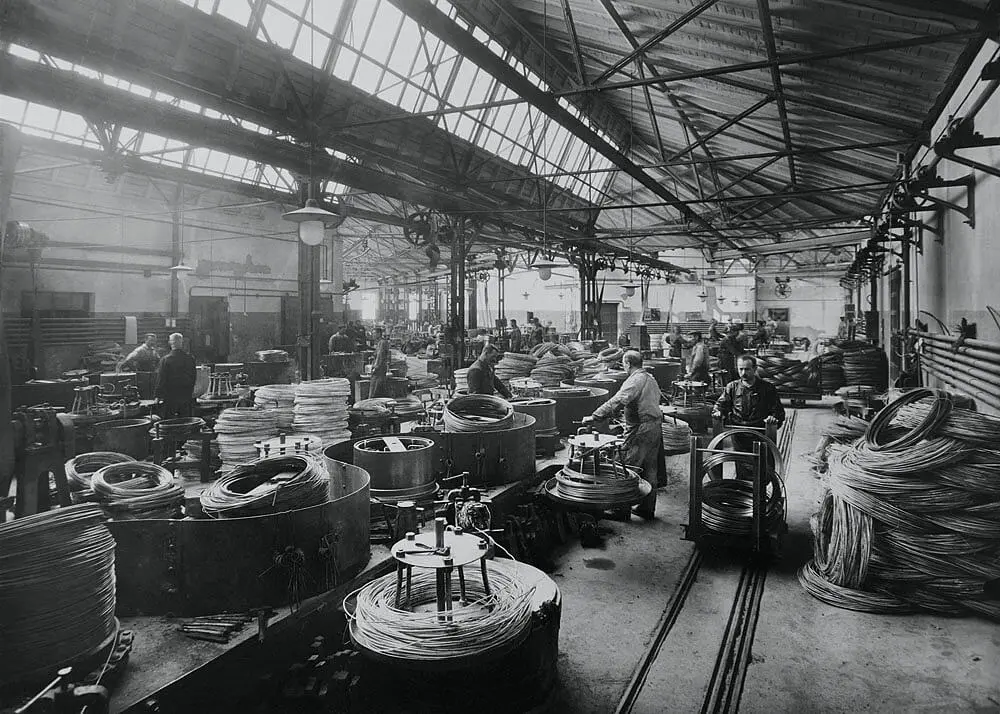
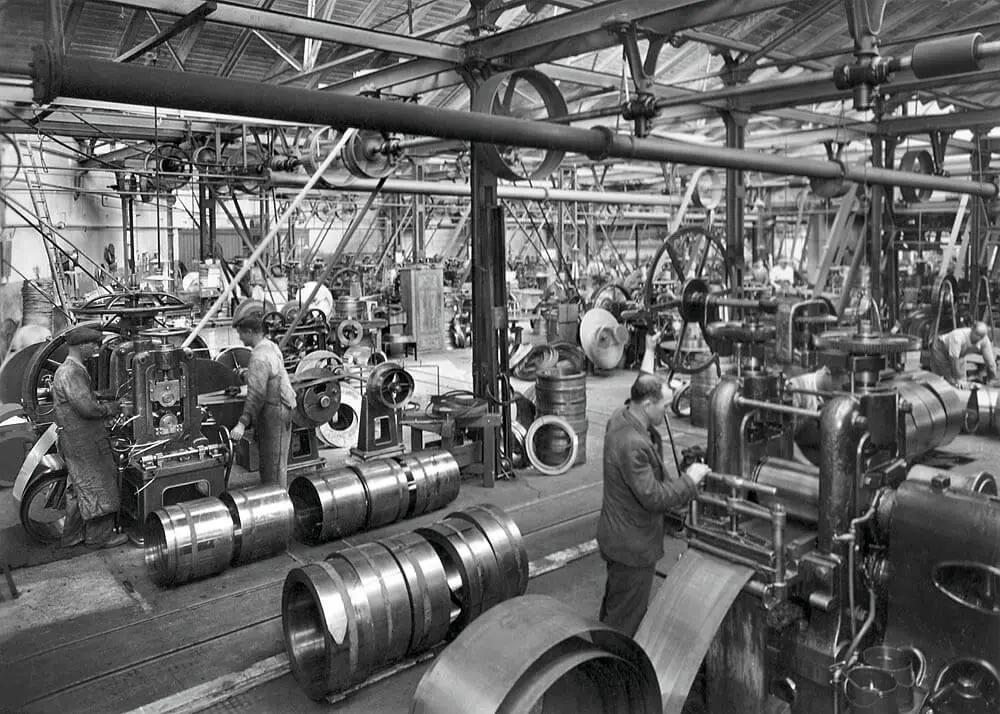
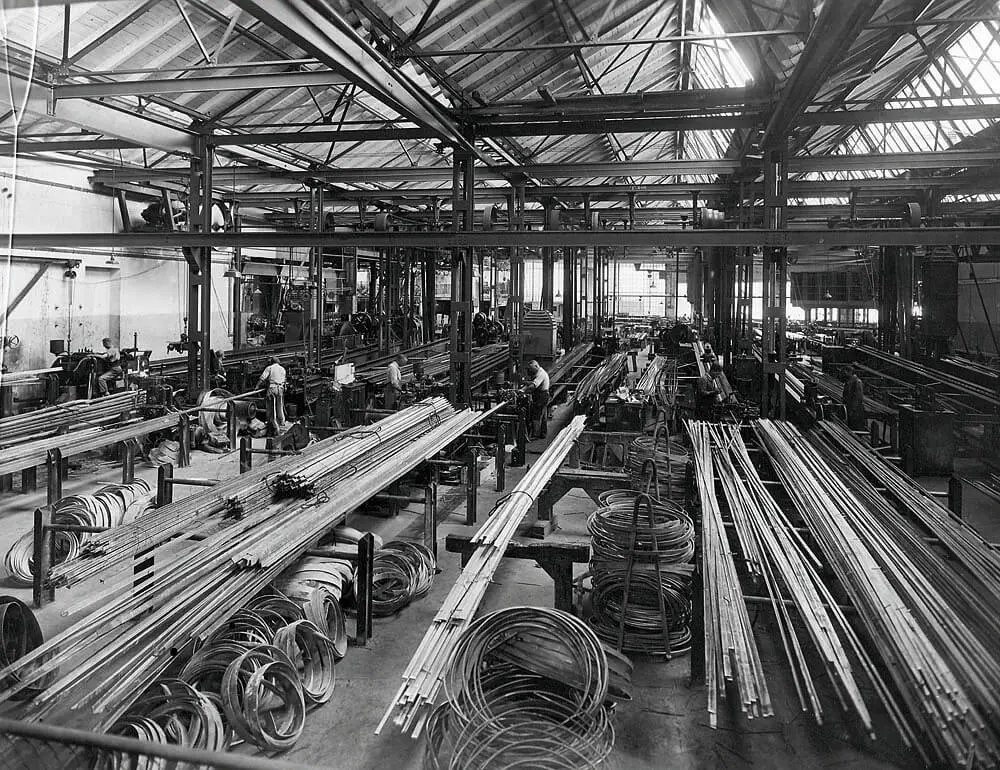
In the 18th century, Biel became a modest but strategic industrial centre, thanks to its position between the French-speaking and German-speaking worlds of Switzerland. The drawmill prospers gently, integrating advances such as water rolling mills, which partially mechanize the drawing. Around 1850, it joined a wider network of manufacturers under the aegis of the Vereinigte Drahtwerke (United Wireworks), an entity that brings together several Swiss metal workshops. At the end of the 19th century, as bicycles began to emerge as a cultural and sporting phenomenon in Europe, steel wires produced in Biel found new applications: brake cables, frames for primitive tyres. These first steps in cycling, although indirect, plant the seeds of a future revolution.
1900-1993: A Transition to Cyclism
The 20th century marked a slow transformation for United Wireworks. In 1934, as the company celebrates three centuries of existence, it began to produce specific components for bicycles: tempered steel beams, rudimentary rims, and even metal mudguards. At that time, cycling was booming in Europe, especially in Switzerland, where alpine roads attracted riders and amateurs. Biel's spokes, known for their strength and uniformity, become a preferred choice of local manufacturers, such as Condor or Allegro, Swiss brands today historic.
During the Second World War, production slowed down, but Switzerland, neutral, maintained a stable industrial activity. The post-war years, « Thirty Glorious »see a growing demand for bicycles, both for transport and competition. United Wire Works invests in modern machines, such as high-precision presses, to respond to this wave. In the 1960s, their teams equipped Swiss professional teams participating in the great classics, consolidating their reputation in the cycling community. However, the company remains primarily a diversified industrial entity, also producing automotive cables and wires for electronics.
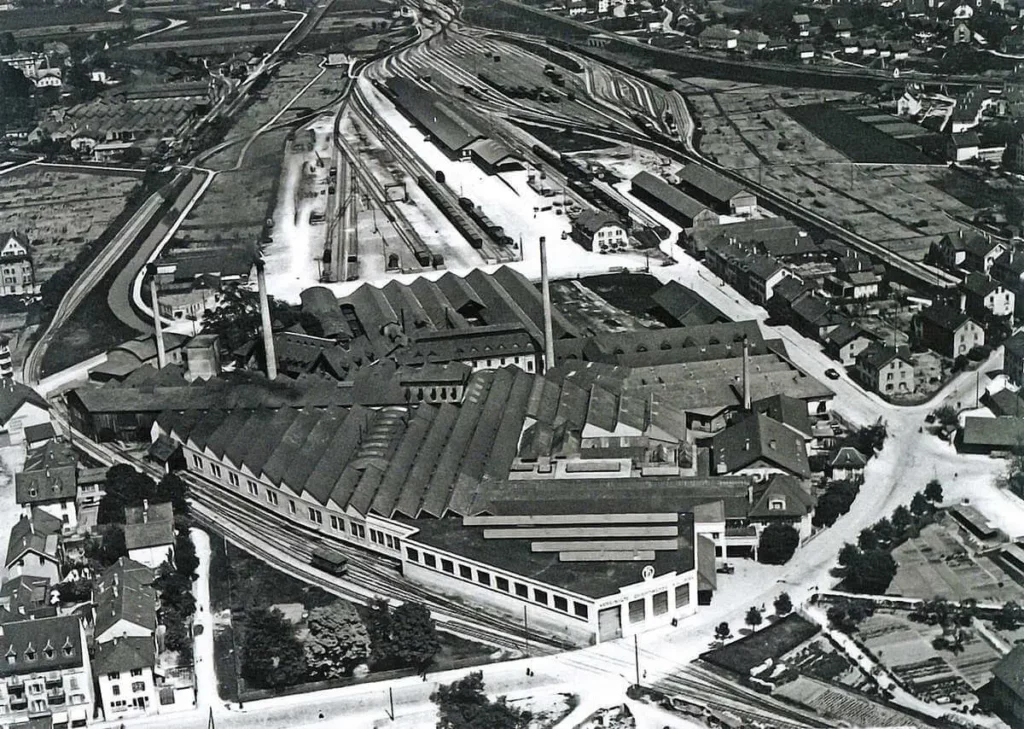
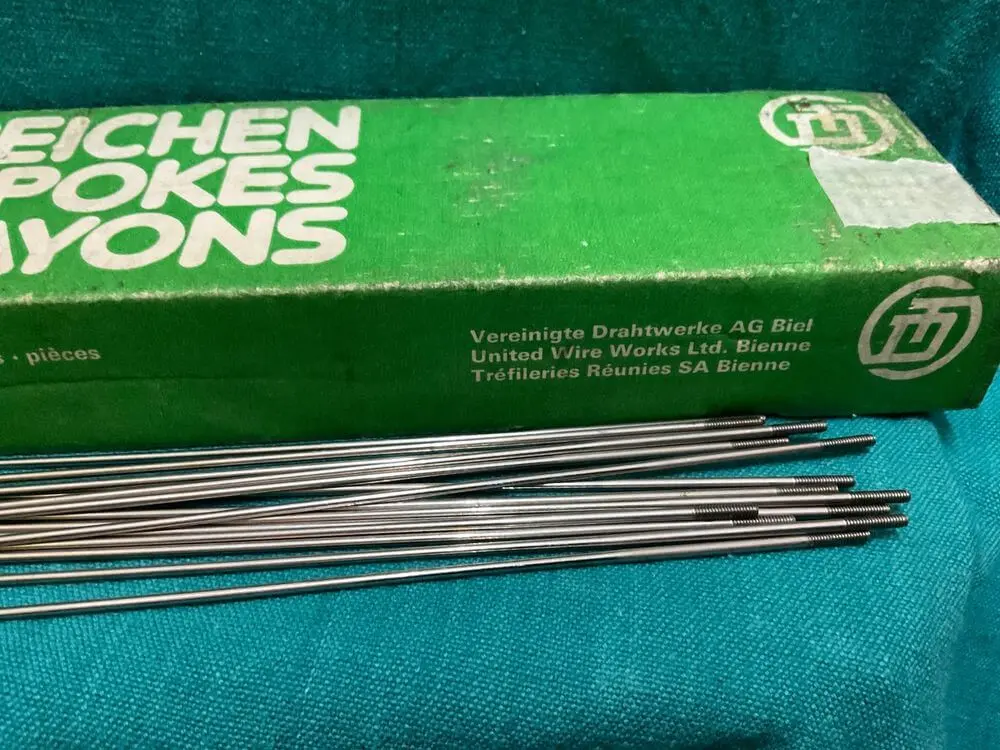 The famous United Wire Works Department made in Biel.
The 1980s brought opposite winds: globalization and Asian competition eroded the margins of European manufacturers. United Wire Works is in a crisis, marked by redundancies and restructuring. In 1993, faced with these challenges, management decided to split its activities. The cycling division, then marginal but promising, attracts the attention of three ambitious cadres: Marco Zingg, Maurizio D-Alberto and Franck Böckmann. This trio sees these industrial roots as an opportunity to create a brand dedicated to cycling, a project that will give birth to DT Swiss.
1994-1999: The foundation and the first triumphs
DT Swiss AG was officially born in 1994, the result of a bold buyout management orchestrated by Zingg, D-Alberto and Böckmann. They bought the United Wireworks division, with the aim of transforming this legacy into a modern and specialized company. The name « DT Swiss » is a twinkling: « DT » for « Drahtwerke Tréfileries » (in German and French) and « Swiss » to anchor the brand in the Swiss tradition of precision and quality. Installed in a renovated factory in Biel, they start with a small but determined team.
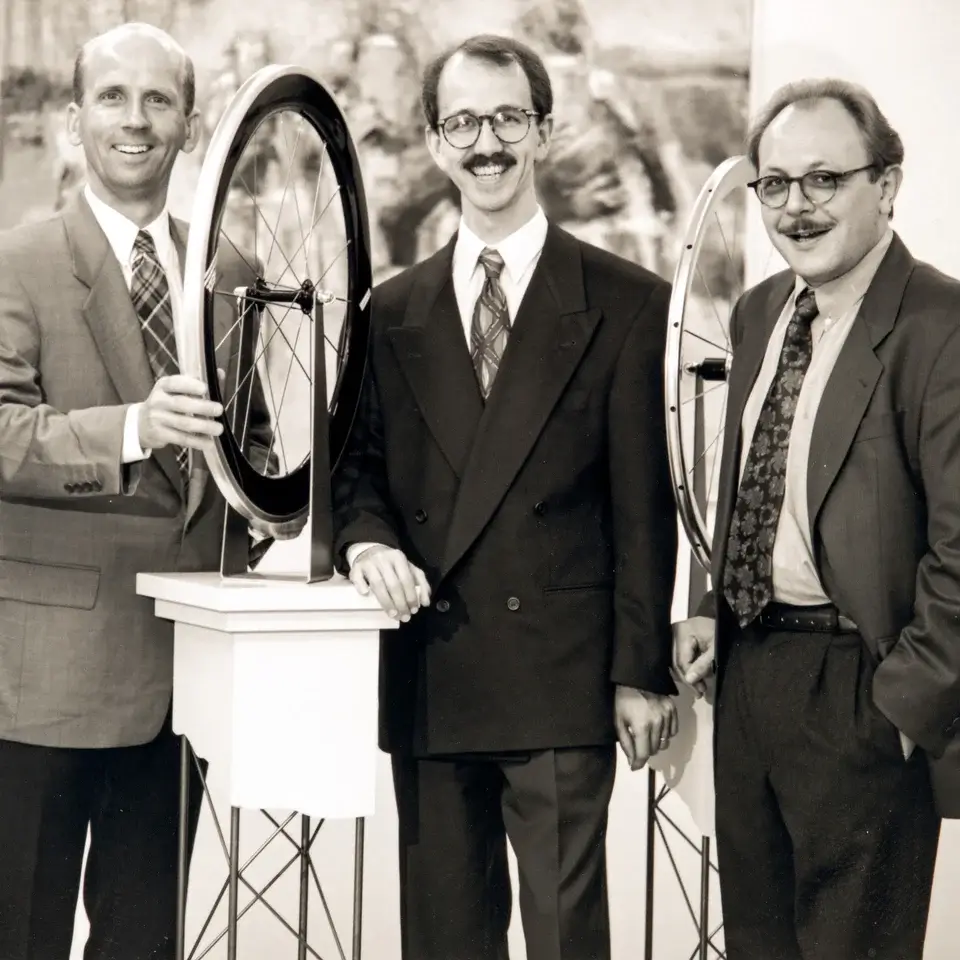 The founders of DT Swiss.
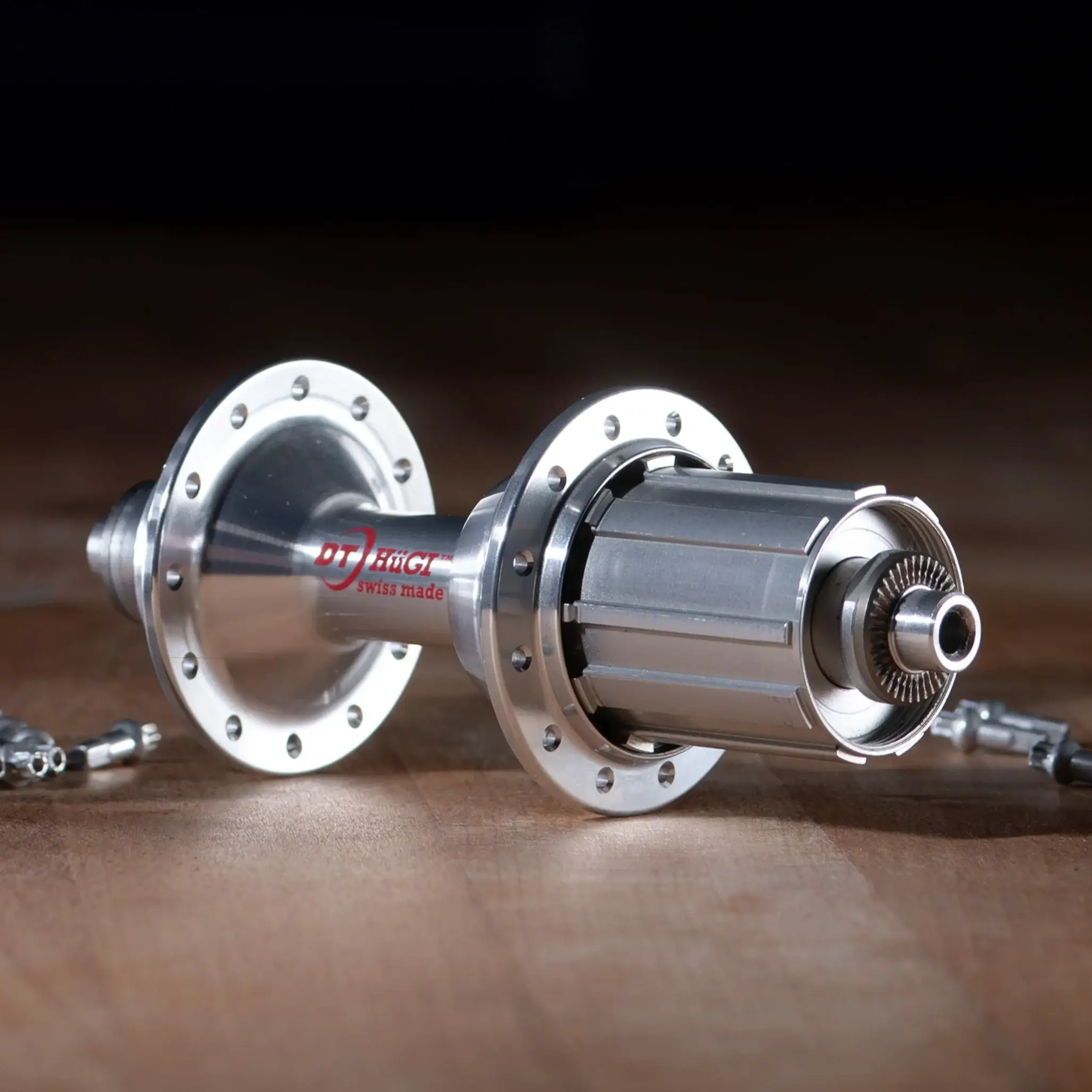
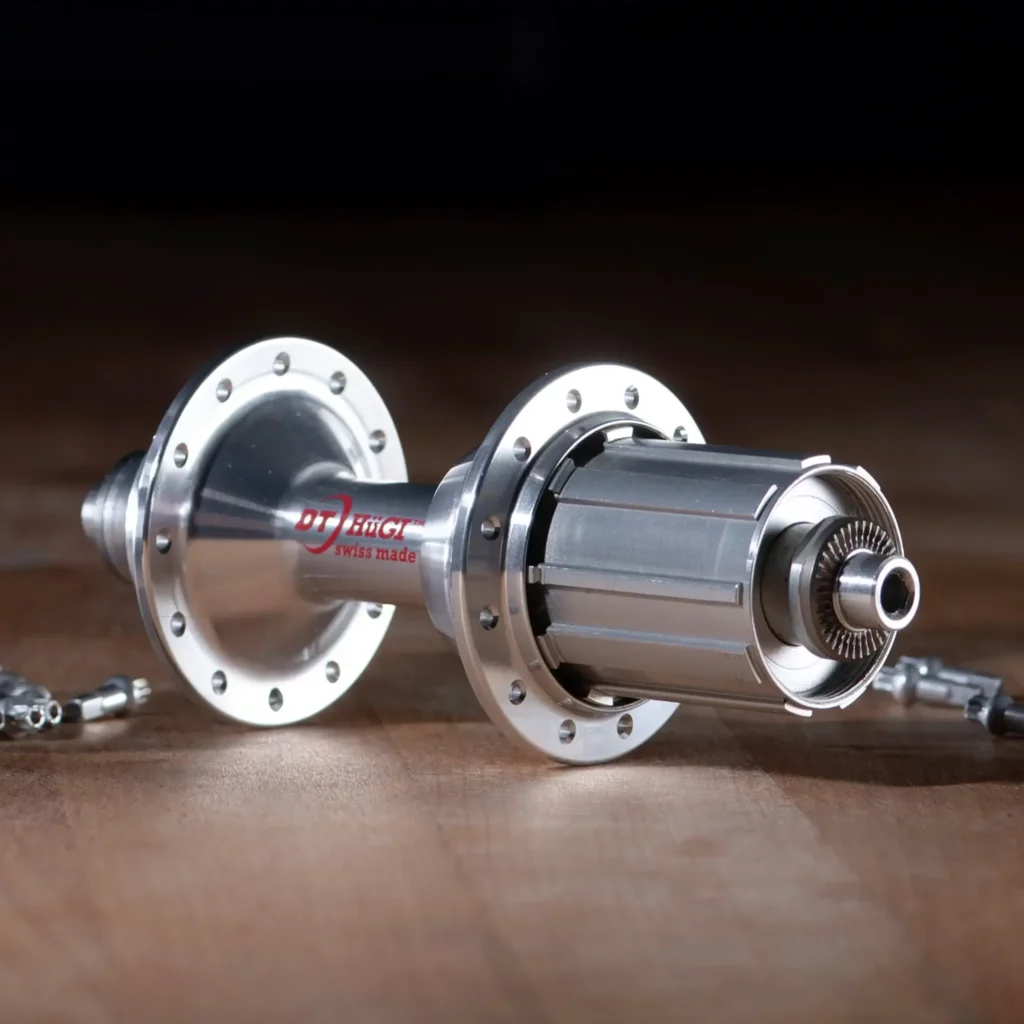
In 1995, DT Swiss hit a big hit with the launch of the Ratchet hubs. This system Ratchet, patented and revolutionary, uses two curved crowns that slit simultaneously, offering quick engagement (18 points at the time) and exceptional durability. This hub becomes a business card, attracting the attention of bike manufacturers and pro riders. In 1996, DT Swiss opened a subsidiary in Grand Junction, Colorado, to enter the US market, where the MTB Blow it up. In 1999, the brand completes its offer with aluminum and brass nuts, strengthening its control of wheel components. An offer that will seduce and equip many brands like Cadex, Roval, Lightweight, Bontrauser, Enve, Syncros,...
2000-2010: a decade of growth and diversification
The beginning of the 21st century is driving DT Swiss on the international stage. In 2001, the acquisition of Pace, a British brand of suspensions, marked a turning point. This acquisition, completed after months of negotiations, allows DT Swiss to enter the market for forks and shock absorbers for MTB. The team integrates the know-how from Pace to Biel, developing light and adjustable suspensions that seduce European and American vetetists. This strategic choice broadens their portfolio, positioning them as a versatile player.
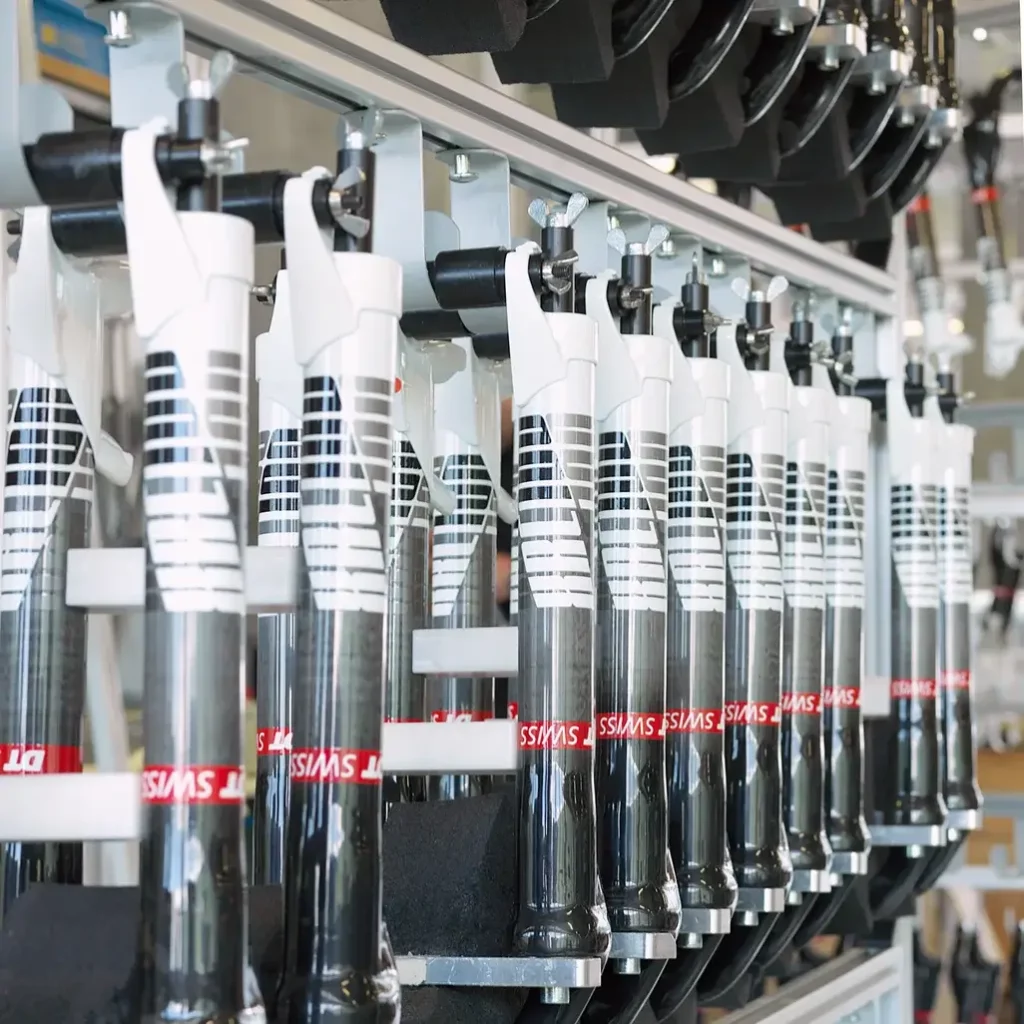
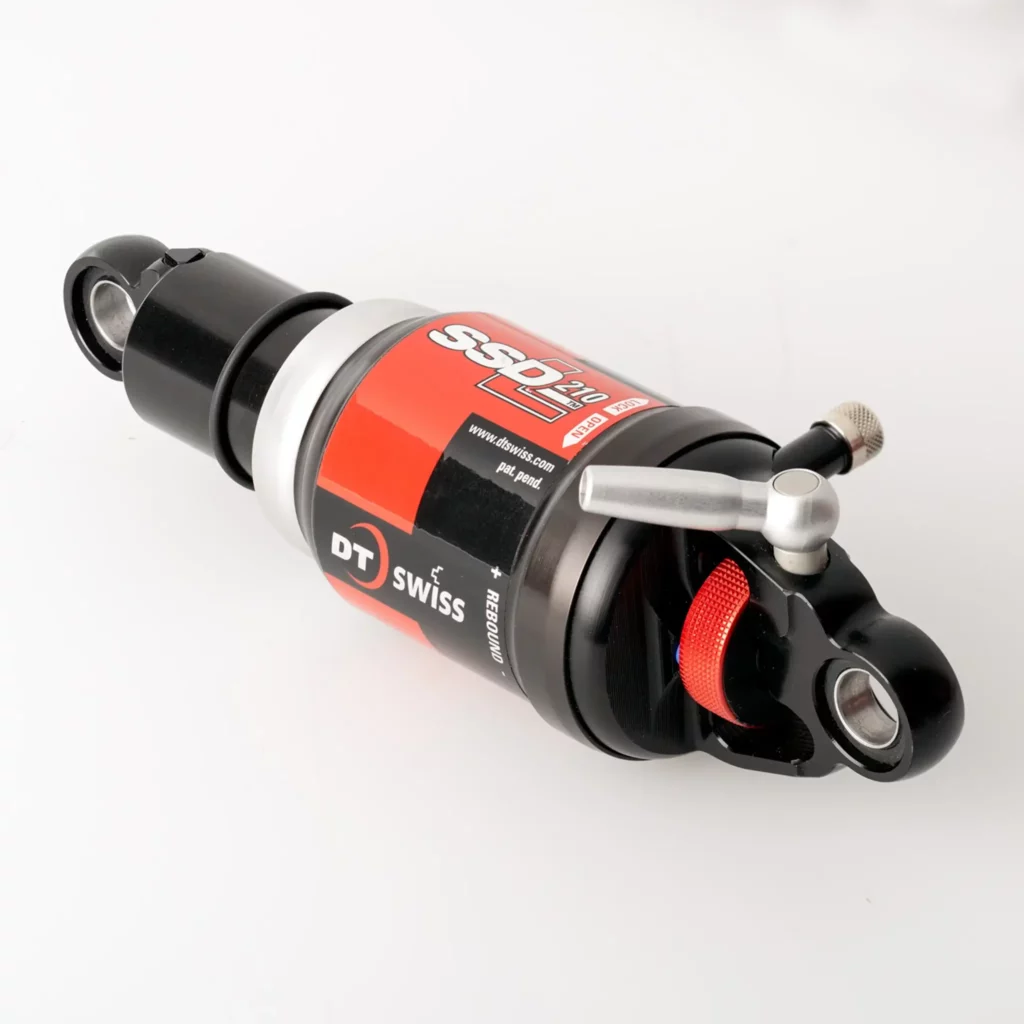
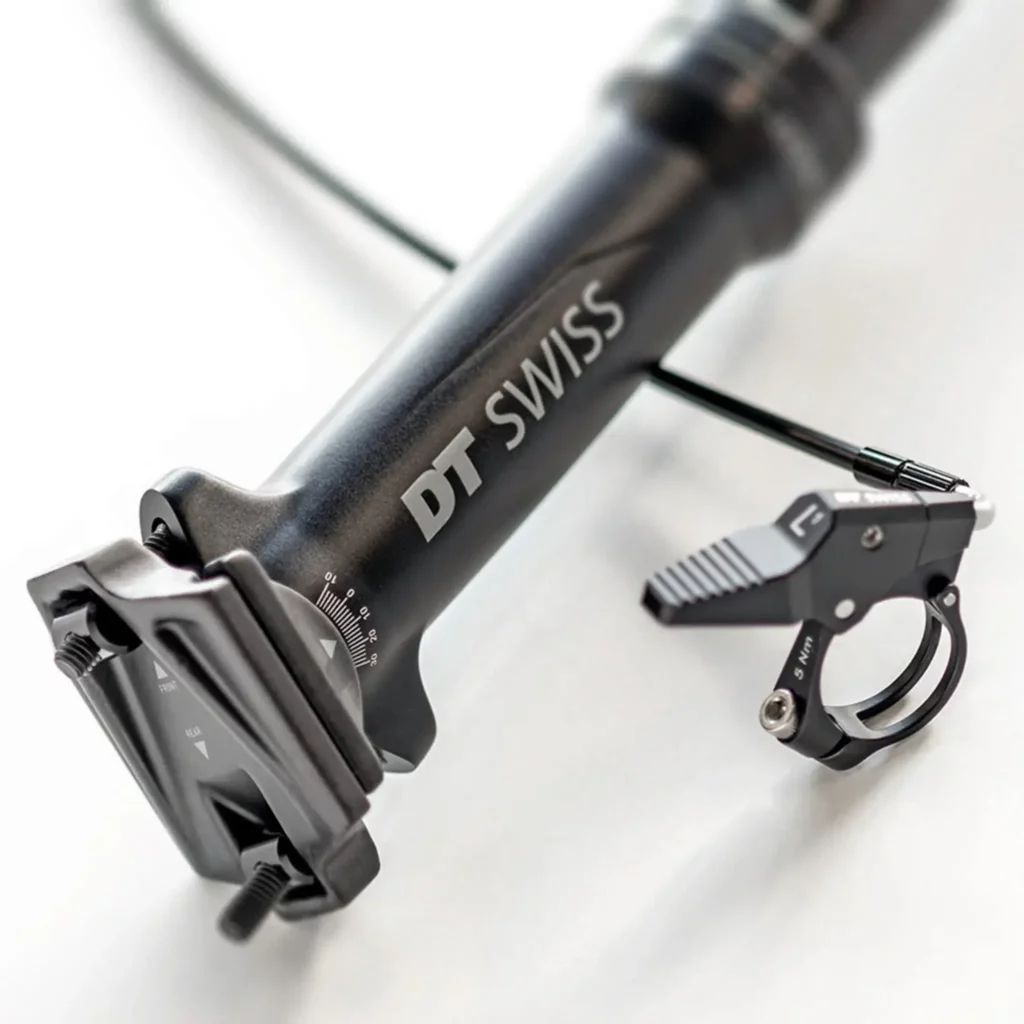
In 2003, DT Swiss received the Espace Mittelland Entrepreneur Award, a regional recognition that celebrates its innovation and economic contribution. That same year, the brand embarked on the production of rims, followed in 2004 by complete wheels – integrated systems that combine rays, hubs and home rims. These wheels, often made of alloy but soon made of carbon, attract giants like Giant, Scott or Canyon, who integrate DT Swiss products into their high-end bikes. In 2005, a factory opened in Taiwan, at the heart of the Asian cycling industry, to reduce costs while maintaining high standards.
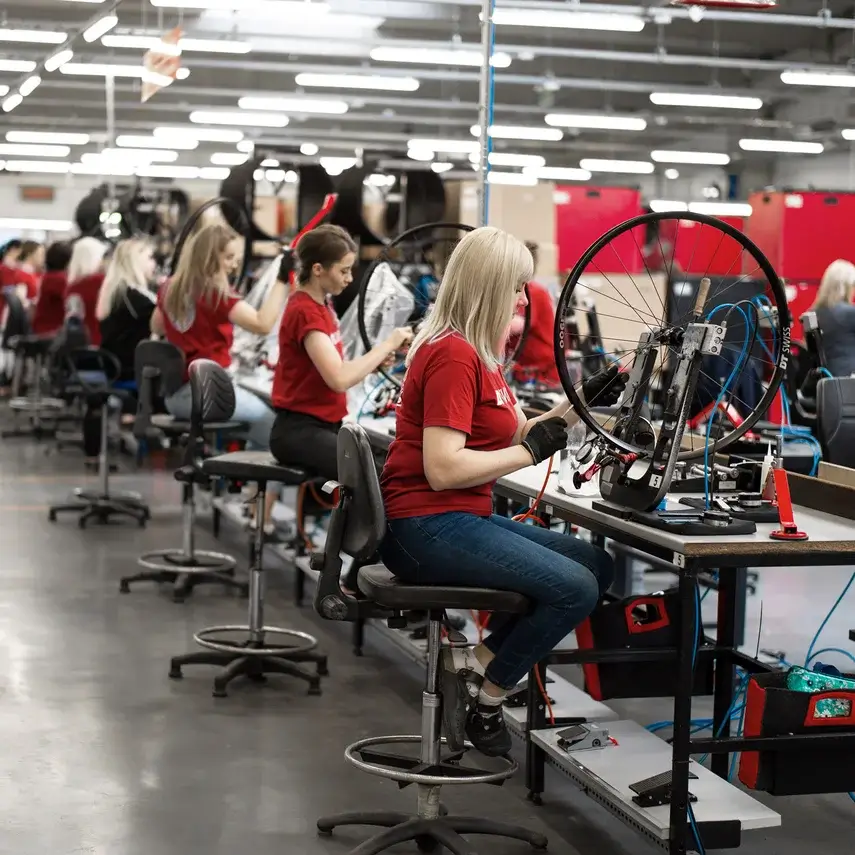 The production of DT Swiss wheels is now in Poland.
In 2007, a new plant was created in Oborniki, Poland, dedicated to wheel assembly and European logistics. This site, chosen for its skilled workforce and its proximity to key markets, produces thousands of pairs each year. In 2010, DT Swiss celebrates 15 years of existence with a strong presence in the pro peloton: their carbon wheels equip many triathletes and the Olympic Games, while their suspensions dominate the podiums of the World Cup of MTB with the legend Nino Schurter. This decade devotes DT Swiss as an essential brand, combining artisanal heritage and global ambition.
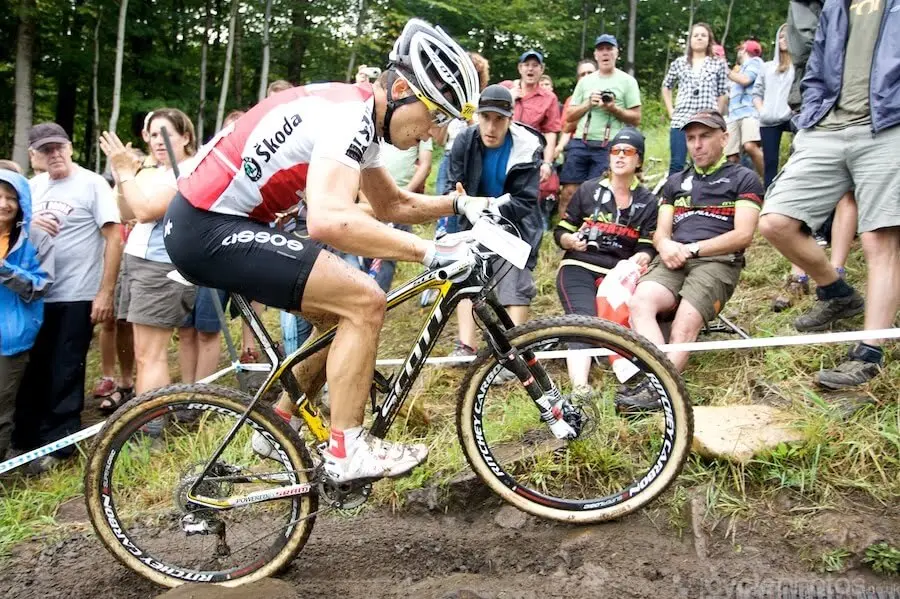 Nino Schurter at his 2009 World Champion fork equipped with a DT Swiss fork.
2011-2021: Modernization and Resilience
In 2011, DT Swiss inaugurated a new headquarters in Biel, a state-of-the-art complex that replaces the historic factory. This building, with R&D laboratories and an optimized production chain, symbolizes a future-oriented brand. The 2010s are marked by an adaptation to the evolution of cycling: disc brakes, adopted massively after 2015, push DT Swiss to redesign its hubs and rims. The engraver, which is booming, inspires versatile wheels like the RCMP series, tested on the gravely roads of the Grisons.
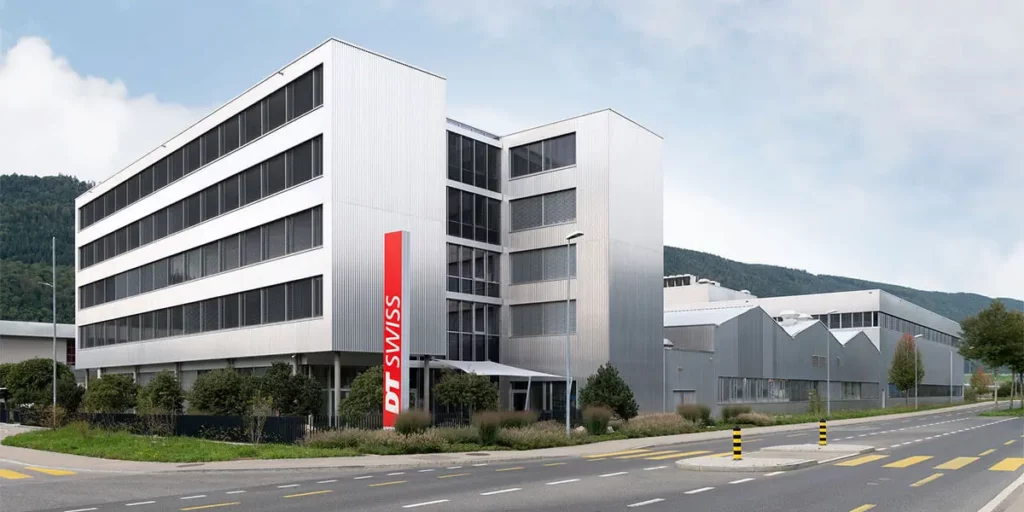 The new DT Swiss seat.
In 2016, Marco Zingg withdrew for personal reasons, leaving Böckmann and D This transition coincides with the euro crisis, which weakens Swiss exports. However, DT Swiss is resilient thanks to prudent management and a solid reputation. In 2018, their rays celebrate a symbolic milestone: more than 100 million units sold since 1994, a figure that reflects their dominance in this field. In 2021, the brand celebrates its 25th anniversary by equipping champions like Nino Schurter, whose Olympic medals highlight the reliability of DT Swiss products.
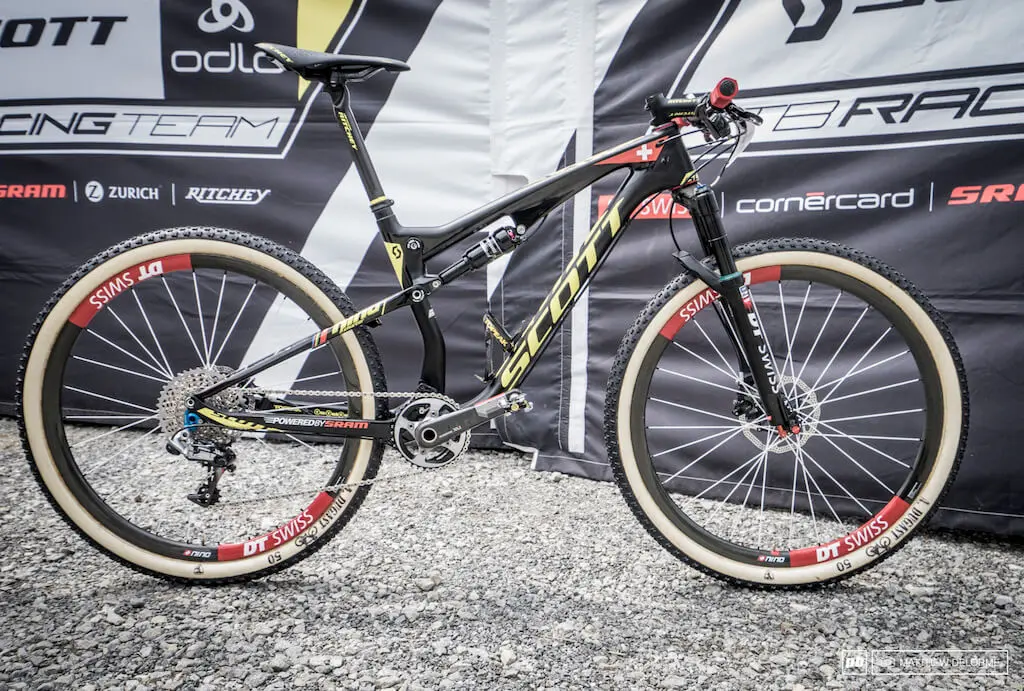 Nino Schurter's bike in 2015, fully equipped with DT Swiss.
2022 to present: legacy and global vision
In 2022, DT Swiss entered a new stage with the acquisition of Trickstuff, a German high-end brake manufacturer. This operation, completed after complex negotiations, enriches their catalogue with precise braking systems, responding to the growing demand for fully equipped bicycles. In 2024, the production of the suspensions was gradually transferred to Oborniki, Poland, to optimize costs, while Biel remained the nerve heart of the rays and hubs.
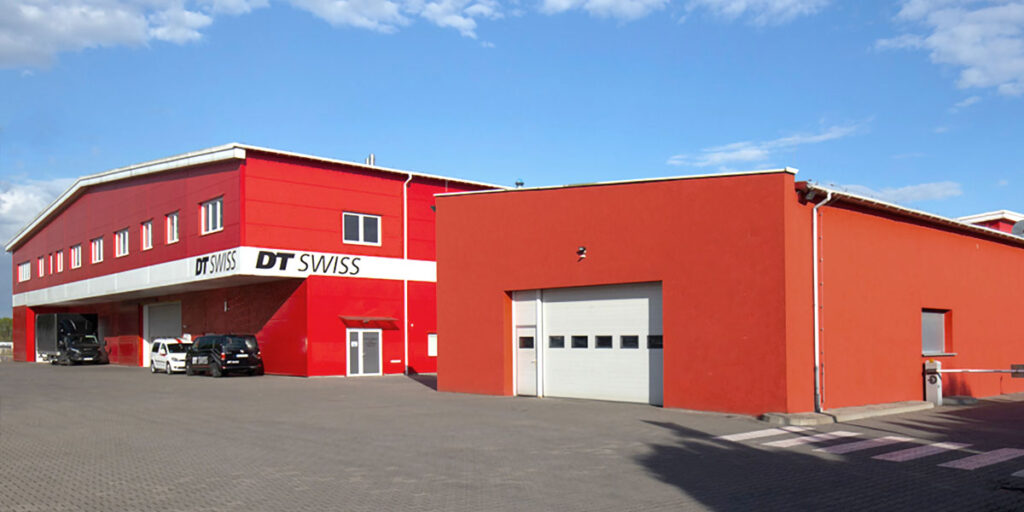 DT Swiss premises in Poland.
Today, in 2025, DT Swiss celebrates 30 years of official existence and nearly 400 years of indirect inheritance. With 600 employees worldwide, including 180 in Biel, the brand still dominates the market (70% of its original business) while excelling in carbon wheels and suspensions. Its products equip a professional team (Uno-X) and are visible on the Tour de France, Olympic champions of MTB and amateur cyclists in more than 50 countries. The Ratchet system has evolved to 54 commitment points and 90 recently (DEG). It remains an icon, often incorporated under license by other manufacturers. DT Swiss embodies a rare success: a company that has been able to turn ancestral know-how into a global force, while remaining faithful to its Swiss roots of precision and excellence.
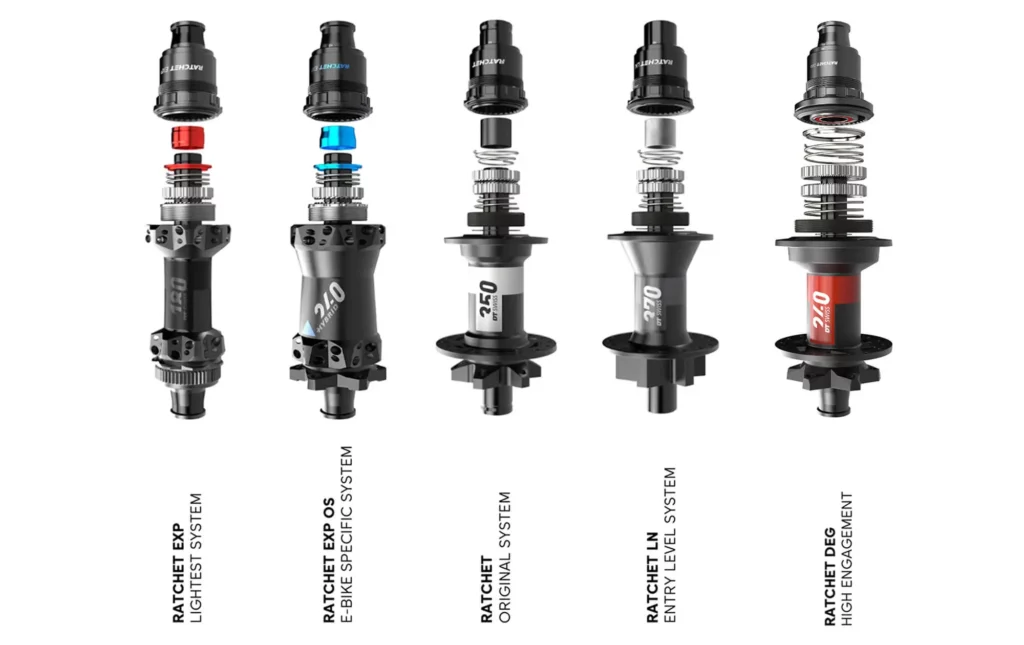 30 years of innovation on hubs
More information on the official website DT Swiss.