Fulcrum
In the world of cycling, few brands have managed to forge such a strong identity in such a short time as Fulcrum Wheels. Often seen in its early days as a mere emanation of an Italian giant, the brand has been able to draw its own path, guided by a philosophy that could be summarized by « Timeless Innovation » (a timeless innovation).
To understand Fulcrum, you have to go beyond the technical data sheet. We must dive into a history of precision engineering, an obsession with aerodynamics and a fierce desire to offer Italian performance to all cyclists, regardless of the transmission they use. From the legendary Racing Zero to the recent Speed 42 and 57, here is the great story of Fulcrum.
2004: The genesis of a strategic project
The history of Fulcrum officially begins in July 2004. To understand this birth, we must put the context of the cycle market in the early 2000s.
The compatibility dilemma
At that time, the market was dominated by two transmission giants: Italian Campagnolo and Japanese Shimano. There was a tacit rule, almost aesthetic, in the platoon: the marks were not mixed. A bicycle equipped in Shimano mounted with Campagnolo wheels was considered a lack of taste or even a technical heresy for purists.
However, Campagnolo, with its centuries-old know-how in the manufacture of hubs and rims, was depriving himself de facto a huge market share: Shimano users (and later SRAM).
The creation of an independent identity
It is here that strategic genius intervenes behind the creation of Fulcrum. The idea was not to create a sub-brand « low cost », but on the contrary to create an autonomous entity, able to offer the very high-end Italian (rolling, shelving, rigidity) with a neutral aesthetic and universal compatibility.
The name « Fulcrum » (which means « pivot » or « support point » in Latin) was not chosen at random. It symbolizes the central point around which everything revolves, the essential element that turns power into motion.
From the start, the company Fulcrum Wheels s.r.l., based in Arcugnano, Italy, displays the colour: it inherits the « Racing Heritage » from his mother's house but ssaffoned traditional visual codes to seek modernity.
Engineering at the heart of DNA Fulcrum
If marketing has made it possible to launch the brand, it is the technology that has made it sustainable. By analysing the technical manuals and patents filed, it is realized that Fulcrum quickly developed its own solutions, distinct from those of Campagnolo on certain points, while sharing the excellence of materials.
Pioneers of the Tubeless
It is important to note a key date often forgotten: 2008. As the brand archives point out, Fulcrum was one of the first manufacturers to experiment with Tubeless technology in road competition. At a time when it seemed « Crazy », they paved the way for what has now become the norm of the professional platoon.
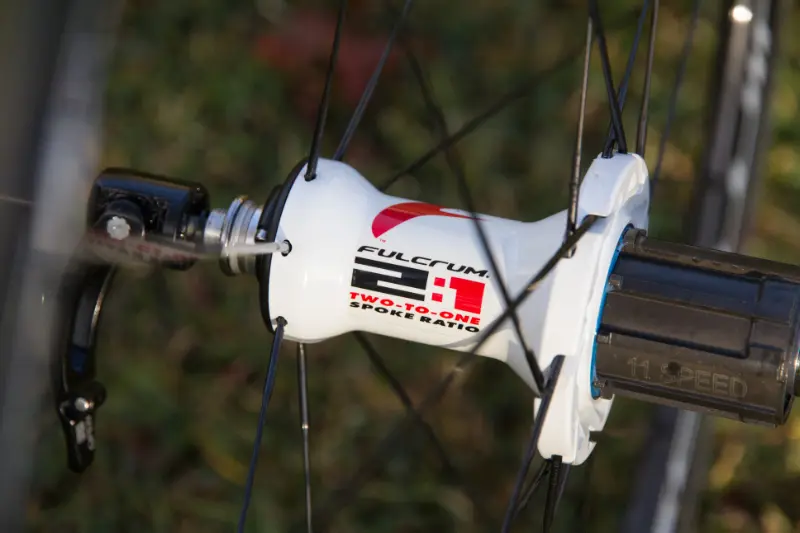
Concept 2:1 Two-to-One Spoke Ratio
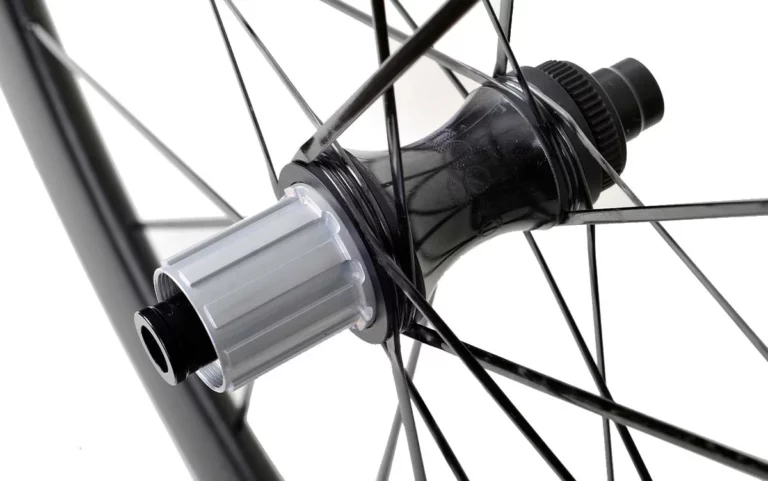
It is probably the most significant visual and technical signature in Fulcrum's history. The engineers started from a simple physical observation: during pedaling, the force exerted on the cassette (side freewheel) induces a twist that can release tension from the opposite rays.
To counter this, Fulcrum introduced ratio 2:1.
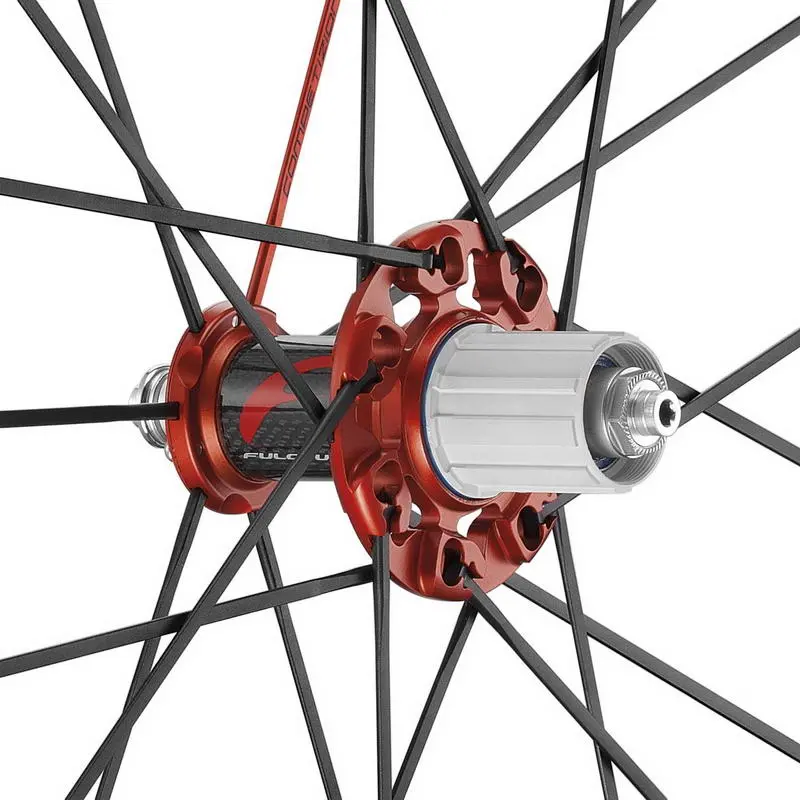
- The principle: On the rear wheel, there are twice as many rays on the cassette side as on the opposite side.
- The result: A perfectly dynamically balanced wheel. The forces are evenly distributed, the rim is not veiled under effort and the reactivity is immediate.
This technology, visible on iconic models such as Racing Zero, has redefined what cyclists expected from an aluminum wheel: absolute rigidity.
MoMag technology: structural integrity
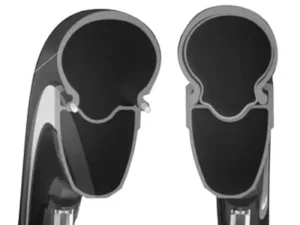
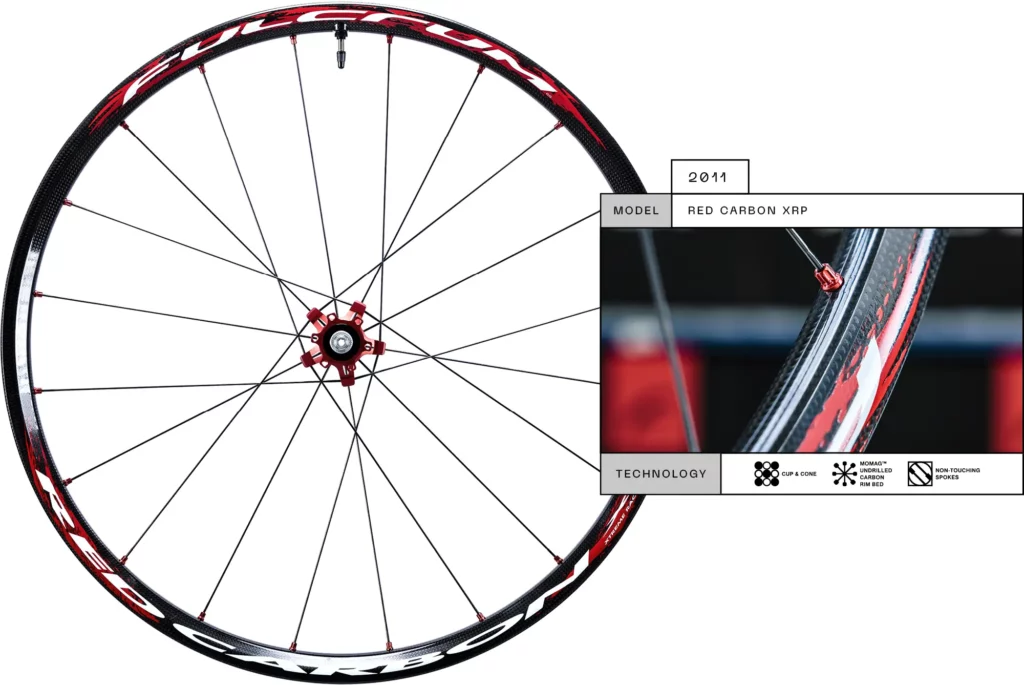
Another major innovation that has marked the history of the brand is the « MoMag » (Mounting Magnet). Unlike the majority of competitors who pierce the rim bottom to insert the spoke nuts (which weakens the structure and requires a rim bottom), Fulcrum took the problem upside down.
The nuts are inserted by the valve hole and guided to their anchoring point using a magnet.
- Advantage 1: The upper deck of the rim is full, without holes. Torsional stiffness is increased.
- Advantage 2: No need for rim bottom, which reduces peripheral weight.
- Advantage 3: Native sealing, greatly facilitating the subsequent adoption of Tubeless.
The conquest of the road: legendary models
The story of Fulcrum is written through its products. Some wheels have become industry standards.
La saga Racing Zero (2007)
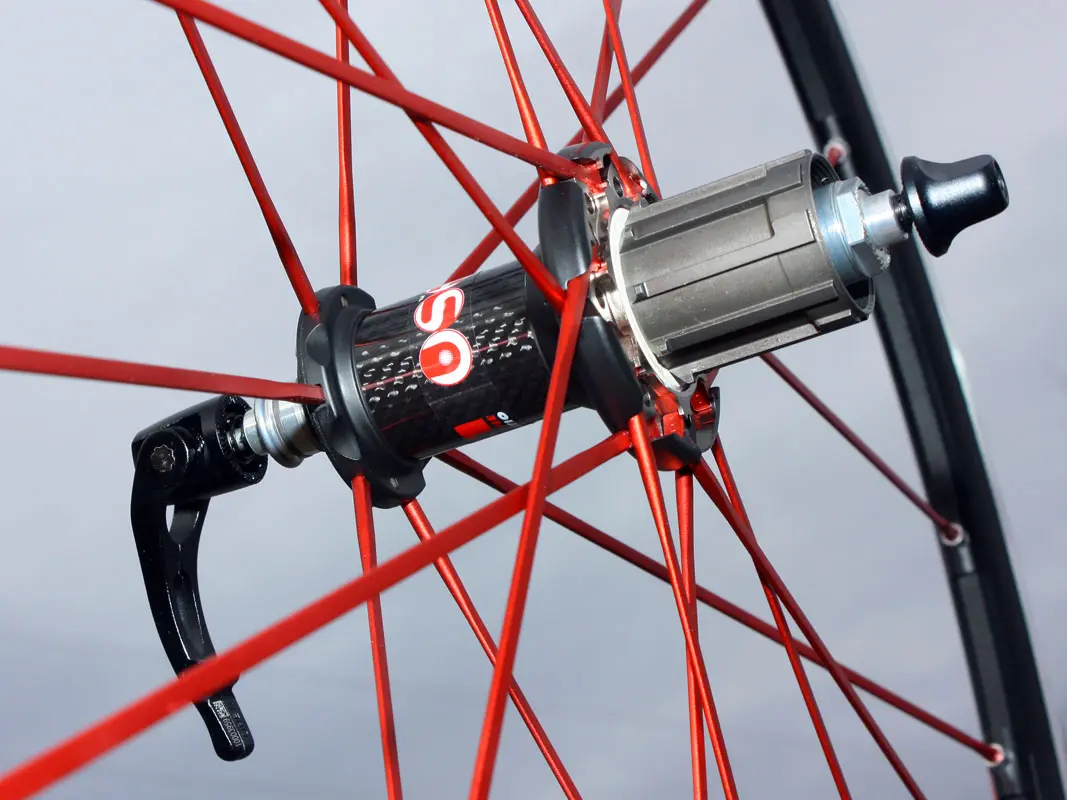
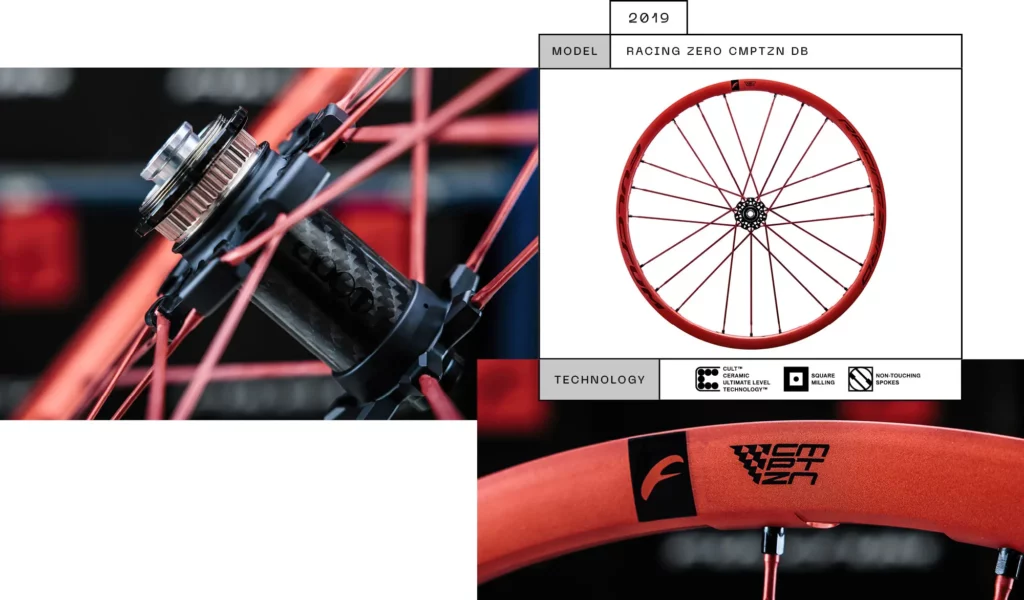
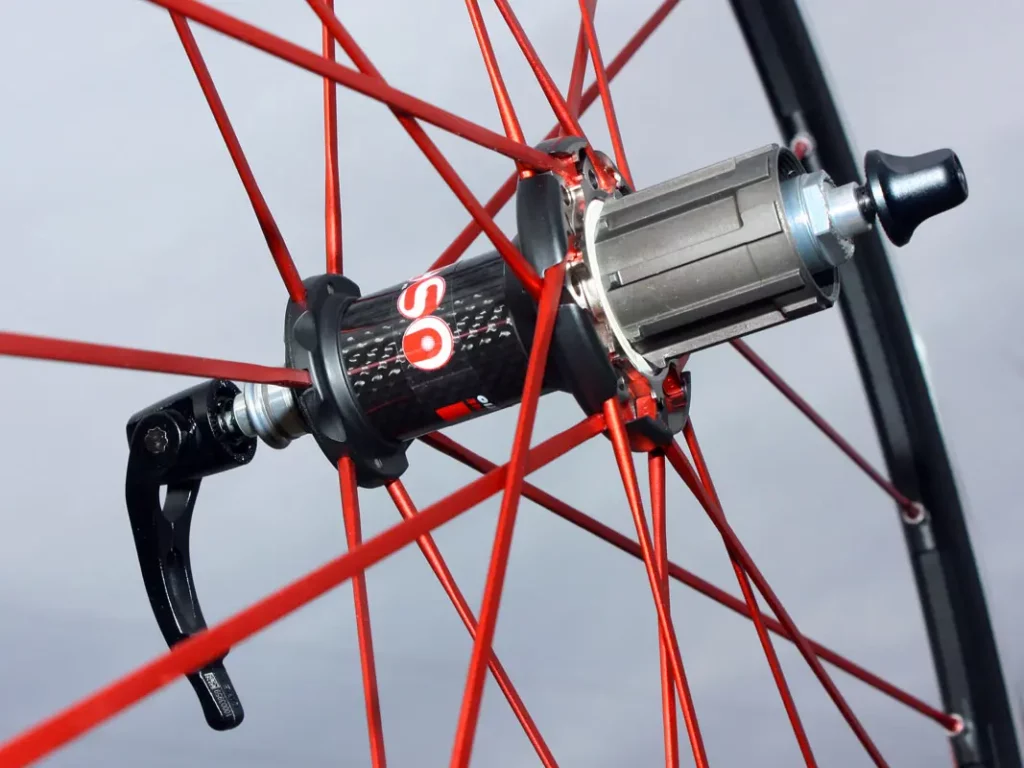
Launched officially in 2007, the Racing Zero has become the absolute standard of the high performance aluminum wheel. It was distinguished by its wide flat aluminium beams and 2:1 technology. The brand has even produced special editions, such as the Racing Zero CMPTZN DB Custom for the Japanese market (with anodized red rays symbolizing the sun and prosperity), proving its ability to adapt its aesthetics to local cultures while maintaining its technical rigour.
Climbing art : Racing Light XLR (2009)
For climbers, 2009 was a pivotal year with the release of the Racing Light XLR. Used by professional teams like Lampre Fondital and Cofidis, this tubular wheel weighed only 1276 grams. With its carbon hub body and CULT ceramic bearings, it was the ultimate answer for mountain stages.
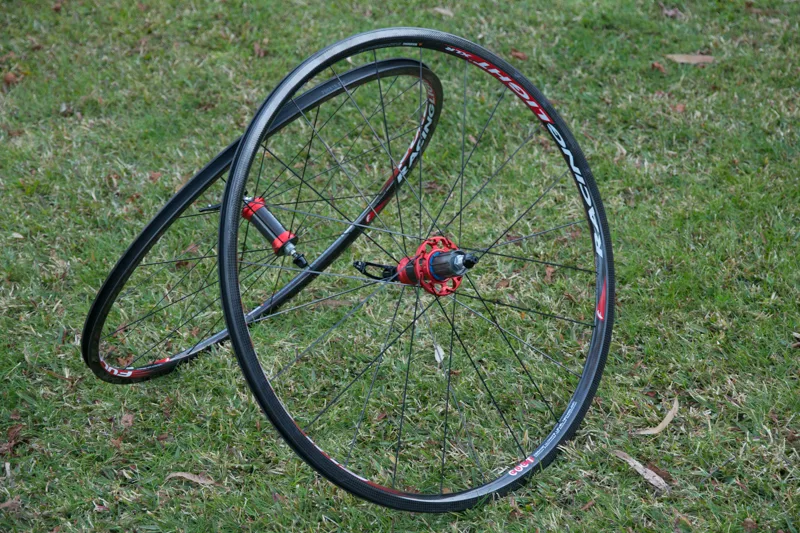
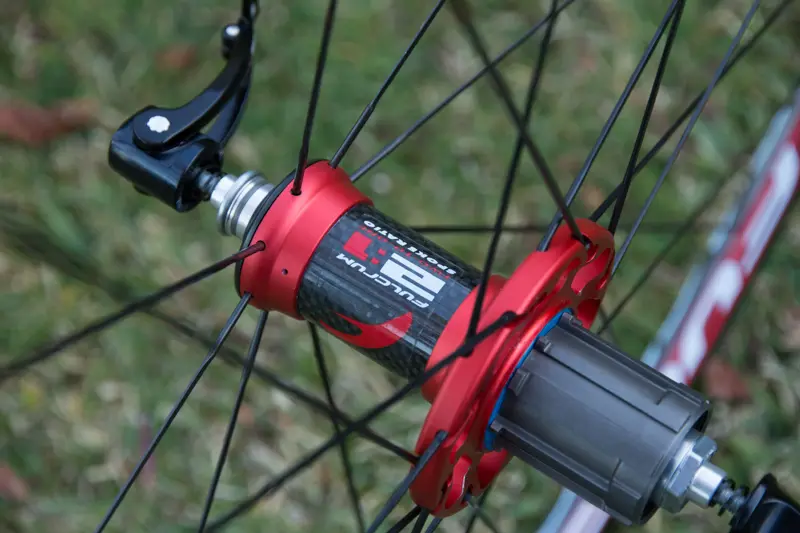
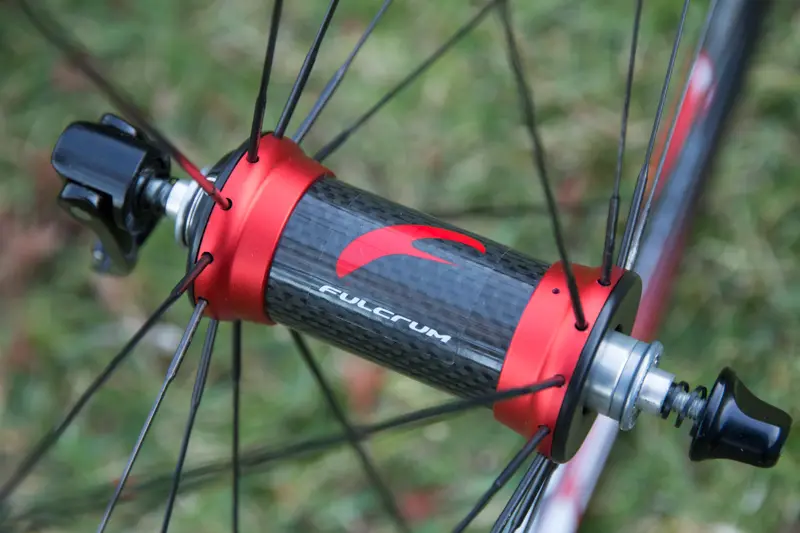
Extreme Aerodynamics: Red Wind XLR (2012)
Fulcrum also knew how to explore extremes with the Red Wind XLR 105. With a vertiginous profile of 105mm, this wheel was an engineering feat: a structure « full carbon » On which an aluminium braking surface was applied (not a simple carbon sling on an aluminium rim, as was the norm at the time). It offered rigidity and air penetration without compromise.
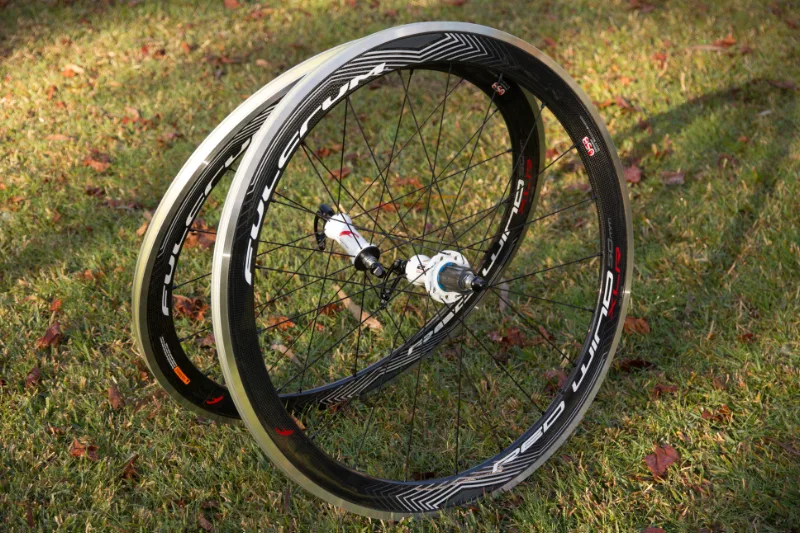
Speed Series: Carbon Age
For the professional platoon, aluminum was no longer enough. Fulcrum developed the series « Speed » (formerly Racing Speed). This is where the aerodynamic obsession of the brand is best expressed.
The arrival of Speed 40 marked a turning point. It offered pro technology (carbon rims, treated brake tracks) to the general public using chamber tires.
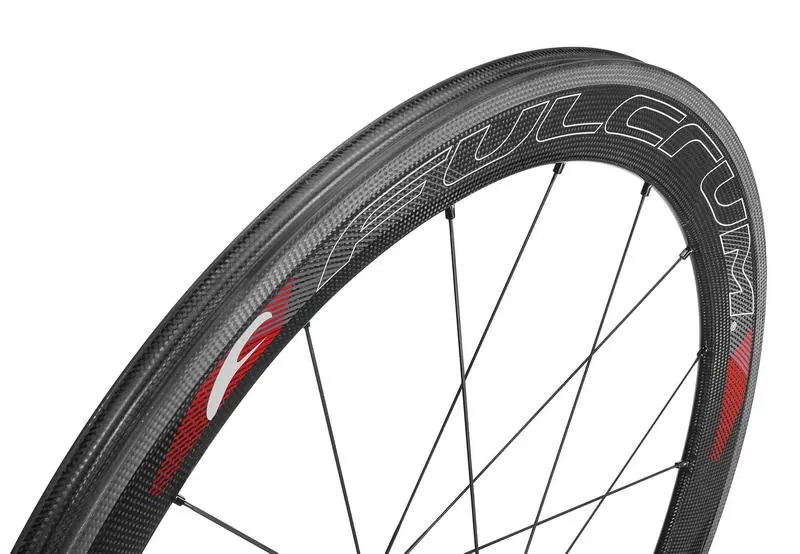
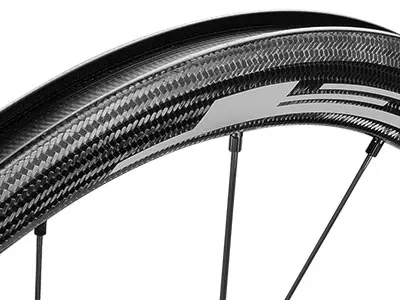
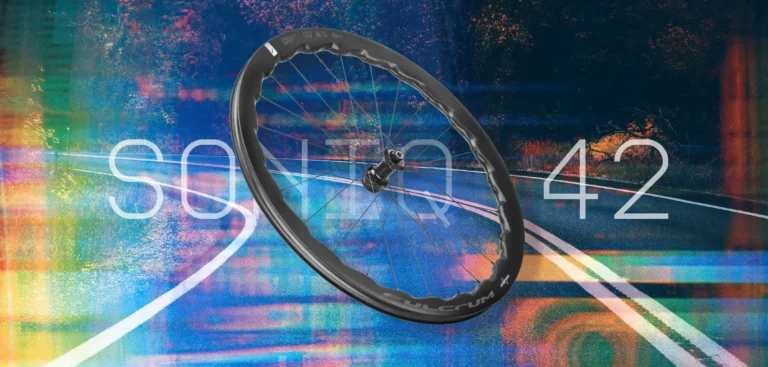
More recently, the new rims Speed 42 and 57 mark a new era. Wider (to accommodate tires of 28mm or more), more round (to manage the lateral wind), they embody modernity. They incorporate rim funds « Undrilled » (not pierced) thanks to the MoMag, optimizing the safety and ease of tubeless mounting.

Bearings: Cult and USB
The history of Fulcrum is also that of fluidity. The brand uses advanced ceramic bearing technologies:
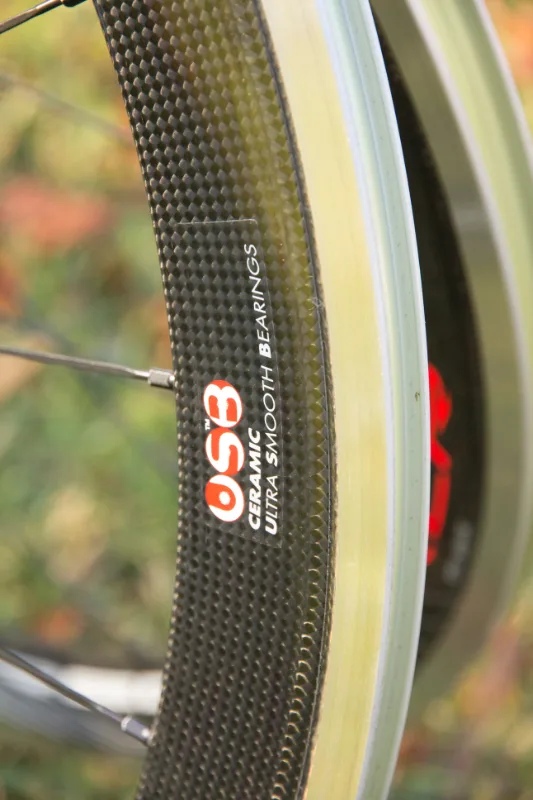
- USB (Ultra Smooth Bearings): Ceramic balls increasing fluidity.
- CULT (Ceramic Ultimate Level Technology): The ultimate. Ceramic balls on Cronitect® steel rings. These bearings almost do not require fat (a single drop of oil is enough) and offer exceptional durability in the face of corrosion.
Beyond bitumen: the all-terrain bet
Contrary to an idea received, Fulcrum's commitment to the MTB was not shy. The archives reveal an offensive strategy since 2008.
2008: The shock « Red Fire » In Descent
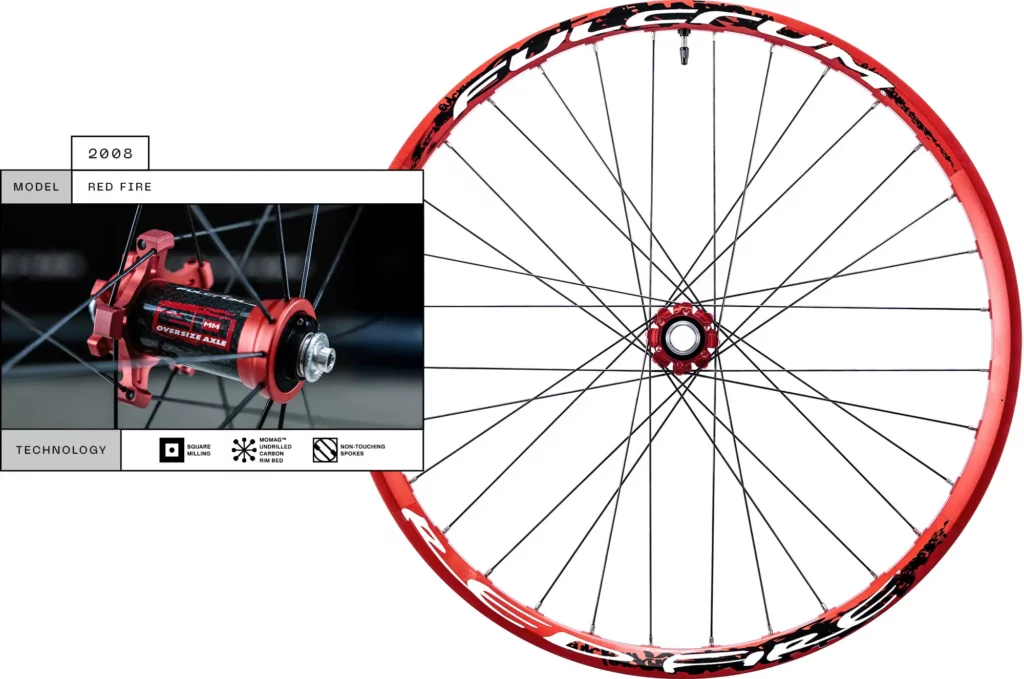
Fulcrum entered the arena of MTB through the large door: the Descent (DH). The Red Fire 2008 remained in memory with its iconic red circle. It was an indestructible 26-inch wheel, with a huge 20mm front hub and a 23mm channel (very wide for the time!). She has equipped the best pilots of the Commencal Team.
Enduro and XC: Red Zone and Red Carbon
Innovation continued with:
- Red Carbon XRP (2011): The Queen of the Cross-Country. With only 1347g, this carbon wheel accompanied legends like Gunn-Rita Dahle Flesjå, José Hermida and team Merida Multivan. Titanium freewheel body and spokes « straight sweater » showed an obsessive search for relief.
- Red Zone XLR (2010): An Enduro wheel with a look « graffiti » unique, designed Tubeless natively thanks to the unperceived rim bottom.
The advent of the grave
With the Gravel explosion, Fulcrum was able to bridge between his two worlds. The range Rapid Red was born from this fusion: the robustness of the MTB with the performance of the road. This is a perfect example of the company's agility, able to react quickly to new market trends (650b wheels, 40mm+ wide wheels).
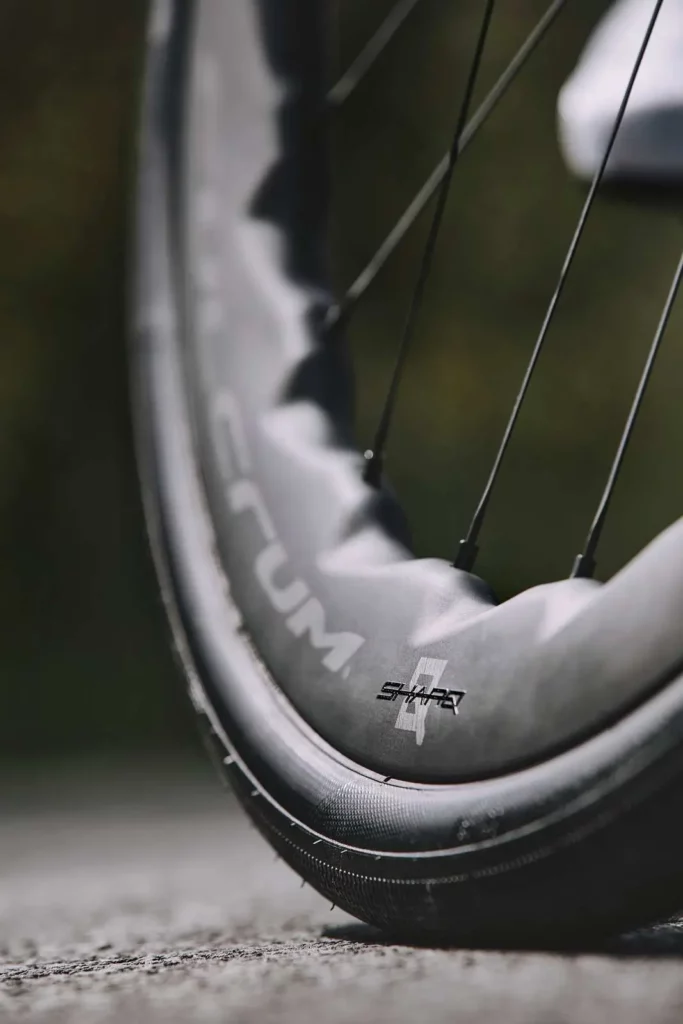 And now the Sharqs!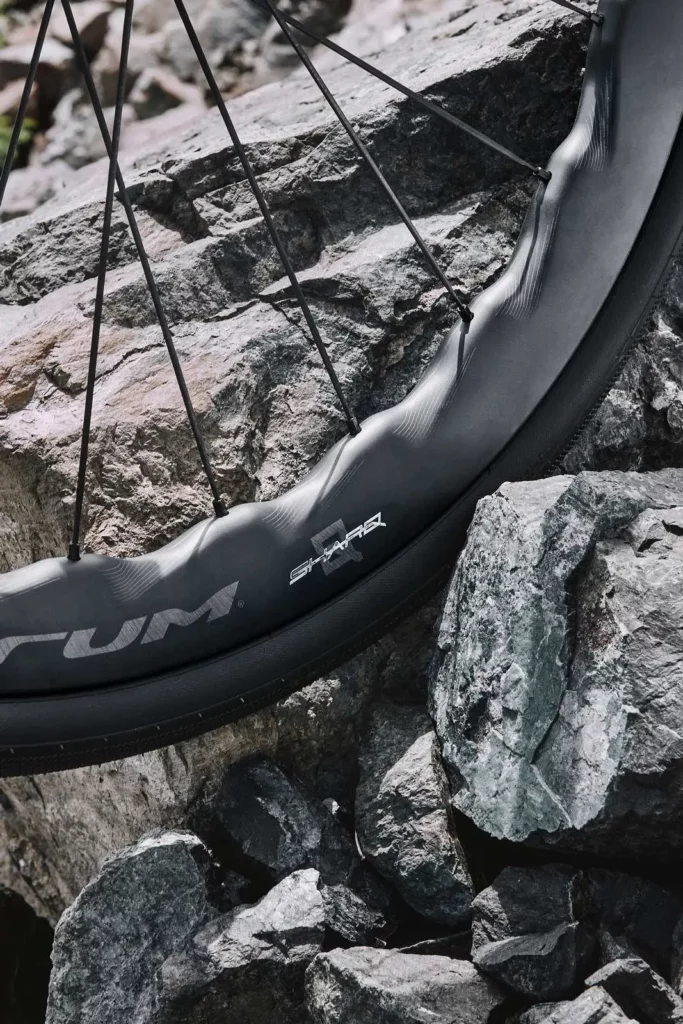
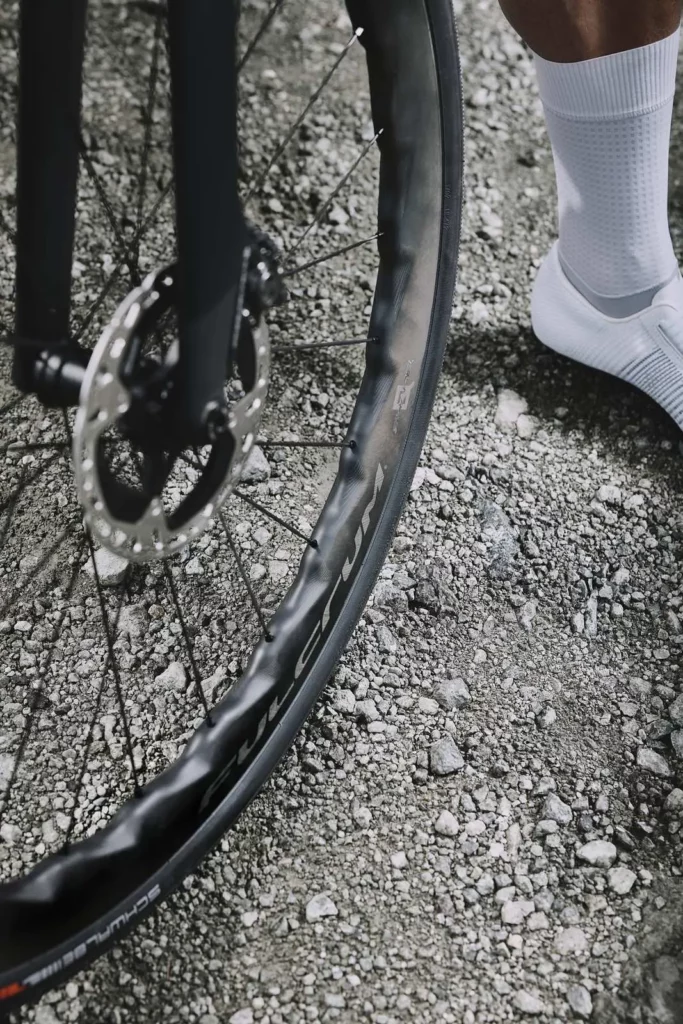
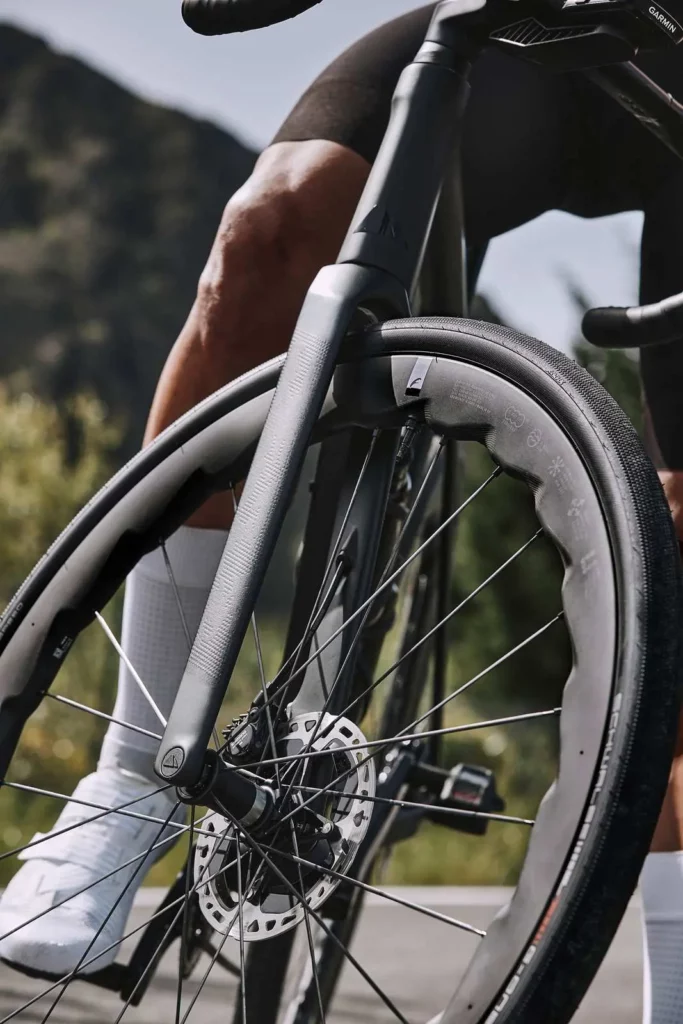
A list that forces respect
The theory is good. The proof of race is better. If the engineers of Arcugnano are excellent in design, Fulcrum has never contented itself to shine only in R&D laboratories or on test benches.
Very quickly, the brand realized that to impose against established giants, it had to win. And fast.
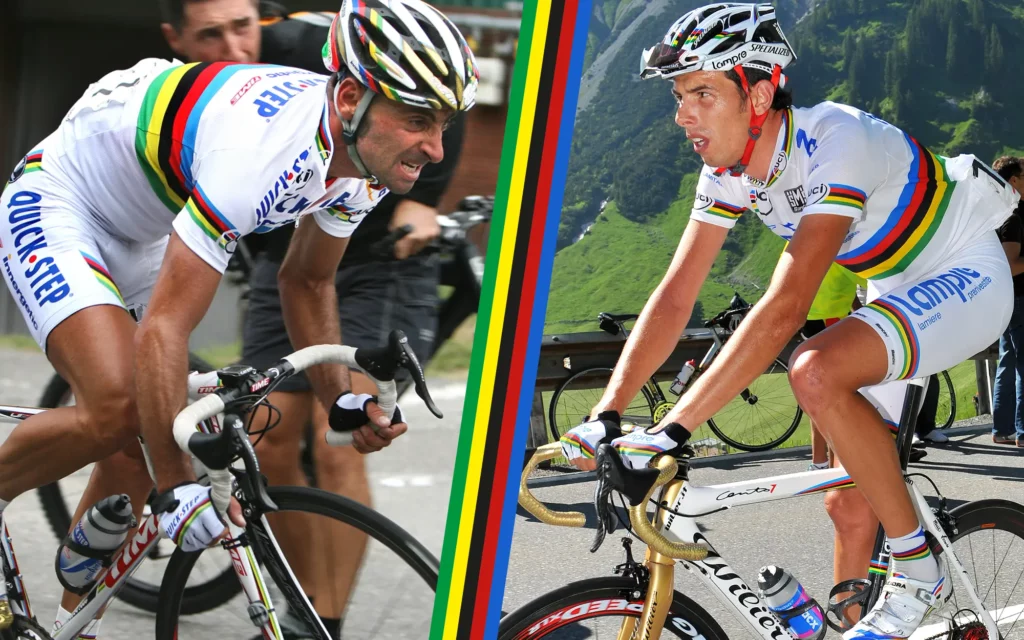
On the road: domination of the classics
The impact was immediate. As early as 2005, just one year after the official launch of the brand, the Belgian Tom Boonen marked the history of modern cycling. He made the mythical double Tour des Flanders and Paris-Roubaix mounted on Fulcrum wheels.
- It was not just a sporting victory, it was a major technical validation: these wheels could endure the hell of the north pavements while maintaining the aerodynamics and rigidity necessary to win a massive sprint.
- Other legends, like Paolo Bettini (« The Grill »), also trusted the brand to conquer their World Champion rainbow jerseys, anchoring Fulcrum in the World Tour elite.
In MTB : Olympic consecration
If the success on the road was expected given the DNA of the brand, the domination of the MTB Surprised many observers. It's the French legend Julien Absalon who gave Fulcrum his most beautiful letters of nobility off-road.
- In 2008, at the Beijing Olympic Games, it was with wheels MTB Fulcrum (optimized Red Metal models) that he conquered the Gold Medal.
- It doubled the bet with world titles, definitely proving that Italian technology offered the necessary robustness on the most hostile terrain, where the slightest mechanical weakness does not forgive.
The turn of the disc brake
One of the pivotal periods in the recent history of the cycle was the transition from rim braking to disc braking. For a wheel manufacturer, it is a revolution that requires a complete rethinking of the product.
The forces no longer apply to the rim, but to the hub. Fulcrum was one of the first to fully embrace this change with its standard AFS (Axial Fixed System), compatible with the Centerlock, and by generalizing the cross axes long before this becomes the absolute norm.
The range « DB » (Disc Brake) has gradually replaced the classic models, proving that Fulcrum does not undergo technical evolution, but accompanies it.
The importance of « Made in... »
While many competitors have relocated their entire production to Asia, Fulcrum (like its parent company) maintains a strong location in Europe (especially Romania for its own carbon assembly plants, with constant Italian supervision). This allows for quality control that few brands can claim today.
Conclusion: the future is on the move
In less than twenty years, Fulcrum has moved from the status of « new curious entrant » the essential pillar of the cycle industry. By winning the bet of marrying the Italian technical heritage with a universal open mind, the brand has seduced millions of cyclists, from amateur courier to World Tour professional.
The history of Fulcrum teaches us that in terms of cycling, the wheel has not finished being reinvented. Between the integration of the Tubeless, the widening of rims for comfort and aerodynamics, and the use of new composites, the journey to perfection continues.
For the modern cyclist, choosing Fulcrum is not only a choice of wheels. It's choosing a piece of industrial history, designed to turn each watt into pure speed.
Technology overview
|
Technology |
Main function |
Cycling Advantage |
|---|---|---|
|
2:1 Two-to-One |
Double-ray cassette side |
Immediate power transfer, no loss of energy. |
|
Rim not pierced (no x-ray holes) |
Increased rigidity, no rim bottom required (Tubeless easy). |
|
|
Ceramic Bearings + Cronitect Steel |
9x superior to standard bearings. |
|
|
USB |
Ultra Smooth Ceramic Bearings |
Reduction of friction, watt gain. |
|
AFS Axle |
Disc fastening system |
Better braking and structural rigidity of the hub. |
FAQ
1. What's the difference between Fulcrum and Campagnolo?
Fulcrum is a subsidiary of Campagnolo. Technically, they share many patents and factories. However, Fulcrum was created to offer wheels compatible with Shimano and SRAM transmissions without « lack of taste », with specific shelving and designs (like ratio 2:1).
2. Are Fulcrum wheels compatible with Tubeless?
The vast majority of modern Fulcrum wheels (medium and high-end) benefit from the 2-Way Fit technology, which allows either an air chamber tire (Clincher) or a Tubeless tire, without the need for a rim bottom thanks to MoMag technology.
3. Where are the Fulcrum wheels manufactured?
Fulcrum wheels are designed in Italy. Production is divided between Italy and the European plants of the group (especially in Romania) to ensure strict quality control, unlike many generic brands in Asia.
Leave a comment