Chinese Carbon Wheels: Threat to brands or revolution for cyclists?
The high-end road bike wheel market is undergoing unprecedented transformation. For decades, a handful of western brands dominated the premium carbon segment, with prices up to 3000€ for a pair of wheels. This situation was accepted as the norm: innovation, quality and performance had a price.
Today, this equation is upset by the massive arrival of Chinese carbon wheels offering competitive tariffs, often three to four times cheaper than their Western counterparts. These carbon bike wheels made in China raise a fundamental question: are we witnessing a healthy democratisation of carbon technology or an existential threat to the brands that built this market?
A scenario already seen in mobile telephony
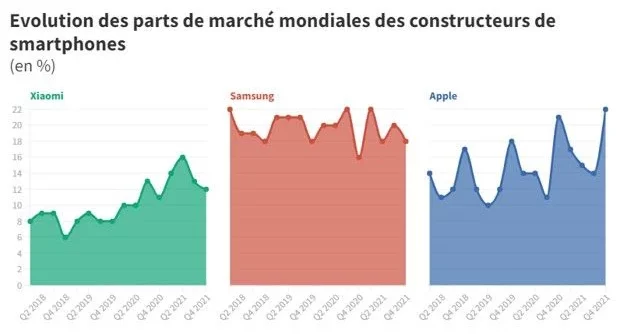
This phenomenon is not new. It recalls the disruption of the mobile telephone industry by Xiaomi and Huawei a decade ago. These Chinese brands offered smartphones with technical specifications comparable to iPhone and Samsung, at prices divided by two or three. Today, Xiaomi is the third largest smartphone manufacturer worldwide, and Huawei dominated the market before US sanctions.
In all these cases, the pattern is identical: industrial control + direct sale or reduced margins + real innovation = tariff disruption without major compromise on quality. The carbon road wheel market follows exactly the same path.
Why Chinese carbon wheels change the deal
Controlled industrialisation of carbon production
China has become the world capital for the manufacture of carbon frames and components for road bikes. What started as subcontracting for the major Western brands turned into autonomous expertise. China's factories now manufacture carbon road wheels for many premium brands that simply affix their logo.
This industrial mastery is accompanied by massive investment in R&D. China's carbon wheel manufacturers are no longer simply copying: they innovate with wind tunnel-optimised aerodynamic profiles, sophisticated carbon stratifications, and cutting-edge manufacturing processes comparable to European standards.
The model of direct sale to the consumer
The traditional business model of bicycle wheel brands involved multiple intermediaries: importer, distributor, retailer. Each link added its margin. Chinese carbon wheel manufacturers have shorted this chain by selling directly via platforms such as AliExpress, their own website, or specialized resellers with reduced margins.
This disintermediation largely explains the price differential of carbon bike wheels, much more than the intrinsic quality of the product. A pair of 50mm carbon wheels can cost 600€ for 2500€ for similar technical performance.
The democratization of technical know-how
The manufacturing of road carbon wheels is no longer a mysterious science reserved for some historical brands. Processes are documented, composite materials are accessible, and quality standards are known. What was once an exclusive competitive advantage has become a widely shared industrial know-how, allowing Chinese carbon wheels to achieve high quality levels.
Impact on established wheel marks
Short term: price disruption and strategic repositioning
The established bike wheel brands face an unprecedented strategic dilemma. Some choose to maintain their premium positioning by focusing on after-sales service, lifetime warranty and brand heritage. Others are launching more accessible sub-brands or adjusting their pricing grid against competition from Chinese carbon wheels.
The immediate risk is the reduction of margins. When a consumer can get a pair of road carbon wheels 50mm to 600€ for 2500€, justifying this price difference becomes a perilous exercise for traditional brands.
We are already seeing major adjustments: price declines in some historical actors, increasing promotions, and above all increased communication about differentiating elements such as VAS, crash replacement guarantees, or certified production traceability.
Medium term: accelerated market segmentation
The carbon bike wheel market is now structured into three distinct segments, creating new opportunities for cyclists:
The premium segment (>3000€) will remain for cyclists seeking absolute excellence, ready to pay for the last percentage of aerodynamic performance, an exemplary VAS, and the social recognition of a prestigious brand. Historical brands will retain their legitimacy in the face of Chinese carbon wheels.
A median segment (approximately 1500)€) emerges with Western brands offering better value for money, sometimes by supplying themselves in Asia but maintaining strict quality control and solid customer service. These carbon road wheels offer an interesting compromise.
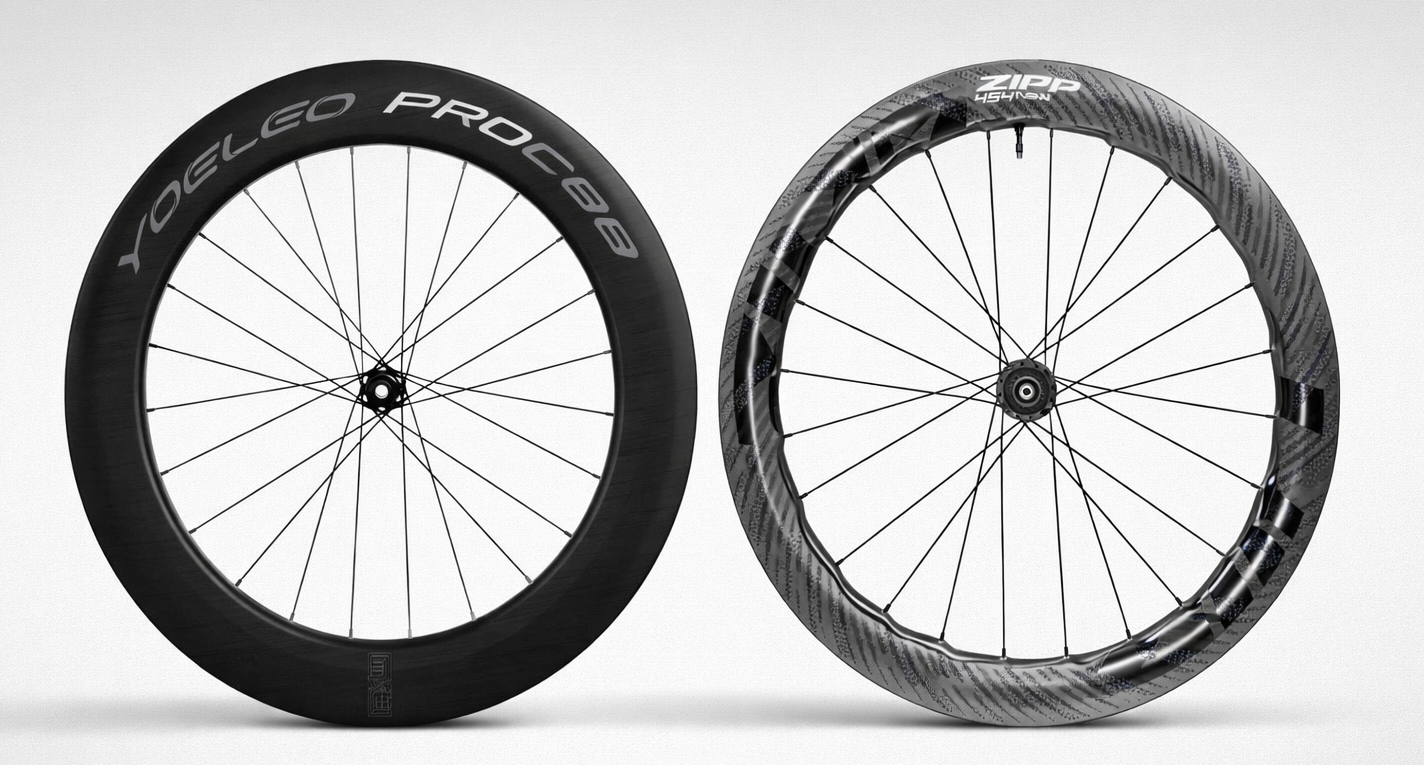
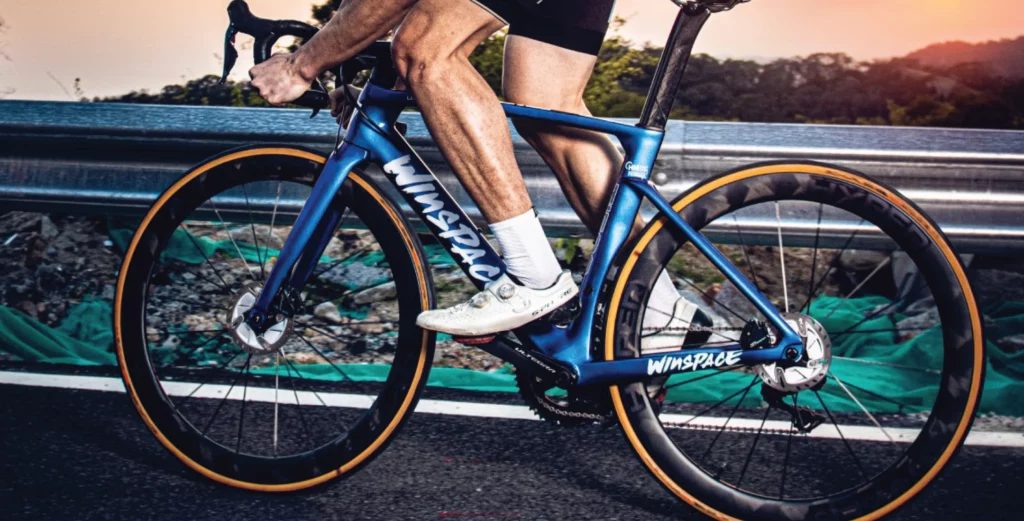
The accessible segment (<1000€) se développe rapidement avec les roues carbone chinoises vendues en direct, attirant les cyclistes rationnels acceptant de prendre un risque mesuré sur le SAV pour accéder à la technologie carbone à prix réduit. Des marques comme Yoeleo, Winspace, Elitewheels, ICAN or Lightcarbon offer high performance wheels at 500-900€ the pair, with serious technical specifications, ISO certifications, and a history of thousands of kilometers travelled by satisfied users documented on cycling forums.
Long term: standardization and consolidation of the sector
As the quality of Chinese carbon wheels continues to grow and their reliability is established by thousands of kilometres travelled, we could witness a market standardization similar to what happened in consumer electronics.
The bike wheel brands that survive will be those able to demonstrate tangible added value: true technological innovation, optimized system integration, exceptional customer experience, or lifestyle brand positioning beyond the simple technical performance of the road carbon wheels.
Lessons from Telephone Disruption: Xiaomi
The previous Xiaomi: from copy to innovation
In 2011, Xiaomi launched its first smartphone at 300$ with characteristics comparable to iPhone 4S sold 650$. Western analysts predicted poor quality and short lifespan. Thirteen years later, Xiaomi is the world's third largest manufacturer, present in 100 countries, with real innovations (120W fast charging, 200MP cameras, foldable screens).
The parallel with Chinese carbon wheels is striking:
- Phase 1 (2011-2014): Xiaomi copies designs, subcuts prizes, general scepticism
- Phase 2 (2015-2018): Quality improvement, R&D investment, progressive recognition
- Phase 3 (2019-today): Clean Innovation, Premium Image, Frontal Competition with Apple
Chinese wheel brands like Winspace or Yoeleo are today between phase 2 and 3 : established quality, increasing investment in wind tunnel and R&D, beginning of recognition in the international amateur platoon.
Key lesson for cycling: Apple has survived with continuous innovation (iPhone, services, ecosystem). Nokia and BlackBerry, who remained motionless relying on their reputation, have disappeared. Premium wheel marks must choose their camp.
Practical opportunities for cyclists
Democratised access to carbon technology
For the first time, efficient carbon road wheels are accessible to modest budgets thanks to Chinese carbon wheels. An amateur cyclist can now equip 50mm carbon wheels for the price of a pair of high-end aluminum wheels ten years ago.
This democratization allows more cyclists to benefit from the real benefits of carbon: optimized lightness, lateral rigidity, effective aerodynamics. Improving performance in carbon bike wheels is no longer reserved for a wealthy elite or professional riders.
Multiplication of choices and customization
The supply of Chinese carbon wheels has diversified considerably. Cyclists can now choose from dozens of different profiles, different rim heights (from 25mm to 85mm), and specific configurations for their practice: road, gravel, triathlon, time trial.
This variety encourages experimentation. Some cyclists no longer hesitate to own several pairs of road carbon wheels adapted to different weather or route conditions, where the prohibitive cost of traditional brands previously limited them to a single versatile game.
revolutionary price-performance ratio
Independent wind tunnel tests show that many Chinese carbon wheels offer aerodynamic performance, lateral rigidity and reliability comparable to premium models at three or four times their price. For the pragmatic cyclist analysing the objective data, this finding regarding the carbon bike wheels is difficult to contest.
This measurable reality forces the industry to question itself and pushes established bike wheel brands to justify their tariffs by concrete elements rather than by the prestige of their name or their marketing legacy.
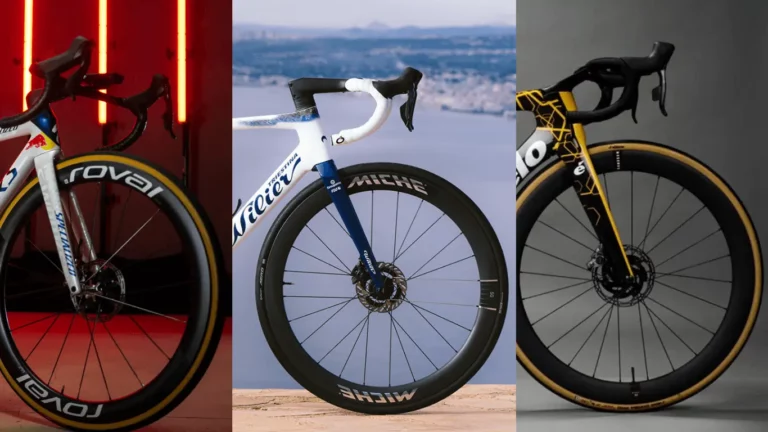
The excellent Nero Cycling performed wind tunnel tests on Chinese Caden wheels. As a result, they are at the same level and sometimes better than their competitors on the exercise (Roval, Reserve and Scope).
Buying Guide: How to Choose Your Carbon Wheels
Selection criteria for Chinese carbon wheels
The first reflex must be to check the reputation of the manufacturer. Not all brands are valid, and verifiable history remains the best indicator of seriousness. Marks like Yoeleo (founded in 2008, over 50,000 pairs sold), Winspace (leader of continental teams) or Elitewheels (specialist in optimized aerodynamic profiles) have accumulated sufficient positive feedback on specialized forums to be considered safe values. Conversely, a brand without documented presence on social networks or Reddit r/cycling deserves the utmost caution.
⚔️ Carbon Wheels Fuel
Chinese vs Premium — Compare specs and price in one click
Technically, the actual specifications should be checked rather than those of the catalogue: weighing weight on a scale, effective internal width (19mm minimum for modern tires of 25-28mm), brake compatibility (patches or discs) and d-axis standards (QR, 12mm, 15mm). Also check the presence of a contactable VAS, with the possibility of ordering spare parts — rays, bearings, freewheel body — Because that's often where the pack hurts. A minimum two-year warranty on manufacturing defects is a non-negotiable confidence signal.
When to prioritise established marks
It would be dishonest to claim that Chinese brands are suitable for all profiles. For a cyclist riding more than 10,000 km a year, participating in competitions, or weighing more than 85 kg, the proven reliability and reactive VAS of brands like Zipp, DT Swiss, Mavic or Campagnolo justify the price differential. The issue of skate braking is particularly sensitive: during repeated alpine climb descents, the thermal management of Chinese rims remains lower than that of premium references, with a real safety risk. Finally, major brands have a network of partner workshops, crash replacement programmes and guaranteed availability of parts over several years. A comfort that even the most serious Chinese manufacturers can not yet offer on the same scale.
Strategic recommendations
For established bicycle wheel markings
The survival of historical brands will not require cosmetic marketing. Small incremental developments will no longer be sufficient to justify a gap of 300% against Chinese competitors who publish comparable wind tunnel results. What is needed is breaking innovation: system integration technologies, profiles developed in partnership with WorldTour teams, compatibility thought for Shimano Di2 or SRAM AXS electronic transmissions.
In this context, after-sales service becomes as important as pure performance. The crash replacement programs at preferential rates, the SAV reacts in 48 hours, the partner workshops able to intervene quickly, the spare parts guaranteed over ten years: this is what brands like DT Swiss, Enve or Campagnolo can offer and that the Chinese manufacturers, even the best organized ones, still struggle to match on a global scale. Transparency also plays a growing role: publishing wind tunnel data, tracing the origin of its carbon fibres, certifying its ISO 900 production processes. These approaches, still rare in the industry, become full selling arguments in the face of competition whose origins are sometimes blurred.
For consumers of carbon wheels
Before purchasing, research work is essential. Not all Chinese wheels are worth it, and the real risks (dlamination, load failure, hub failure) do exist on brand products without history. Spend a few hours on Weight Weenies, specialized Francophone forums or Facebook groups of experienced cyclists is the best possible investment before spending 700€.
We must also have honesty in assessing our real needs. A casual cyclist travelling 3,000 km a year on hilly terrain does not need wheels at 3,000€ to enjoy his outings. On the other hand, a regular competitor or a strong rider, over 90 kg, has good reasons to steer towards an established brand, if only for peace of mind and reliability of the VAS. Thinking about the cost over five years rather than just the purchase price often changes the equation: a pair of Chinese wheels without real warranty can end up costing more than a Mavic pair or DT Swiss lifetime warranty. Finally, for those who are still hesitant, the most cautious strategy remains simple: to start with Chinese wheels of an established brand for training, and to keep its premium wheels for important competitions and trips. The best way to form an opinion is still to experience yourself.
The future of the carbon bike wheel market
Emerging trends
The first likely move is market consolidation. Not all dozens of current Chinese brands will survive: actors without history, VAS and certification will gradually disappear in favour of some well-established names. This is already seen in the strategic decisions of Winspace, which invests in sponsoring UCI Continental teams and establishes partnerships with European distributors, or Yoeleo, which opened warehouses in Germany and the United States to reduce delivery times and improve its local VAS. This movement towards professionalization resembles what Xiaomi went through between 2014 and 2018.
In parallel, the cycling industry converges towards common standards — 21mm internal width, generalised tubeless ready, universal axis compatibility — which reduce mechanically the competitive advantage of proprietary solutions. When a Yoeleo and a Zipp accept the same tires, valves and cassettes, the battlefield inevitably moves towards price, service and brand image.
The Chinese upscale is perhaps the most significant trend to monitor. ICAN sponsor professional Ironman triathletes, Lightcarbon influencer team, and Elitewheels develops ultra-light models at 1,200-1,500€ with specifications previously reserved for the Western premium: internal width 25mm, DT Swiss hubs, lifetime warranty. These brands no longer seek to be cheap, they seek to be better. Finally, some Western brands themselves learn from this reality by creating discrete partnerships with quality Chinese factories, combining Asian manufacturing with their own quality control, design and distribution network.
Scenarios likely at 5 years
Three trajectories are possible, and none should be excluded. In the most favourable scenario for established brands, consumers continue to value the service, guarantee and reputation sufficiently to accept a tariff premium of the order of 50 to 100%, i.e. about 1,500-2,000€ for a premium pair against 800-1 000€ for a Chinese equivalent in performance. Brands like Zipp, Enve or Campagnolo retain their legitimacy in the high-end segment while Chinese dominate the market.
In a more disruptive scenario, the quality of Chinese wheels progresses to the point that only a minority of professional cyclists or unconditional enthusiasts still justify premium shopping. The industry would then be forced to undergo a major restructuring, comparable to what the photographic industry experienced with the rise of smartphones. Generalised price reductions of Western brands would become inevitable, with consolidations and possibly disappearances at the key.
The most likely scenario, however, remains that of a stable balance between well-defined segments, each type of wheel finding its audience according to clearly differentiated priorities: price for some, absolute performance measured in the wind tunnel for others, service and peace of mind for others, and brand image for those who regard their wheels as a sign of belonging as well as technical equipment. This three-tier segmented market is precisely the one that caused Xiaomi disruption in telephony — and proved viable for all parties.
Towards a new market balance
The emergence of Chinese carbon wheels is neither a disaster nor a miracle. This is a natural development of a market that is reaching technical maturity, where production is rationalizing and barriers to technological entry are gradually decreasing.
Historic bike wheel brands will retain a legitimate place for consumers who value prestige, premium after-sales service, or certified leading edge innovation. But they will have to deserve this position with tangible evidence of measurable superiority, not only through their history or marketing.
Chinese carbon wheel manufacturers will continue to gain market share by continuously improving their quality, reliability and credibility with cyclists. The most visionary of them will invest massively in international customer service and the construction of sustainable brands rather than in competition by low prices alone.
Consumers of carbon bike wheels are the big winners of this market transformation. They benefit from significantly lower prices, from a much wider and diversified offer, and from an enforced cycling industry to genuinely innovate and challenge itself. It remains to navigate intelligently in this new complexity, where price is no longer an automatically reliable indicator of quality or performance.
FAQ: Frequently Asked Questions about Chinese Carbon Wheels
Where to buy safe Chinese carbon wheels?
Three channels exist, with different levels of risk and price. The safest is the official website of the brand (yoeleo.com, winspace.cc, ican-cycling.com, elitewheels.cc) : you buy live, without intermediary, with the full manufacturer warranty. The drawback is the delivery time from China (10-20 days) and the tariffs to anticipate.
Option 2: official storefronts on AliExpress. The main brands — Elitewheels, SuperTeam and SCC — have shop verified on the platform, recognizable by their badge « Official Store ». The advantage is the AliExpress buyer protection in case of dispute, regular promotions (11/11, summer sales), and sometimes a shipment from warehouses in Spain or Poland that avoids customs duties. This is the channel I recommend for a first purchase, the safety/price ratio being optimal.
To avoid in any case: unnamed sellers on AliExpress offering « Zipp style » or « Infancy » at broken prices, and lots without certification displayed.
Are Chinese carbon wheels as reliable as Western brands?
Reliability depends entirely on the brand chosen. Manufacturers established as Yoeleo, Winspace, ICAN, Elitewheels and Lightcarbon have proved themselves with thousands of kilometres travelled by satisfied users. These brands use the same carbon fibres (often Toray T700 or T800) and manufacturing processes similar to premium brands.
The key is to focus on brands with:
- A history of several years (5+ years)
- ISO 9001 and EN standard certifications
- Positive feedback on cycling forums (Weight Weenies, Reddit r/cycling)
- An existing VAS with spare parts available
Avoid unknown brands sold only on AliExpress without verifiable history.
What is the concrete difference between a Yoeleo at 850€ and a Zipp 404 to 2500€ ?
In terms of pure performance (aerodynamics, rigidity, weight), independent wind tunnel tests show minimal differences, often in the order of 1-2 watts at 40 km/h.
The real differences are elsewhere:
- VAS : Zipp offers a crash replacement (replaced at a reduced price in case of a break) and a network of global distributors. Yoeleo has an existing but less developed VAS.
- Guarantee : Zipp often offers a lifetime warranty on manufacturing defects. Yoeleo usually offers 2-3 years.
- Availability parts : Zip guarantees the availability of spare parts for 7+ years. For Yoeleo, this is less certain in the long run.
- Brand Prestige : Zipp is visible in WorldTour, Yoeleo in amateur platoons.
For an amateur cyclist riding 5000 km/year, the difference in performance probably does not justify the difference of 1650€. For a demanding competitor or heavy cyclist (>90kg), the premium VAS can be worth the investment.
Can I use Chinese wheels in competition?
Yes, absolutely. The Chinese carbon wheels of established brands meet UCI (International Cycling Union) standards and are legal in amateur and even professional competition (although rare in WorldTour for reasons of sponsorship).
Recommendations by level :
- Local/regional competitions : Yoeleo, Winspace, ICAN are perfectly adapted
- National Championships : Prefer high-end models (Winspace Hyper, Elitewheels Drive) or premium brands for maximum reliability
- International competition : If you are aiming for podium, reactive VAS and guaranteed availability of premium replacement wheels (Zipp, Enve, Campagnolo) justify investment
Many Ironman triathletes now use ICAN or Elitewheels successfully.
What is the risk in case of a break or technical problem?
This is the main drawback of Chinese carbon wheels. In case of problem:
Chinese brand scenario :
- Contact by email (time limit: 24-72h)
- Remote diagnosis via photos
- Spare part or wheel shipment from China (2-4 weeks)
- Potential return customs fees
- No courtesy wheel
Scenario premium brand (Zipp, Enve, DT Swiss, Mavic, Campagnolo):
- Contact local distributor or hotline (response: 24-48h)
- Network of accredited partner workshops
- Courtesy wheel sometimes available
- Crash replacement program (replacement at reduced price, about 40-60% of public price)
- Spare parts available
Risk mitigation strategy :
- Buy two pairs of Chinese wheels for the price of a premium pair
- Keep a pair of spare aluminium wheels
- Verify that the seller has a warehouse in Europe (e.g. Yoeleo Germany)
Do Chinese wheels last for 3-5 years?
The feedback over 3-5 years is beginning to be numerous for established brands:
Yoeleo (founded 2008): Numerous wheel reports with 30,000-50 000 km without major problems. Some cases of bearings to be replaced (normal) and broken rays (idem for all marks).
Winspace (founded 2006): Strong reputation in the triathlon community. Reliable wheels over several seasons.
ICAN : Most positive returns, some shelving problems reported but supported by SAV.
Lightcarbon : Good reputation over time, especially for skate wheels.
Elitewheels : Brand more recent but very positive feedback on quality of construction.
Point of vigilance : Sustainability depends heavily on use (cycling weight, type of terrain, maintenance). A 95kg biker in the mountains will require much more wheels than a 65kg biker on flat terrain.
Which Chinese brands absolutely avoid?
Without mentioning specific names, avoid:
- Brands without own website (only present on AliExpress)
- Prices too low (carbon wheels 50mm to 300€ = alarm signal)
- Brands without any feedback on cycling forums
- Sellers who refuse to give precise technical information (real weight, exact internal width, origin of hubs)
- Brands without minimum warranty (2 years minimum)
Simple Rule : If you don't find at least 10 detailed reviews of Weight Weenies, Reddit r/cycling or francophone forums, pass your path.
Do I have to pay customs duties?
From China to the European Union :
- Value < 150€ VAT only (20%)
- Value > 150€ VAT (20%) + customs duties (4.7% for bicycles/components) + carrier file fees (15-30)€)
Example wheels at 800€ :
- Product price : 800€
- VAT (20%) : 160€
- Rights (4.7%): 37.60€
- File fee: ~25€
- Total: ~1022€
Strategies to avoid/reduce :
- Buy via European distributor (Yoeleo Germany, some dealers)
- Check if the displayed price is tax included or tax excluded + taxes
- Group multiple purchases to optimize fixed costs
Attention : Some sellers underestimate the value (illegal and risky – fine if discovered by customs).
Can I mount my Chinese tubeless wheels easily?
Most modern Chinese carbon wheels are tubeless ready, but the quality of sealing varies:
Brands with good reputation tubeless :
- Yoeleo : original tubeless rim bottom, easy mounting
- Winspace : Excellent watertightness reported
- ICAN : Tubeless ready, sometimes need extra ribbon
- Elitewheels : Good feedback on tubeless mounting
Assembly advice :
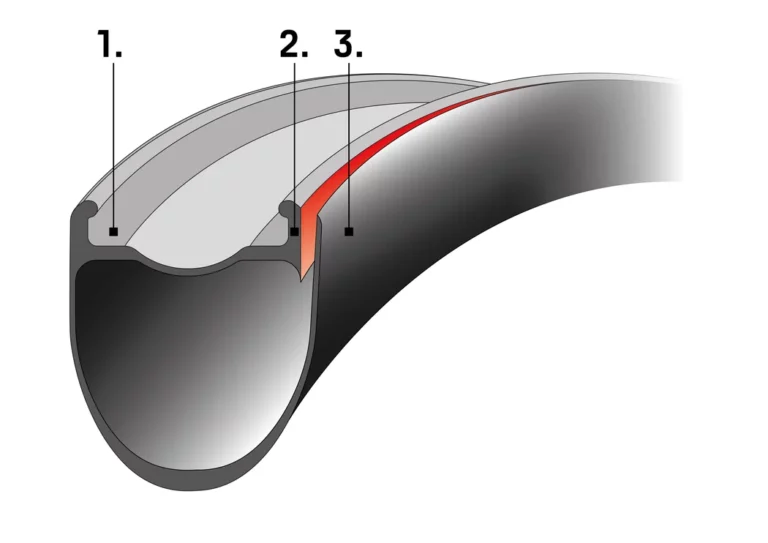
- Check that the rim bottom is watertight (add ribbon if necessary)
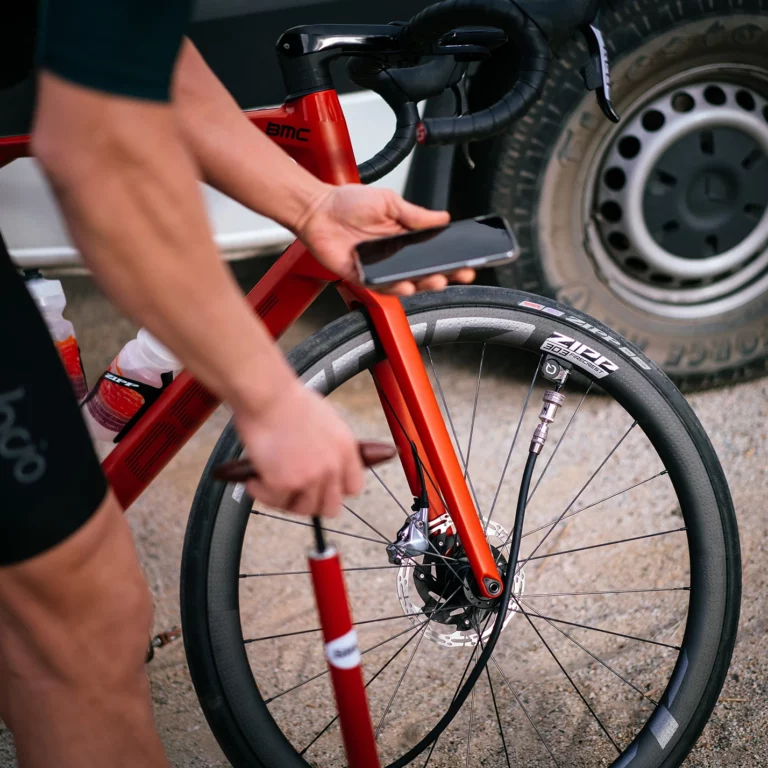
- Use a high pressure compressor or inflater for initial mounting
- Preferred tyres known to fit well (Continental GP5000 TL, Schwalbe Pro One)
- Provide 50-100ml preventive depending on tire volume
Comparison premium brands : Zipp, Enve, DT Swiss usually have optimized rim bottoms for tubeless with excellent original sealing. Less trouble at assembly.
How to recognize a premium wheel counterfeit?
Some unscrupulous sellers sell Chinese wheels with false logos Zipp, Enve or Campagnolo. It's illegal and not recommended (uncertain quality, no guarantee).
Counterfeit alarm signals :
- Price 70-80% cheaper than official price (Zipp 404 to 600€ = counterfeiting)
- Seller on AliExpress/DHGate offering « Zipp style » or « Infancy »
- No verifiable serial number
- Poor quality logos (printing vs original stickers)
- Weight declared different from official specs
- Unable to register guarantee on official website brand
Legal and ethical solution Buy real Chinese wheels (Yoeleo, Winspace, etc.) that take on their identity. They offer an excellent value for money without the legal and ethical risks of counterfeiting.
Join the conversation
Does this transformation of the Chinese carbon wheel market prefigure the evolution of the entire high-end cycling sector? Will electronic transmission groups, integrated frames, aerodynamic components experience the same tariff revolution?
How can historic bike wheel brands sustainably preserve their value in a world where manufacturing is globalized and where technical information flows instantly? Is the prestige of a century-old brand really worth 2000€ more for technically equivalent road carbon wheels in windmill?
Share your concrete experience: have you taken the step of Chinese carbon wheels, or are you faithful to established brands? What really motivates your choice: trust in VAS, accessible price, measured performance, brand image, or something else?
This article contains affiliate links. In case of purchase via these links, I perceive a commission without extra cost for you.
Leave a comment